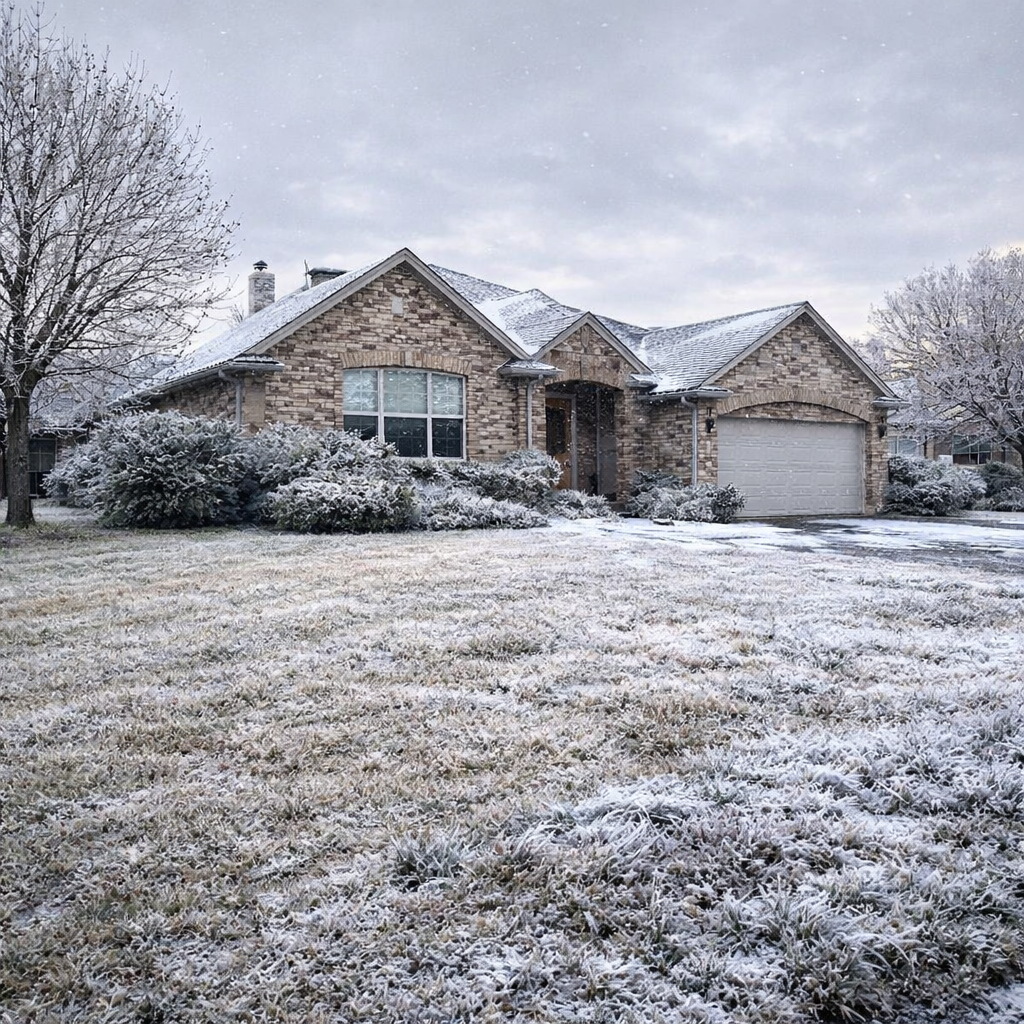
A hard freeze is forecast for North Texas from January 24 through January 28, with overnight temperatures expected to dip into the low 20s. When cold like this moves in, we hear the same questions from homeowners in Plano, Richardson, Frisco, and McKinney:
- Should I water before a freeze?
- Will my sprinkler system freeze and break?
- What actually causes freeze damage to lawns and plants?
Let’s walk through what matters, what doesn’t, and exactly what you should do to protect your lawn and landscape.
Why Freeze Damage Happens in North Texas (and What Most People Get Wrong)
The biggest misconception we see is that cold temperatures alone cause freeze damage. In reality, most damage happens when:
- Soil is dry going into a freeze
- Plants are already stressed or dehydrated
- Sprinkler systems are left running during freezing temperatures
Cold air plus dry soil is what creates problems—not the freeze itself.
The Most Important Step: Water Before the Freeze
If it has been more than 10–14 days since meaningful rainfall, watering before the freeze is the single most important thing you can do.
Why watering works:
- Moist soil insulates plant roots
- Wet ground absorbs heat during the day and releases it slowly overnight
- Proper hydration prevents winter desiccation (drying out)
This is especially critical for St. Augustine lawns, which are more sensitive to freeze stress than Bermuda or Zoysia.
When to water:
- Water 1–2 days before the freeze arrives
- Do not water once temperatures are already at or below freezing
What to Do With Your Sprinkler System
Here’s some good news:
You do NOT need to drain or blow out your sprinkler system in North Texas.
Unlike northern climates, our freezes are typically short-lived and not deep enough to damage properly installed irrigation systems.
What you should do instead:
- Turn your sprinkler system off during the freeze
- Manually shut it down even if you have a rain/freeze sensor
- Avoid ice buildup on sidewalks, driveways, and streets
Once temperatures rise safely above freezing, you can turn your system back on.
Protecting Plants the Right Way
If you plan to cover plants, do it correctly.
Best practices:
- Use fabric frost cloths, sheets, or breathable coverings
- Avoid plastic directly touching plants—it can cause more damage
- Remove covers once temperatures rise above freezing during the day
Focus on:
- Newly planted shrubs
- Tropical or non-hardy plants
- Potted plants exposed to wind
One Thing Most Homeowners Forget: Emergency Prep
Extreme cold can lead to unexpected issues. We recommend having these items accessible:
- A water meter key
- A street key
- Knowledge of where your main shutoff valve is located
If a pipe breaks, fast access can prevent costly damage.
Will My Lawn Be Okay?
Yes—North Texas lawns are tougher than most people realize.
When soil is properly watered:
- Established lawns rarely suffer long-term freeze damage
- Dormant grass recovers naturally in spring
- Even brief dips into the teens are usually manageable
The key is preparation, not panic.
Final Freeze Checklist
✔ Water lawn and landscape if dry
✔ Turn sprinkler system off during freeze
✔ Cover sensitive plants properly
✔ Keep emergency tools accessible
✔ Avoid walking on frozen grass
If you have questions or want reassurance about your specific lawn, we’re always happy to help. Call us at 972-495-6990—we’ve been helping North Texas homeowners through freezes like this for over four decades.