
The Truth About Why Grass Thins — And Why Your Lawn Plan Still Matters
If you live in North Texas and your lawn is thinning under trees or along fence lines, you are not alone.
And in many cases, it’s not insects.
It’s not disease.
It’s not a “bad treatment.”
It’s shade.
This is one of the most misunderstood lawn issues we see across Richardson, Plano, Dallas, Allen, and surrounding areas. Homeowners often assume something is wrong with the program when the real issue is environmental — specifically, insufficient sunlight.
Before you blame the treatment plan, it’s important to understand what grass biologically requires to survive and thrive.
How Much Sun Does Grass Actually Need?
Most lawns in North Texas are one of three turf types:
- Bermuda
- St. Augustine
- Zoysia
Each has different shade tolerance.
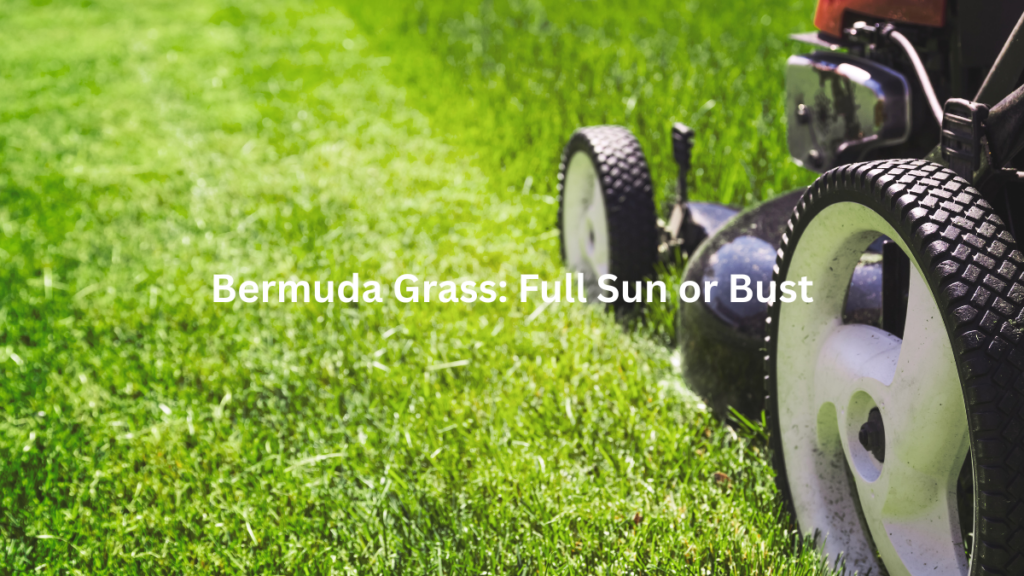
Bermuda Grass: Full Sun or Bust
Sun requirement: 6–8+ hours of direct sun daily
Shade tolerance: Very low
Bermuda thrives in wide-open, unshaded spaces. It produces dense, resilient turf in full sun.
Under mature tree canopy or in areas receiving limited direct light, Bermuda will thin over time. No fertilizer or weed control program can override a sunlight deficit.
If Bermuda is struggling in shaded areas, the problem is usually physics — not product.
St. Augustine: Moderate Shade Tolerance
Sun requirement: 4–6 hours of direct sun
Shade tolerance: Moderate
St. Augustine handles partial shade better than Bermuda, which is why it’s common in established neighborhoods with mature trees.
But here’s where confusion sets in:
Filtered light through trees is not the same as 4–6 hours of direct sun.
Dappled light can reduce usable energy by 50–80%. Grass may survive in those areas, but density and vigor often decline.

Zoysia: Variety Matters
Sun requirement: 4–6 hours (variety dependent)
Shade tolerance: Moderate
Certain Zoysia varieties perform reasonably well in partial shade, but heavy shade will still lead to thinning.
The key takeaway: All warm-season grasses common to North Texas require meaningful direct sunlight.
Why Your Lawn “Used to Be Full”
We hear this often:
“That area was thick when we moved in.”
That’s probably true.
When you purchased your home:
- Trees were younger.
- The canopy was thinner.
- Sunlight reached more of the yard.
Fast forward 10–20 years:
- Trees mature.
- Branches expand.
- Shade lines shift.
- Neighboring trees grow taller.
The change happens gradually, so it’s easy to miss. But even losing one to two hours of direct sunlight per day can significantly impact turf density.
The lawn didn’t suddenly fail.
The environment evolved.

Why Shade Gets Misdiagnosed
Shade stress often looks like:
- Thin turf
- Bare spots under trees
- Slower recovery
- Increased disease susceptibility
- Patchy decline
It’s easy to assume:
- “There must be bugs.”
- “The fertilizer isn’t strong enough.”
- “The treatment burned it.”
But adding more product does not create sunlight.
In fact, over-fertilizing shaded areas can increase stress.
The solution starts with proper diagnosis — not heavier applications.
Here’s What We Don’t Want You Thinking
We don’t want you to conclude: “I have shade. I can’t fight nature. So why even have a lawn plan?” That’s the wrong takeaway. Shade changes expectations and strategy — not the value of professional lawn management.
Why Your Lawn Health Plan Still Matters
Even in shaded zones, your lawn still needs:
- Weed control (thin turf invites weeds fast)
- Soil conditioning
- Root development support
- Disease prevention (shade increases moisture retention)
- Seasonal nutrient management
Without structured care, shaded turf declines faster and weeds move in aggressively.
Your program protects the lawn you can grow — and stabilizes the areas under stress.

This Is Not a One-Size-Fits-All Program
Village Green does not run a generic “spray schedule.”
We are on your property multiple times per year.
We are:
- Documenting conditions
- Observing seasonal performance
- Monitoring stress patterns
- Adjusting timing and products
- Refining your plan over time
Most lawns are not uniform.
They contain:
- Full-sun sections
- Partial-shade areas
- High-traffic zones
- Compacted soil pockets
- Drainage differences
Your lawn health plan accounts for that complexity.
If a shaded section struggles, we evaluate:
- Light exposure
- Irrigation patterns
- Soil compaction
- Turf type
- Seasonal timing
Then we adjust.
That’s management — not maintenance.
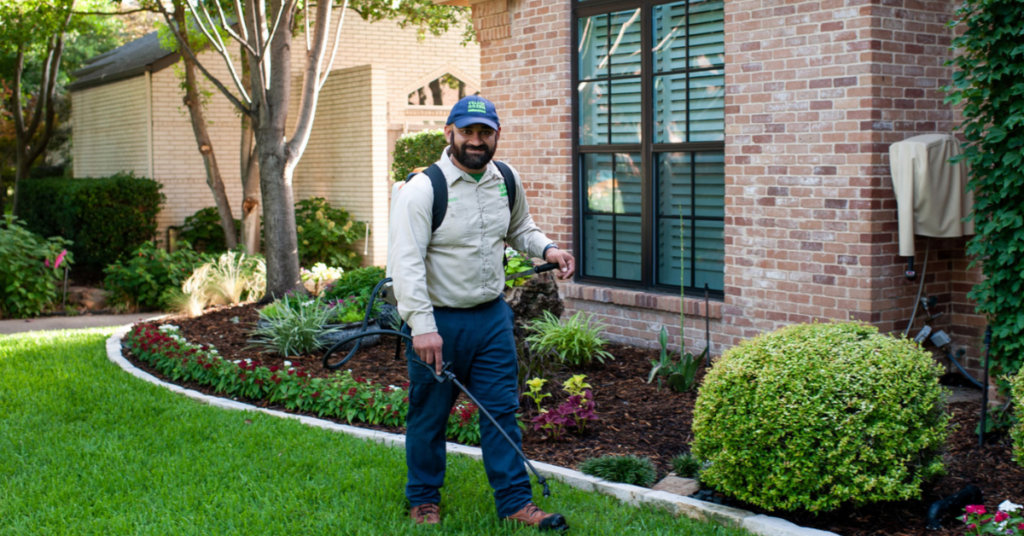
What Village Green Can Do About Shade
This is where honesty matters.
Village Green cannot turn back the clock on grass loss caused by shade. No lawn care company can. If someone tells you they can completely reverse shade damage, we would encourage you to think carefully before believing that claim.
As trees mature over time, sunlight reaching the lawn naturally decreases. That environmental change affects how grass grows.
What we can do is slow that decline.
Because Village Green is not a one-size-fits-all lawn care company, we personalize your lawn health plan based on the specific conditions on your property. When shade becomes a factor, we adjust strategy, expectations, and management practices to help the turf perform as well as possible under those conditions.
We can’t reverse the shade. But we can manage the lawn intelligently to slow grass loss and protect the areas that can still thrive.
That approach is one of the things that makes Village Green different.
Our goal is always to set realistic expectations so you can make an informed decision about your lawn’s health plan.
What Happens When You Work With Us
When you place your lawn in our care, our role is to think about your lawn so you don’t have to.
We visit your lawn multiple times each year as part of your lawn health program, and we actively monitor conditions over time.
That includes:
• Documenting lawn conditions and progress
• Taking photos when needed to track changes
• Logging notes about turf health and environmental conditions
• Watching for issues caused by weather, shade changes, or seasonal stress
No lawn improves in a straight line. Weather patterns, shade, and environmental conditions will always influence how grass performs.
Our job is to watch those changes, adjust where needed, and be available whenever you have questions.
If something concerns you about your lawn, you can always call or text us and we will walk through it together.
Because when you hire Village Green, you’re trusting us to manage the health of your lawn — and we take that responsibility seriously.
Not Sure If Shade Is Impacting Your Lawn?
Don’t guess. Diagnose.
If parts of your lawn are thinning and you’re unsure whether it’s shade, irrigation, soil, or something else — that’s exactly what we’re here to evaluate.
We’ll look at:
- Turf type
- Actual direct sunlight hours
- Soil condition
- Irrigation coverage
- Seasonal timing
- Long-term trends on your property
Then we’ll tell you the truth.
If your lawn is a strong candidate for improvement, we’ll build a plan around it.
If certain areas have environmental limits, we’ll explain those too — and outline realistic options.
No pressure. No overselling. No generic recommendations.
Just a clear assessment and a strategy built for your property.
If you’re in our North Texas service area and want a professional evaluation of your lawn’s sunlight exposure and overall health, request a consultation today.
Because the right plan starts with the right diagnosis.