
After the recent freeze across the Dallas–Fort Worth area, we’ve been getting a lot of calls and texts asking the same question:
“What does this cold weather mean for my lawn?”
It’s a fair question—especially since this winter felt different than what we’ve experienced in recent years. Here’s what you need to know, what we’re watching closely, and when you’ll have real answers.
The Good News: Snow Can Actually Help Protect Your Lawn
This freeze came with something we don’t always get in North Texas: moisture.
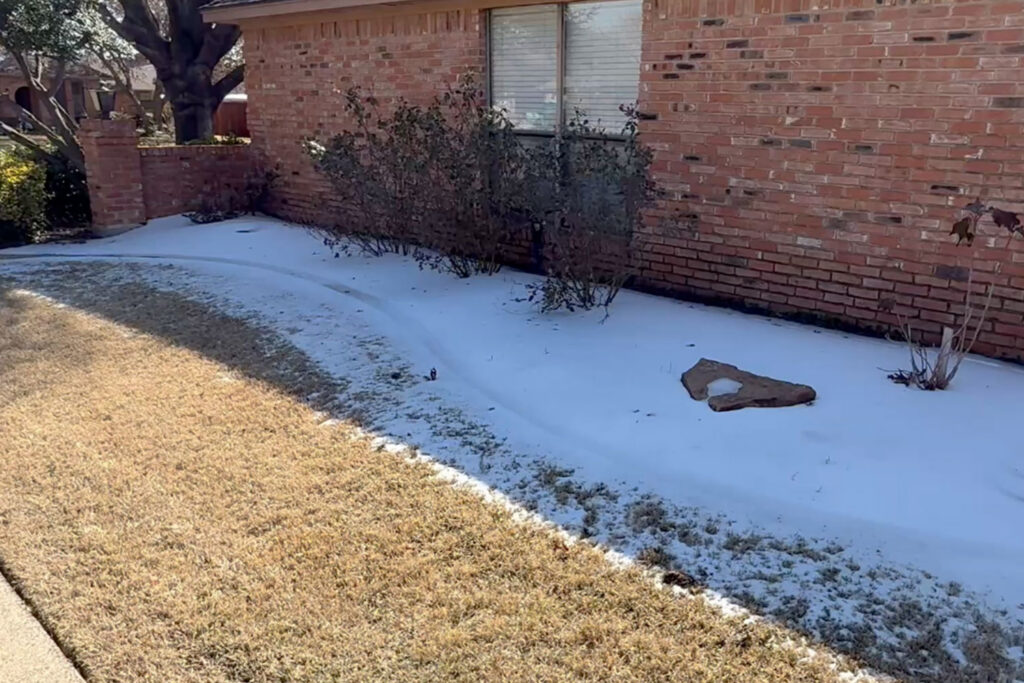
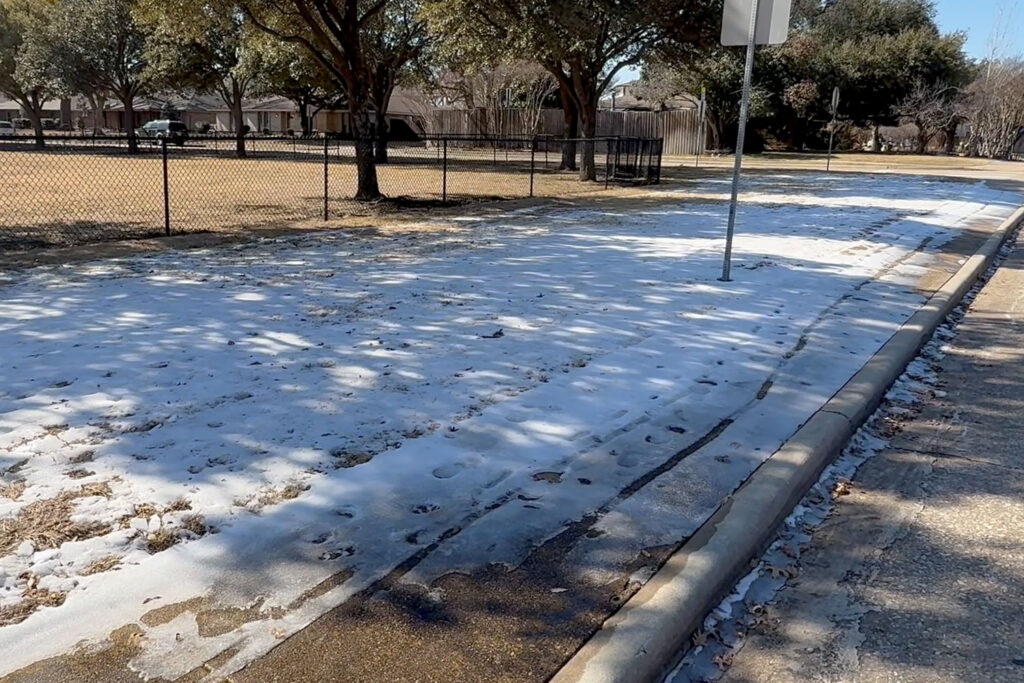
The snow and sleet created a layer of insulation over your lawn. That snow cover helps protect grass crowns and roots from extreme temperature swings, much like mulch protects landscape beds.
In many cases, snow is far less damaging than dry, bitter cold.
Why This Freeze Is Different Than Recent Winters
Over the last five or six years, our typical winter pattern has looked like this:
- Warm stretches in the 70s or 80s
- Followed by sudden drops into the teens or 20s
This time, temperatures stayed cold longer—and snow and ice lingered on the ground well after the storm. Many homeowners have asked us the same thing:
“Have we seen this before?”
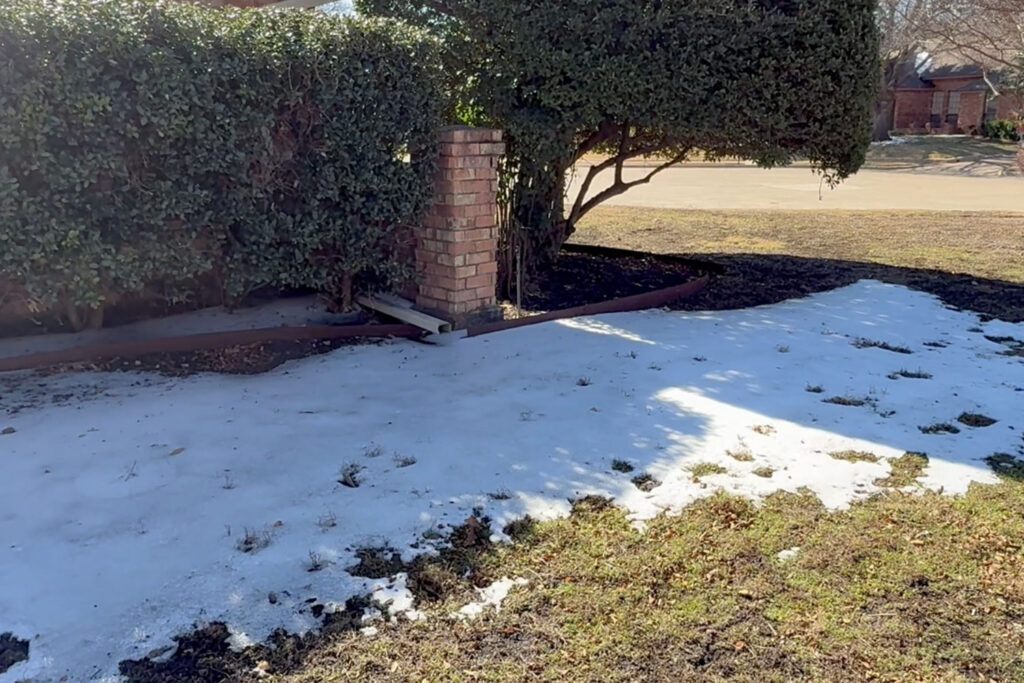
Honestly, it’s been a while since we’ve had snow and ice still on the ground a full week later. Because this type of extended cold is less common for our area, we won’t know the full impact right away.
How Different Grass Types Handle Cold
Not all lawns respond to cold the same way.
Bermuda Grass
Bermuda generally handles cold weather well and is usually the most resilient after freezes like this.
St. Augustine Grass
St. Augustine is a tropical grass. While it can recover from cold damage, it does so slowly. If damage occurs, patience is key.
Zoysia Grass
Zoysia tends to be the slowest to recover from freeze damage. Last year, we saw Zoysia lawns take several weeks longer to fill back in compared to Bermuda and St. Augustine.
This doesn’t mean your lawn is lost—it just means recovery timelines can vary.
One Factor That Makes Freeze Damage Worse
There’s one trend we see consistently:
Lawns that were underwatered or stressed during the previous summer tend to suffer more freeze damage.
Healthy, well-watered turf going into winter has stronger roots and better energy reserves. That’s one of the reasons we talk so much about proper summer watering—it doesn’t just matter in August, it matters in February too.
When Will We Know If There’s Real Damage?
This is the hardest part for homeowners:
We won’t know for sure until late April or early May.
We’ve seen lawns in mid-April that looked like total losses—only to fully recover by the end of May. Grass can be surprisingly resilient once soil temperatures rise and active growth begins.
If you’re seeing thin areas or discoloration early in the season, don’t panic and don’t replace anything yet.
The Bottom Line: Don’t Give Up on Your Lawn Too Early
Right now, the best approach is patience.
- Snow may have protected more lawns than it harmed
- Some grasses simply wake up later than others
- Early spring can be misleading
In many cases, lawns that look rough in April are perfectly fine by May.
If you’re unsure, we’re happy to take a look and talk through what you’re seeing—honestly and without pressure.