
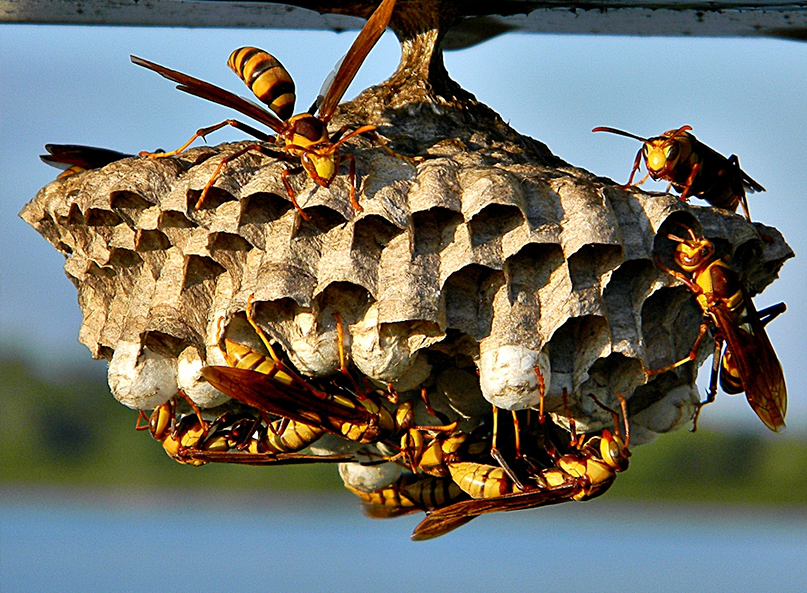
As the weather starts doing that very North Texas thing — cool mornings, warm afternoons, and big temperature swings — a lot of homeowners in Plano, Richardson, Frisco, and McKinney are noticing something unnerving:
Wasps.
On the ceiling.
By the fireplace.
Buzzing around the living room.
At Village Green Lawn & Pest, our phones have been ringing off the hook with wasp calls. On one recent day, our team made multiple visits just to help customers with wasps inside their homes.
If that’s happening at your house, you’re not alone. And no, you’re not cursed. What you’re seeing is a predictable fall pattern in North Texas — and one that you can get in front of once you understand what’s driving it.
What’s going on with wasps in North Texas right now?
Most of the wasps we see in our area — especially around homes — are paper wasps and occasionally yellowjackets and mud daubers. In North Texas, their year looks roughly like this:
- Spring: A fertilized queen wakes up from winter, finds a sheltered spot (eaves, beams, porch ceilings), and starts a small nest.
- Summer: The colony grows. Workers build more cells, forage for food, and protect the nest.
- Late summer into fall: The colony is at full size. Food becomes less abundant. Temperatures start dropping at night but can spike during the day.
That last phase is where we are now — and it’s a perfect recipe for the “why are there wasps in my house?” calls.
Why wasps suddenly show up inside your home in the fall
A few key things are happening at once in Plano, Richardson, Frisco, and McKinney:
1. They’re looking for a warmer, protected place to ride out the cold
As temperatures bounce up and down, wasps start looking for more stable, protected spots to spend the colder months — think: attics, wall voids, eaves, and gaps around rooflines.
Your home is a giant, gently warmed “wasp magnet,” especially:
- Homes with vaulted or high ceilings
- Homes with fireplaces and chimney flues
- Two-story entries and big picture windows
Wasps following warmth up along the structure often slip into tiny gaps and end up inside your living space.
2. Indoor wasps may be sluggish — but they’re not harmless
Many homeowners tell us, “They seem kind of slow and lazy.” That’s common when wasps are chilled or disoriented after coming out of a cold void space into your home’s conditioned air.
Sluggish doesn’t mean harmless, though. A startled or trapped wasp can still sting, and for those with allergies, that’s a serious concern.
3. North Texas weather makes it worse
We live in a part of Texas where you can run the heater one day and the A/C the next. Those swings wake wasps up, get them moving, and push them to explore for new shelter. That’s why you may notice “bursts” of wasp activity after a warm-up, even late in the season.
Common wasp hotspots we’re seeing right now
From what our technicians are finding in the field, these are the biggest problem areas in local homes:
- Vaulted & high ceilings
Warm air rises, and so do wasps. They may be entering around recessed lights, trim gaps, or where sheetrock meets beams. - Fireplaces & chimney flues
Even if you don’t use your fireplace often, the flue is a sheltered vertical tunnel. If the cap, screen, or seal isn’t perfect, wasps can move up and down and occasionally wander right into the living room. - Attic access points
Poorly sealed attic doors, pull-down ladders, or light fixtures can be pathways for wasps that have settled in the attic space. - Eaves, overhangs, and doorways
We’ve even written about why North Texas doorways become prime wasp real estate in late summer, and we’re still seeing plenty of nests on porch ceilings and overhangs as fall continues.
Are fall wasps less aggressive?
Compared to peak late-summer outdoor activity around food sources, the wasps you see wandering around inside the house often do seem calmer and slower.
Why?
- Cooler temps slow their metabolism.
- They may be disoriented and tired from emerging out of wall voids or attics.
That said, it’s important not to let your guard down. Wasps will still defend themselves, especially if they’re trapped against a window or swatted at. A sting in a confined space can feel even more alarming than one outside.
DIY vs. professional wasp control: what actually works?
We get a lot of versions of the same question:
“Can I just spray something up there myself and be done with it?”
Sometimes, for a single small nest that’s easy to reach and far from people or pets, a careful DIY approach might work. But that’s not what most of our North Texas customers are dealing with this fall.
Here’s where DIY usually falls short:
- You can’t see the whole picture. If wasps are coming from attics, flues, or wall voids, the actual nest may be hidden.
- Spraying blindly can drive them deeper. Sprays in the wrong place can scatter wasps into new areas instead of eliminating the colony.
- High access = high risk. Vaulted ceilings, ladders, and wasp spray are not a great combination from a safety standpoint.
How Village Green handles wasps around North Texas homes
When we come out for a wasp problem in Plano, Richardson, Frisco, or McKinney, our technicians:
- Inspect the exterior and interior to find where wasps are entering and where nests are located.
- Treat active nests and high-risk areas with professional products appropriate for the location (eaves, rooflines, flues, etc.).
- Identify and reduce entry points where possible — gaps, cracks, and other access points.
- Recommend ongoing protection so you’re not starting from scratch next season.
For homeowners who want proactive protection, we typically recommend our Home Defense Plus Pest Control Plan, which includes all the pests covered in our standard Home Defense plan plus wasps, scorpions, venomous spiders, and exterior rodent baiting.
That means regular, scheduled visits and priority help if you see activity between services.
When should you call a professional about wasps?
Give us a call or text if you notice any of the following:
- Wasps regularly appearing in your home (not just one that snuck in a door)
- Activity around vaulted ceilings, high windows, or chimney areas
- Visible nests around eaves, doorways, patio covers, or play areas
- Anyone in your home has a history of allergic reactions to stings
We’ve been helping North Texas homeowners since 1980, and we’ve seen just about every version of “Why are there wasps in my house?” there is.
Next steps
If you’re seeing more wasps than usual this fall, it’s not just you — it’s a North Texas thing. The good news is that you don’t have to wait it out or hope they “go away on their own.”
You can:
- Request a quote and learn more about our Pest Control Plans:
- Or call/text our office at 972-495-6990 and we’ll help you figure out what Pest Plan makes the most sense for your home.
Either way, our goal is simple: keep your home comfortable, safe, and wasp-free — this season and the next.