How to protect your lawn in Plano, Richardson, Frisco, North Dallas, & McKinney when the grass looks “dead”… but really isn’t.
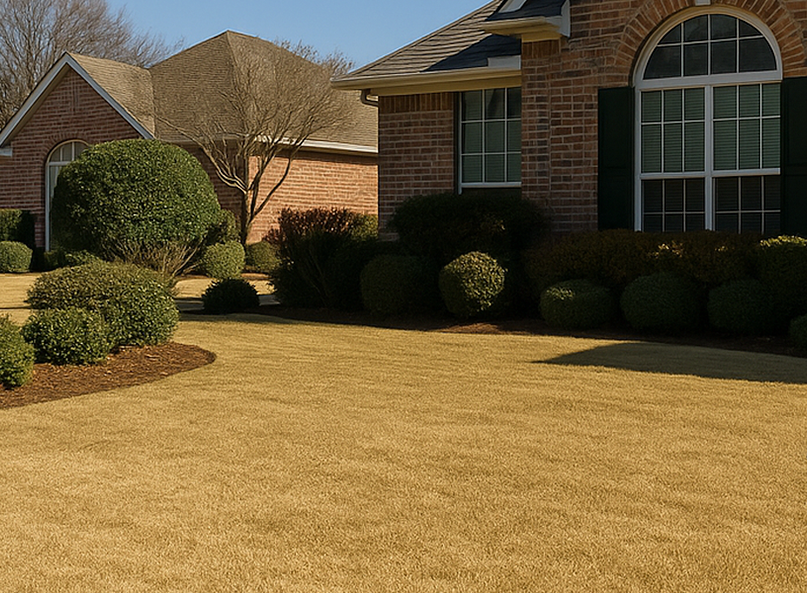
If you’re looking out at a brown lawn in Plano in December and wondering if it’s dead, you’re not alone.
Every winter, we talk to homeowners in Plano, Richardson, Frisco, North Dallas, and McKinney who assume lawn season is “over” until March. Sprinklers get turned off. Leaves pile up. Dogs and kids run wild over frosty grass. Then spring arrives… and some lawns wake up thick and green while others struggle with bare spots, weeds, and lingering damage.
The difference usually isn’t what you did in April.
It’s what you did or didn’t do in December, January, and February.
This guide is your comprehensive Village Green playbook for winter lawn do’s and don’ts in our part of North Texas—hyper-local to the clay soils, weather swings, and city rules in:
- Plano (where we’re based and spend most of our days)
- Richardson
- Frisco
- McKinney
- North Dallas
You’ll also see references to our Winter Watering Guide and our step-by-step video:
“How to Program Your Sprinkler System Controller for Proper Winter Watering in North Texas”(embedded in this article).
Use this as your “one winter lawn resource” you can bookmark, share, and refer back to every year.
1. What Your North Texas Lawn Is Really Doing in Winter
Most lawns in Plano, Richardson, Frisco, North Dallas, and McKinney are warm-season grasses like Bermuda, St. Augustine, and Zoysia. When soil and air temperatures drop in late fall, they go dormant—blades turn brown and stop growing, but the root system under the soil is still very much alive.
A few key realities about North Texas winters:
- Our winters are mostly mild with sudden hard freezes (think 70° on Tuesday, ice on Thursday).
- Dormant grass isn’t actively growing, but roots still need moisture to stay healthy and insulated.
- Our heavy clay soils shrink and crack when they dry out, which stresses roots and can worsen freeze damage.
So winter lawn care in North Texas is not about making the lawn greener right now. It’s about:
- Protecting the root system
- Preventing winter weeds
- Avoiding stress and physical damage
- Setting your lawn up to wake up stronger in spring
That’s why the first (and biggest) set of winter do’s and don’ts for Plano and surrounding cities is all about watering.
2. Winter Watering: The #1 Do (and the #1 Don’t)
DO: Keep watering in winter—just adjust for the season
One of the most damaging myths in our service area is:
“It’s winter. The grass is brown. I can turn my sprinkler system off.”
For North Texas lawns, that’s a fast track to a weak, stressed yard in spring. Even though your lawn and plants are dormant, your soil still needs consistent moisture.
That’s why our Winter 2025 Watering Guide (and Ken’s video) recommends:
Village Green’s baseline winter watering schedule (2025)
For most Plano, Richardson, McKinney, and Frisco lawns:
- Turf zones with standard spray heads (full sun)
- Water one day per week
- Aim for about 10 minutes total per zone
- Best practice: use cycle-and-soak
- Example: 3 cycles of ~4 minutes spread out early in the morning
- Shady turf areas
- Start with half as much water as your sunny zones
- Adjust based on how your soil feels (slightly moist, never muddy)
- Rotary head zones (the sprinklers that slowly rotate and throw long streams)
- Double the runtime of standard spray zones to put down the same amount of water (e.g., ~20 minutes total instead of 10).
- Drip irrigation in beds
- Run daily or near-daily, around 1–2 minutes per day in winter
- Watch the beds—drip lines can vary, so adjust if things look too dry or too soggy.
If your controller has a seasonal adjustment feature, you can also:
- Copy your summer schedule, then
- Set the seasonal adjustment to ~20% for winter watering.
That’s the equivalent of “shrinking” your summer watering down to a gentle winter version without reprogramming every zone.
And if all of that sounds overwhelming, this is exactly what our embedded video walks you through—step-by-step on a real controller.
DON’T: Turn your sprinklers fully off from November to March
Unless your city specifically requires it, shutting your system off all winter is one of the most common mistakes we see.
When you leave North Texas clay soils bone-dry for months:
- Roots lose moisture and resilience
- The soil contracts, pulls away from foundations and hardscape, and can even damage tree roots
- Your lawn is more vulnerable to freeze damage and slower to recover in spring
We can usually spot “winter-off” lawns by April: they’re thinner, patchier, and often have more weeds than the house next door that followed a light winter schedule.
The bottom line: Dormant isn’t dead. Your sprinkler system still has a job in winter—just a lighter one.
3. City-Specific Note: Frisco’s Winter Watering Ban
If you’re in Frisco, your winter watering realities are different.
As of the current guidance, Frisco has a winter watering ban starting November 1st and running through March 31, with strict limits on typical irrigation. Village Green supports homeowners following those rules first.
Frisco’s restrictions matter more than any generic advice on the internet—including ours.
Village Green’s position for Frisco lawns:
- Always follow city restrictions first.
- Respect the winter watering ban, except where the city allows specific exceptions, such as:
- Watering after a pre-emergent treatment, when instructions require light watering to move the product into the soil
- Watering a day before an extreme cold event to help protect root systems
We mention these exceptions in our Winter Watering Guide because:
- Moist soil holds heat better than dry soil and can help insulate roots against extreme cold.
If you’re in Frisco and unsure how to reconcile city rules with your lawn’s needs, ask us. We work in Frisco regularly and can help you plan within the regulations.
4. Timing Matters: When (and When Not) to Water in Winter
DO: Water in the early morning
Year-round, the best time to water in North Texas is generally early in the morning:
- Cooler temps = less evaporation especially in warmer months
- Water has time to soak into the soil
- Grass blades dry out during the day, which reduces disease risk
DON’T: Water while temperatures are at or below freezing
This is where some online advice gets confusing. You may see:
- “Water before a freeze to protect roots”
- “Avoid watering before a freeze to prevent damage”
Both can be true—depending on timing.
Here’s Village Green’s nuance for Plano-area lawns:
- DO water the day before a hard freeze
This gives the soil time to absorb the water and hold heat around the roots. - DON’T run your sprinklers while temperatures are at or below freezing—or within a few hours of freezing.
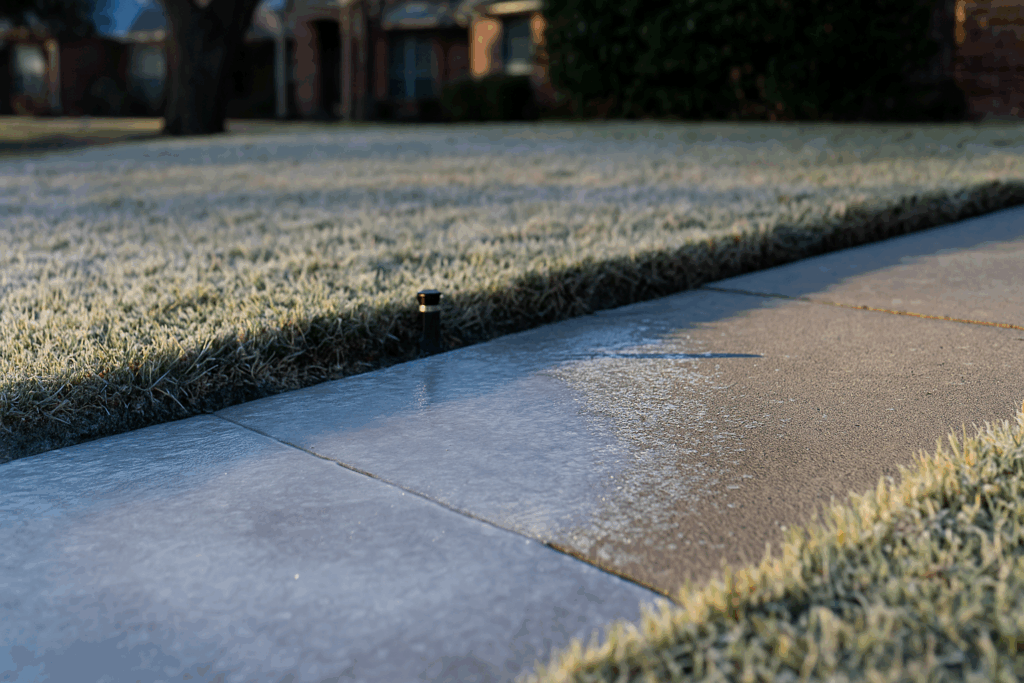
That’s when you risk:- Ice on sidewalks and driveways
- Frozen sprinkler heads and valves
- Potential turf damage from ice forming on blades and soil surface
Think of it like this:
“Give the soil a good drink and time to absorb it before the cold arrives. Don’t spray water into freezing air.”
5. Beyond Watering: Winter Lawn DO’s for Plano, Richardson, McKinney & Frisco
DO #1: Keep leaves and debris off the lawn
A thin layer of fallen leaves is fine—and can even be mulched. But piles of wet leaves sitting for weeks:
- Smother your grass
- Trap moisture against the soil
- Create a cozy environment for turf diseases and pests
In established neighborhoods of Plano and Richardson, where mature trees drop a lot of leaves, we see this all the time. If one side of the yard stays covered all winter, that side is almost always thinner and weaker in spring.
Practical approach:
- Blow, rake, or mulch mow leaves regularly
- Don’t let wet, matted piles sit on the lawn for weeks
- For shady, heavily treed yards in Richardson and older Plano neighborhoods, it’s extra important
DO #2: Mow occasionally—but gently
Most warm-season lawns won’t need much mowing in winter. But during milder stretches, your lawn (or mixed cool-season patches) may grow a bit.
When that happens:
- Keep your mower set higher than summer levels
- Mow occasionally to:
- Keep things tidy
- Maintain a consistent height
- Prevent tall, thin blades that flop over and mat down
Avoid the temptation to “scalp” or cut too low. Scalping exposes more of the soil surface, increases stress, and can worsen weed problems later.
DO #3: Stay ahead of winter weeds
Even when your warm-season grass is dormant, winter weeds are wide awake.
Common culprits in our area include henbit and other cool-season weeds that love thin or stressed turf.
Your best defenses:
- Good fall and late-winter pre-emergent applications to prevent many weeds from germinating in the first place
- Spot treatments for any weeds that do break through
- Healthy mowing and watering habits, which help desirable turf outcompete intruders
If you’re on a Village Green lawn health plan, pre-emergent for winter and early spring weeds is already baked into your schedule. If you DIY, just remember: timing matters. Pre-emergents need to go down before certain weeds germinate—and they usually need light watering to be effective, which is one of the exceptions we noted for Frisco’s winter watering rules.

DO #4: Protect sensitive plants and your sprinkler system before hard freezes
While your lawn is fairly tough, some plants and your sprinkler system are more vulnerable.
Best practices we recommend (and use in our own yards):
- Water the lawn and beds a day before the polar plunge (within city rules) so the soil is hydrated and better insulated.
- Use frost cloths or boxes on tender plants when deep freezes are forecast (especially in exposed Frisco and McKinney neighborhoods prone to wind).
- Follow standard freeze protection steps for your sprinkler system:
- Insulate exposed backflow preventers and vacuum breakers
- Turn off and drain manual valves if recommended for your setup
- Consider temporarily turning the controller off only during the extreme event—then resume your winter schedule once temps normalize again
Our goal is always the same: protect the system and plants from extremes without abandoning consistent winter care altogether.
DO #5: Pay special attention to high-traffic areas
Winter is when many families in Plano, Richardson, and Frisco are home more, hosting holidays, sending the kids and dogs into the yard, or parking the car just a little farther onto the lawn.
The problem: frozen or very cold grass blades are brittle. When you walk or drive over them, they can break and leave visible tracks in spring.
Helpful habits:
- Try to avoid walking on a frosty lawn early in the morning
- Don’t park vehicles on the turf, especially when it’s cold or wet
- If there are “shortcut paths” where everyone walks, consider stepping stones or a simple path upgrade over time
6. Winter Lawn DON’Ts: Common Mistakes to Avoid
We’ve touched on some of these already, but it’s worth calling them out clearly.
DON’T #1: Turn the system off all winter (except where city rules require it)
We’re repeating this on purpose. The number of lawns in Plano and Richardson that suffer needlessly in spring because of this one choice is staggering.
Dry clay soil + dormant grass + sudden deep freezes =
a lawn that takes much longer to bounce back.
If you remember nothing else from this article, remember this:
For most North Texas lawns, winter = 1 watering day per week.
(Again, with Frisco’s winter watering ban being the big exception where you must follow city rules first.)
DON’T #2: Apply heavy, high-nitrogen fertilizer in winter
In North Texas, warm-season lawns generally do not need nitrogen-heavy fertilizer in mid-winter.
Applying high nitrogen when the grass should be resting:
- Encourages growth at the wrong time
- Can make turf more vulnerable to freeze damage
- Often ends up feeding weeds instead of your dormant lawn
If you’re on a professional program (like Village Green’s), we plan fertilizer and soil amendments around the lawn’s growth cycle. If you DIY, talk to a local expert before applying anything in winter.
DON’T #3: Ignore obvious sprinkler problems until spring
Winter is actually a great time to:
- Check for leaking heads or zones that never come on
- Tune coverage in dry corners where the lawn always thins out
- Test your controller settings and backup battery
If you wait until May, you’ll be trying to fix issues in the hottest, most stressful part of the growing season.
For many Plano and Richardson homeowners, a quick winter sprinkler checkup can do more for next spring’s lawn than almost anything else.
DON’T #4: Walk or play heavily on frozen turf
We mentioned this under “Do #5,” but it deserves its own don’t:
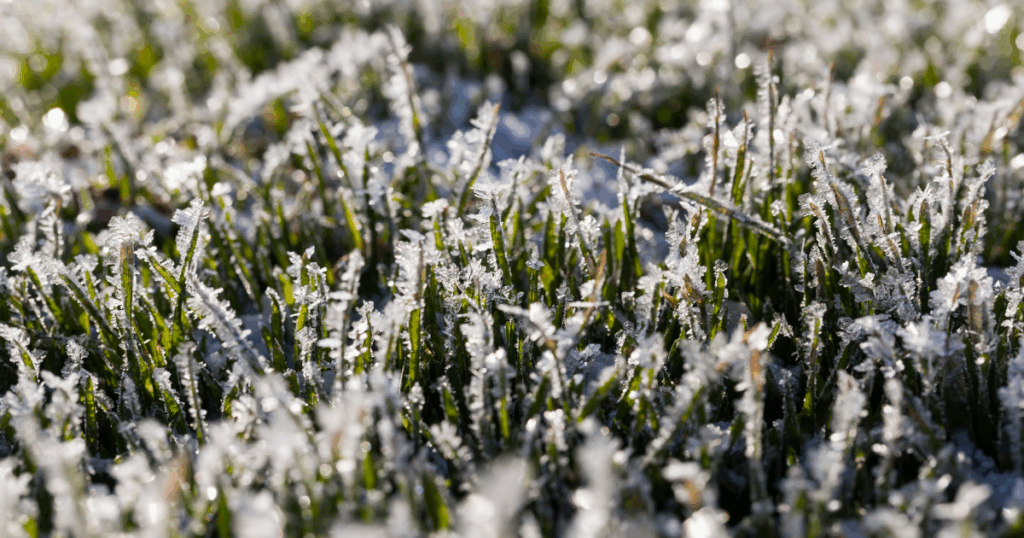
When there’s visible frost on the lawn, treat it like thin glass.
Walking on a frost-covered lawn can crush and break the grass blades, causing visible footprints and damage that shows up when everything greens back up.
If you look outside in McKinney and see a white sheen on the grass—send the dog out later.
7. Bringing It All Together: Your Winter Watering Guide + Video
Let’s recap the practical, Village Green version of winter lawn care in our service area.
Step 1: Set your winter watering schedule
Using our Winter Watering Guide, program your controller something like this (adjusting for your system and city rules):
For most Plano, Richardson, and McKinney lawns:
- 1 watering day per week
- Spray zones (turf, full sun):
- 3 cycles of ~4 minutes (or 2 x 5 minutes) early in the morning
- Equivalent to about 10 minutes total of runtime per week
- Shady turf zones:
- Start at half that runtime
- Rotary zones:
- Twice the total minutes of the spray zones
- Drip zones in beds:
- 1–2 minutes per day, most days of the week in winter
For Frisco lawns:
- Follow Frisco’s winter watering ban beginning November 1 through March 31
- Only water when allowed—for example, after pre-emergent applications and the day before extreme cold, within the city’s guidelines
Step 2: Use the video to program your controller with confidence
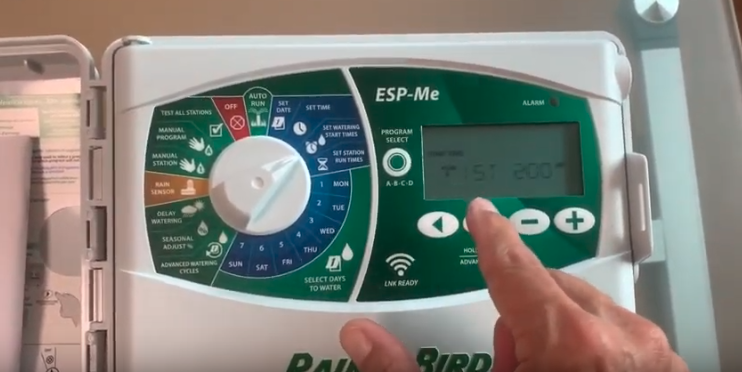
Right below this section, we recommend embedding:
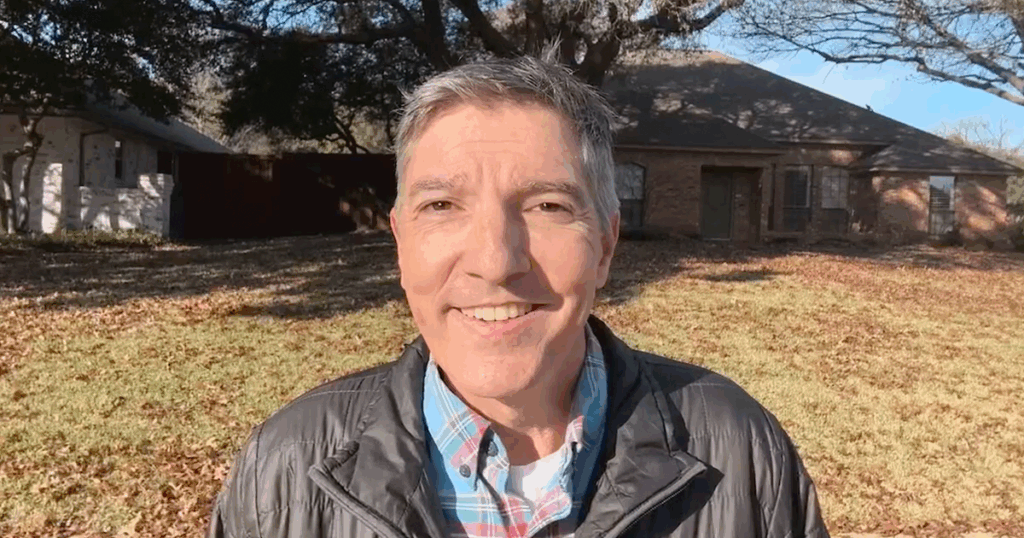
Video: “How to Program Your Sprinkler System Controller for Proper Winter Watering in North Texas”
In the video, Ken walks you through:
- Navigating a typical controller menu
- Setting up a winter program
- Using seasonal adjustment instead of rewriting every zone
- Avoiding common controller mistakes we see every week in Plano and Richardson
Even if your controller looks a little different, the principles are the same. Watch once, then keep the Winter Guide handy as your cheat sheet.
Step 3: Layer in the other winter do’s and don’ts
Once your watering is dialed in, winter lawn care gets much simpler:
- Every couple of weeks
- Walk the yard
- Look for debris piles, standing water, or stressed spots
- After big leaf drops (especially in older Plano/Richardson neighborhoods)
- Mulch or remove leaves so they don’t smother the turf
- Before and after extreme cold snaps
- Follow freeze protection steps for plants and sprinkler systems
- Check that your schedule is still correct afterward—controllers sometimes reset
- Throughout winter
- Avoid heavy traffic on frosty turf
- Don’t “help” the lawn with late nitrogen fertilizer
- Keep an eye out for winter weeds and address them early
8. Winter Lawn FAQ for Plano, Richardson, Frisco, North Dallas & McKinney
“My lawn is brown. How do I know it’s not dead?”
Dormant warm-season grass in winter will:
- Have brown blades, but
- Still feel firmly rooted if you tug gently
- Show new green growth first in sunny, warm spots when spring arrives
Truly dead turf usually pulls up easily, roots and all, and doesn’t respond once warm weather and proper watering return.
“Will winter watering increase my water bill a lot?”
If you’re going from 0 days to 1 day per week, yes, your bill will tick up a bit compared to “everything off.”
But compared to summer:
- Winter run times are much shorter
- You’re watering one day a week instead of several
- You’re protecting a significant investment in your lawn and landscape
Most customers tell us the difference is modest—and significantly cheaper than replacing dead sod, shrubs, and trees later.
“Does this advice change for Bermuda vs. St. Augustine vs. Zoysia?”
The watering principles are the same for all three in winter:
- One day per week in most of our service area
- Shade vs. sun adjustments
- Rotary heads vs. spray vs. drip adjustments
What does vary a bit:
- Shade tolerance
- St. Augustine handles shade better, but still hates soggy, constantly wet soil
- Bermuda needs more sun and tends to thin out more quickly in heavy shade
Regardless of grass type, clay soil + dry winters + extreme cold is a bad combo—so the winter watering recommendation stands.
“What about new sod or new landscaping installed in late fall?”
New sod and new plantings are a different category:
- They need a more frequent watering schedule at first
- Then you gradually ease them into the standard winter schedule
If you aren’t sure reach out and we can help you fine-tune a safe winter schedule for new plant material.
“I travel a lot in winter. Is it okay to leave things on autopilot?”
Yes—if you:
- Have the winter schedule set correctly
- Turn on rain/freeze sensors if available
- Double-check your controller battery (if it uses one) so you don’t lose programming during a power outage
Think of winter as the season when your sprinkler controller can quietly protect your lawn while you live your life—just don’t set it and forget it for years.
9. When to Ask Village Green for Help
If you’re in Plano, Richardson, Frisco, North Dallas, or McKinney and any of this feels overwhelming, that’s what we’re here for.
You might want to bring Village Green in if:
- Your lawn struggled last spring and you suspect winter habits were part of the problem
- You’re new to North Texas and not sure how to navigate local watering restrictions and clay soils
- You’ve had freeze damage to sprinklers or plants in past winters
- You’re tired of guessing at pre-emergent timing and weed control
We can:
- Audit your sprinkler system and controller settings
- Build a seasonal watering plan tailored to your yard
- Provide a lawn health program that handles fertilization, weed control, and seasonal needs for you
But whether you DIY or hire us, the Village Green message is the same:
Healthy North Texas lawns are made in winter.
A little smart watering, some basic protection, and a few good habits now will pay off with a thicker, greener, more resilient lawn when spring arrives in Plano and across North Texas.
Use this guide, download the Winter Watering Guide, and watch the sprinkler controller video embedded in this post. If questions pop up as you go, we’re always happy to answer them.