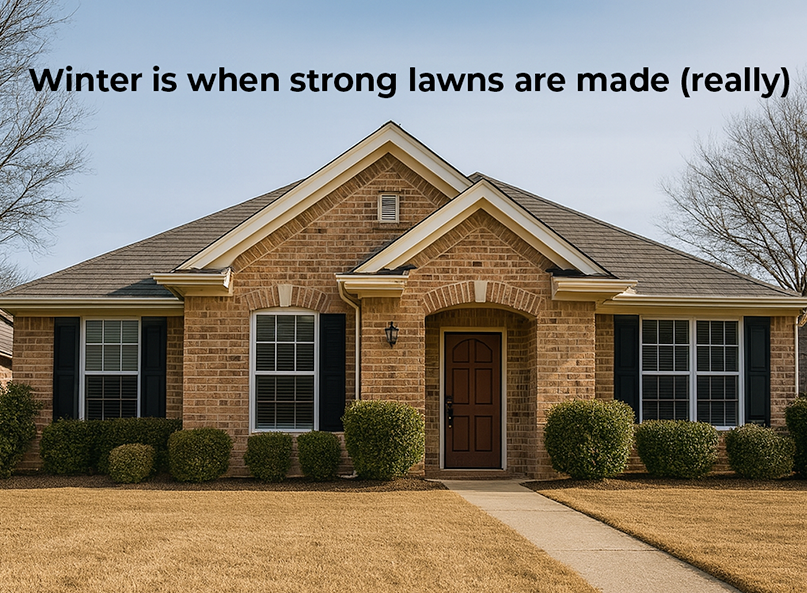
When most of North Texas is thinking about coats, holidays, and football, we’re thinking about grass roots.
That might sound strange, but after more than 45 years caring for lawns in Plano, Richardson, Garland, Frisco, McKinney, and the surrounding area, we’ve learned something important:
Strong North Texas lawns are made in winter, not spring.
In this article, we’ll walk through why winter matters so much, what’s really going on in your lawn when it looks “dead,” and how to handle watering and treatments so you set yourself up for a better spring and summer.
No sales pitch—just the same guidance we give our own customers when we’re standing in their front yard.
Dormant on top, busy underneath: what your lawn is really doing in winter
In December and January, warm-season grasses common in North Texas (like Bermuda and St. Augustine) turn brown and go dormant. The top growth essentially shuts down to protect the plant from cold weather.
But underground, something very different is happening.
- The root system is still alive and active, storing energy and preparing for the next growing season.
- Soil organisms are still breaking down organic matter and slowly cycling nutrients.
- Moisture levels in the soil are changing with each front, freeze, and warm spell.
Think of winter as your lawn’s “off-season training.” You may not see new green blades, but the plant is deciding how strong it will be when it wakes up in spring. Lawns that are protected and supported in winter usually green up faster, stay thicker, and tolerate stress better once the heat arrives.
Why winter treatments matter so much in North Texas
Because the grass isn’t growing much above the surface, many people assume nothing they do in winter matters. From our experience, that’s when a lot of lawn problems actually start.
Well-timed winter treatments can:
1. Support the root system
The goal this time of year is not lush, instant color—it’s root health. Balanced winter treatments focusing on weed prevention can help the grass store energy without forcing tender new growth that cold snaps might damage.
We’re paying attention to:
- Soil temperature, not just air temperature
- Your grass type and how it responds to late-season nutrients
- How much stress the lawn has already been under from heat, drought, or traffic
The specifics change from lawn to lawn, but the principle is the same: a stronger root system in winter usually equals a stronger lawn in summer.
2. Stop winter and early spring weeds before they take over
Many of the weeds that drive homeowners crazy in March and April actually start germinating in late fall and winter. If you’ve ever wondered why your lawn seems to “suddenly” be full of weeds in spring, this is why.
Winter pre-emergent and spot treatments can:
- Prevent a large percentage of cool-season weeds from ever popping up
- Give your desirable grass a cleaner start when it comes out of dormancy
- Reduce how hard your lawn has to “fight” in spring just to reclaim space
We like to explain it this way: preventing weeds in winter is like not inviting a hundred uninvited guests to your party. It’s much easier than trying to kick them all out later.
3. Help your lawn handle cold snaps and bounce back
North Texas winters can be strange—mild stretches followed by sudden hard freezes. Lawns that go into these swings stressed, under-watered, or overrun with weeds have a much harder time recovering.
By focusing on:
- Root health
- Moisture balance
- Weed prevention
we set the stage for lawns to bounce back more quickly once soil temperatures warm up.
Skipping winter care isn’t always a disaster, but it’s a bit like skipping all your workouts in January and then expecting to be in great shape by March. Technically possible… but not very likely.
Why you shouldn’t turn your sprinkler system completely off
One of the most common winter mistakes we see is shutting off the irrigation system from November to March.
We understand why people do it—no one wants to waste water, and brown grass feels like it doesn’t need any. But in North Texas clay soil, completely cutting off irrigation for months can backfire.
Here’s what we’ve learned after decades of watching local lawns through winter:
Our clay soil behaves differently
North Texas soil tends to be heavy and clay-based. That means:
- When it gets too dry, it can shrink, crack, and actually repel water at the surface.
- Roots in dry, compacted soil are more vulnerable to cold damage.
- When we finally do get rain or irrigation, water may run off instead of soaking in.
A small amount of consistent moisture keeps the soil structure more stable and hospitable for roots.
Moist soil insulates roots
During cold snaps, slightly moist soil holds heat better than bone-dry soil. We’re not trying to create a swamp—we’re trying to protect the living part of the plant below ground.
What winter watering should look like
You don’t need summer-level watering at all. But in most winters, we recommend:
- Turning your system down, not off
- Watering infrequently but consistently (for example, one cycle every 2–3 weeks if we’re not getting rain, adjusted for city watering rules)
- Using the cycle-and-soak method (shorter run times with breaks in between) so water can soak into clay soil rather than running off
If we get a good soaking rain, you can skip your next run. The idea is simply to keep the root zone from swinging between “bone dry” and “briefly flooded.”
How winter fits into a year-round lawn health plan
When we talk about “plans” at Village Green, we’re not talking about a one-size-fits-all program that ignores what’s happening in your yard. We’re talking about a calendar of care that responds to North Texas conditions and your specific lawn.
In a typical year, that looks something like:
- Winter (Dec–Feb): Root-focused care, weed prevention, monitoring soil moisture, and protecting against cold stress.
- Spring (Mar–May): Encouraging healthy green-up, continuing weed control, watching for disease or insect pressure.
- Summer (Jun–Aug): Supporting the lawn through heat and drought stress with the right nutrients and careful watering.
- Fall (Sep–Nov): Repairing summer stress, preparing roots for winter, and starting the weed-prevention clock again.
Winter is not an “extra” season—it’s the foundation for everything that follows.
Common winter lawn questions we hear in North Texas
To make this practical, here are a few questions homeowners regularly ask us, along with the general guidance we share on visits and in our Greentalk Blog.
“My lawn is all brown. How do I know if it’s dead or just dormant?”
Most warm-season lawns will turn uniformly tan or straw-colored in winter. That’s normal dormancy.
Things that may signal bigger issues:
- Very irregular patches that stayed thin or bare all summer
- Areas that feel mushy or spongy underfoot
- Spots where the grass pulls up easily, roots and all
In those cases, we look at shade, soil, watering, and possible pest or disease issues that may need to be addressed before spring.
“Is it worth fertilizing when the grass isn’t growing?”
Sometimes yes, sometimes no. It depends on:
- Timing
- Grass type
- Recent weather
- How the lawn has been treated the rest of the year
Well-timed, balanced nutrients can help the grass store energy in the roots. But too much, too late, or the wrong product can push growth at the wrong time. This is one area where a tailored plan and local experience really matter.
“What if I just wait until March or April to start thinking about my lawn?”
You certainly can wait—many people do. Just understand what you’re giving up:
- The chance to prevent a big flush of winter and early spring weeds
- The opportunity to protect your root system during cold, dry periods
- A head start on green-up and density once soil temperatures rise
In other words, your lawn may spend spring and early summer catching up instead of building on a strong foundation.
How Village Green approaches winter lawn care
Since 1980, we’ve walked thousands of lawns in North Texas, through good winters and not-so-good ones. That experience shapes how we approach winter care today.
When we look at a lawn in December or January, we’re asking:
- How did this lawn handle heat and drought last summer?
- What weed pressure did we see last spring, and what’s likely to come back?
- How is the soil holding moisture—too much, too little, or just right?
- Are there shaded, high-traffic, or sloped areas that need special attention?
From there, we build a plan that combines:
- Thoughtful winter treatments
- Realistic watering guidance based on your system and city rules
- Honest expectations about what can change in one season versus what takes a full year or more
Our goal is simple: help you understand what your lawn actually needs, and why, so you can make informed decisions—whether you DIY some things or have us do all the heavy lifting.
The bottom line: winter is your quiet advantage
It’s easy to ignore your lawn in winter. It isn’t demanding attention the way it does in summer. But that quiet season is your best opportunity to:
- Protect and strengthen the root system
- Cut next spring’s weed problem down to size
- Keep your soil and lawn from drying out and thinning
- Set yourself up for a lawn that’s easier to care for when the growing season returns
If you remember one thing, let it be this:
What you do for your lawn in winter is a big reason it either struggles—or looks great—next spring and summer.
If you’d like help figuring out what makes sense for your yard, we’re always happy to talk through it, answer questions, or take a look in person. Whether you’re in Plano, Richardson, Garland, Frisco, McKinney, or a nearby North Dallas neighborhood, Village Green is here as your local lawn health resource—winter, spring, summer, and fall.