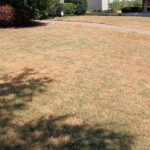
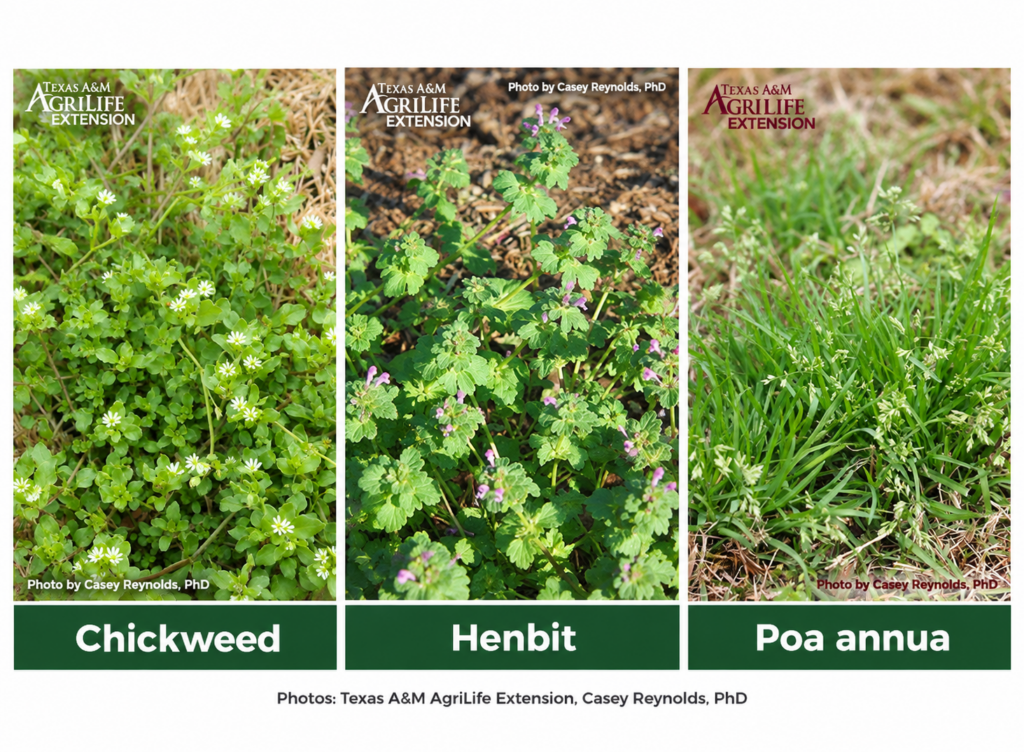
The clearest sign of a weed problem in a North Texas lawn shows up in February. Bermuda grass goes dormant and turns tan for the winter, and anything green growing in it stands out. Clumps of rescuegrass. Mats of chickweed. Henbit with its small purple flowers. Homeowners notice them in late winter and assume the problem started then.
It didn’t. Those weeds sprouted months earlier, in the fall, and spent the winter building roots. By the time they’re easy to see, they’re established, and the most effective window to stop them has already closed.
Why winter weeds are a fall problem
Rescuegrass, chickweed, and henbit are winter annuals. Their seeds sit in the soil through the summer and sprout as the weather cools in early fall. They grow slowly through the winter, flower in late winter and early spring, and drop new seed before the heat returns. Then the cycle repeats.
That timing is why pre-emergent is a fall job. A pre-emergent doesn’t kill weeds you can see. It stops seeds from establishing roots after they sprout. If it’s down before the seeds germinate, most of those weeds never get started. If it goes down after, it does little for the weeds already growing.
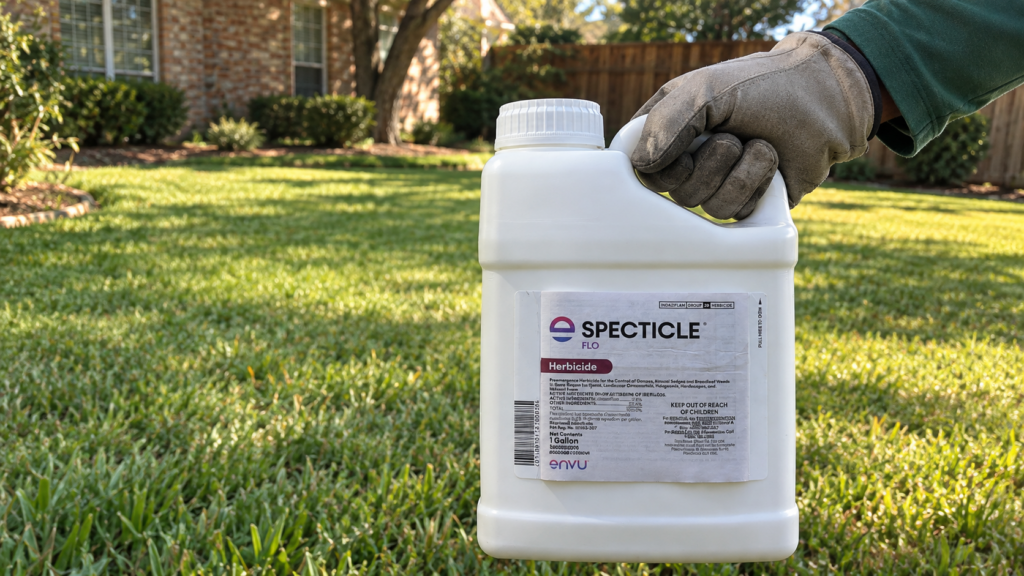
Why we pay more for Specticle
Most pre-emergents used in lawn programs cost a couple of hundred dollars a gallon. The one we use in the fall, Specticle, costs far more than that. We’ve looked at cheaper options, and we keep coming back to it for one reason: in our experience, it comes closer than anything else we’ve used to keeping winter weeds out of North Texas lawns through the winter and well into spring.
That’s a real cost decision, and we think homeowners should know about it. When lawn programs look similar on paper, the difference is often in the products and timing behind each visit. For Village Green lawn customers, Specticle goes down during the final two visits of the season.
What a fall pre-emergent can’t do
Being honest about the limits matters as much as the product. A few things every homeowner should know:
It won’t kill weeds already growing. If rescuegrass or henbit is already up, a pre-emergent won’t remove it. Those weeds need a different treatment.
It needs water to work. A pre-emergent has to be watered in by rain or irrigation to activate. A dry fall can leave it sitting on the surface.
It isn’t for every lawn. Specticle is labeled for established warm-season grasses like bermuda, zoysia, and St. Augustine. It is not for fescue or ryegrass, and it doesn’t mix with fall overseeding, because a product that stops weed seeds will stop grass seed too. That’s why it matters to work with a lawn health company that understands different grass types, understands the products it applies, and knows your specific lawn. Fall weed prevention isn’t one-size-fits-all.
No pre-emergent is perfect. Bare spots, thin turf, and soil disturbed after application can let weeds through. A thick, healthy lawn is the long-term defense; the pre-emergent gives it a head start.
How we keep watch through the winter
Applying the product is one part of the job. Our technicians document every visit with photos, and when they see something that needs attention, like weeds breaking through along a bed edge or a thin area where turf is struggling, they flag it and we follow up. That way you hear about problems from us before you notice them yourself.
If you’re doing it yourself
If you manage your own lawn, the biggest factor is timing. Get a pre-emergent down in late summer to early fall, before winter weeds sprout, and water it in. Read the label for your grass type, and skip it on any area you plan to overseed. If you already see weeds, you’ve missed the pre-emergent window for this season, and it’s time to plan for next fall.
The payoff
A clean spring lawn starts months earlier than most people think. Enjoy the cooler weather. The work that decides what your lawn looks like in March happens now.
For watering through the fall, including how to water in treatments, see our Fall Watering Guide: https://qrco.de/bh1W9L
Watch Ken explain it:
Questions about fall weed prevention for your lawn in Plano, Richardson, McKinney, Frisco, Garland, Sachse, Allen, or North Dallas? Call or text us at 972-495-6990. A real person on our team will get back to you. Every program comes with no contracts, per-visit photo documentation, and our Worry-Free Guarantee.
About the author
Ken Hyatt is the owner and founder of Village Green Lawn and Pest. He has more than 45 years in the lawn care business, and Village Green has been locally owned and serving North Texas homeowners since 1980.