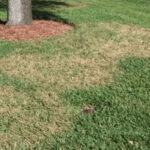
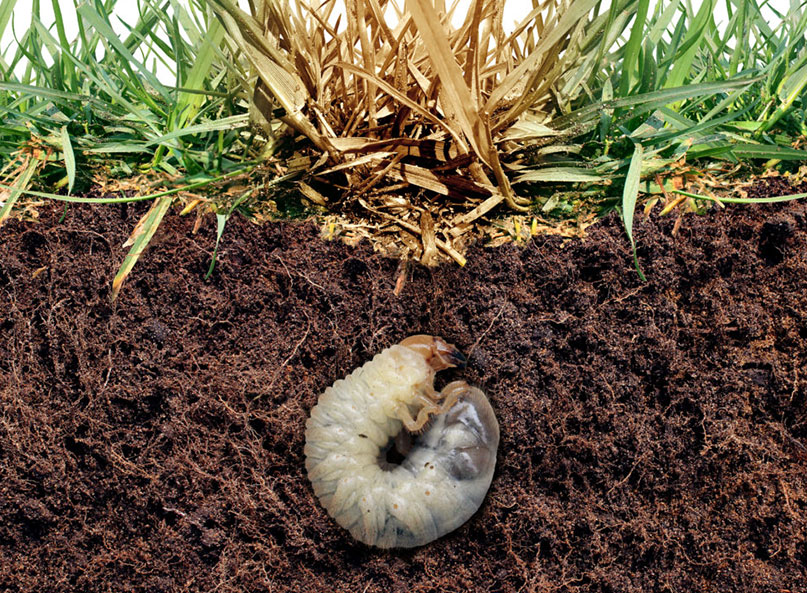
Every spring and early summer, homeowners across Plano, Richardson, and McKinney start finding white, C-shaped larvae in their soil — and the calls start coming in. “Are these grubs? Are they killing my lawn?”
The honest answer: probably not. At least not yet, and possibly not ever.
That’s not something a lot of lawn care companies will tell you, because grub treatments are a line-item upsell. But our job is to give you accurate information so you can make a good decision for your lawn — not an anxious one.
Grubs are always in your lawn. That’s normal.
Grub worms — the larval stage of beetles like June bugs and masked chafers — are a permanent fixture in North Texas soil. If you dug up a square foot of your lawn right now, you’d likely find some. That doesn’t mean your lawn is infested. It means you have a lawn in Texas.
The presence of grubs is not, by itself, a problem.
When do grubs actually cause damage?
Grubs feed on grass root systems — but only during a specific window: July through August, when the newly hatched larvae are small, near the surface, and actively eating.
If you’re finding grubs in April, May, or early June, those are mature larvae from last season. They’re not feeding on your roots at this stage. They’re just there.
The second important threshold is population density. Grubs only cause visible turf damage when their numbers spike unusually high — typically well above what’s considered a normal background population. Most lawns, even with grubs present, never reach that threshold.
So what is actually tearing up your lawn?
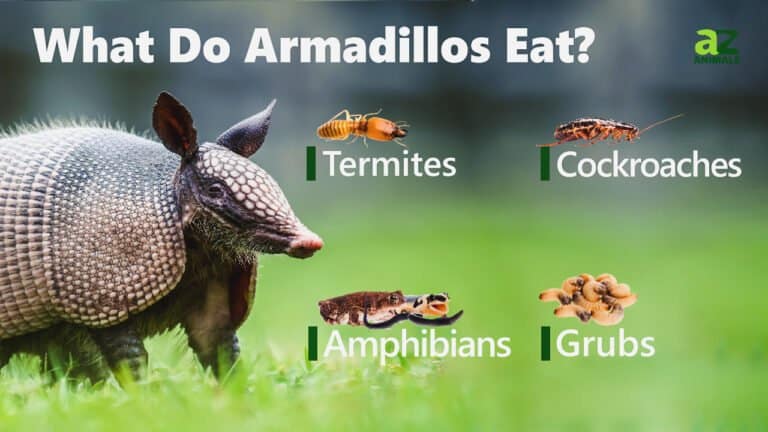
This is where the real answer surprises most homeowners: the most common grub-related lawn damage in North Texas isn’t from the grubs themselves. It’s from armadillos (and occasionally birds and raccoons) digging for them.
Armadillos are relentless. They’ll excavate large irregular patches overnight, rooting through turf and landscape beds in search of grubs. If you’re seeing torn-up areas, especially near beds or along edges, that’s likely the culprit — not root feeding.
What does a grub treatment actually do?
Village Green applies a preventative product called imidicloprid in late spring — typically May through early July. This isn’t a curative treatment that kills grubs already in your lawn. It’s a preventative that disrupts the feeding cycle before the damaging summer window begins.
Applied at the right time, it’s highly effective. Applied too early or too late, it’s much less useful. Timing matters.

Should you add a grub treatment?
Here’s the framework we use with customers:
- If you’ve had documented grub damage in prior seasons — meaning turf that pulled up like a carpet with severed roots — a preventative makes sense.
- If you’ve had significant armadillo activity, it indicates a grub population worth managing.
- If this is your first time finding grubs with no prior damage, a wait-and-monitor approach is often the right call.
We won’t push a treatment you don’t need. But if the conditions warrant it, we’ll tell you clearly and apply it at the right time.
The bottom line
Finding grubs in your lawn is not an emergency. It’s information. The questions that matter are: how many, when did you find them, and what else are you seeing?
If you have questions about your specific lawn, call us at 972-495-6990. We’ll give you a straight answer.
Village Green has served Plano, Richardson, McKinney, Frisco, Garland, and Sachse homeowners since 1980. No contracts. 90-Day Worry-Free Guarantee.