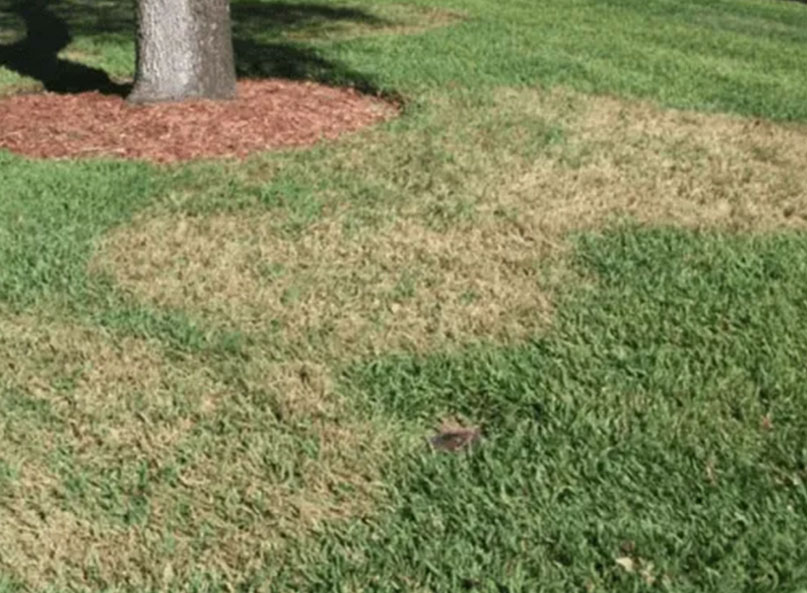
You walk outside one morning and something’s wrong. There are brown circular patches in your St. Augustine lawn — some with a darker ring around the edge, some covering several square feet. It happened fast. And it looks bad.
Before you assume the worst, here’s what you’re almost certainly dealing with: brown patch. Also called large patch, it’s the most common lawn disease we see in North Texas St. Augustine lawns, and after 45 years in this business, we’ve seen it more times than we can count.
Here’s what you actually need to know.
What Brown Patch Looks Like
The name is pretty accurate. You’ll see circular brown patches — often with a distinct ring or darker border around the outer edge. The affected areas can range from a few inches to several feet across, and in bad outbreaks, multiple patches can merge.
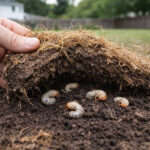
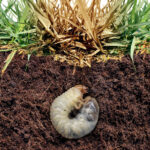
This is different from drought stress or grub damage, which tend to produce irregular patterns. Brown patch leaves those characteristic rings that stand out once you know what you’re looking at.
When It Shows Up — and Why
Brown patch thrives during moderate temperatures — the kind we see in North Texas springs and falls. Not the blazing heat of a July afternoon, and not a cold December night. It’s the in-between window, when moisture combines with mild air temps, that creates the right conditions for the fungus to spread.
Several things accelerate it:
- Overwatering or watering at night, which keeps leaf surfaces wet for extended periods
- Heavy rainfall following dry periods, particularly after a long hot summer when the lawn is already stressed
- High-nitrogen fertilizer applied at the wrong time — which is why we stop those applications in late summer
The Part Most People Get Wrong
Brown patch looks alarming. But here’s the honest truth: it’s primarily cosmetic damage. The fungus attacks the grass blades above the ground. The root system underneath? Usually fine.
This distinction matters enormously when you’re deciding how to respond. Treatment with fungicide will stop the spread — but it won’t make the existing brown spots disappear. Those stay through fall and winter. And that’s normal.
What happens next is the part homeowners don’t always expect: once the grass greens up again in late spring, St. Augustine typically recovers completely. The brown spots that looked permanent in October are often gone by May.
What Treatment Actually Does
Fungicide treatment stops active spread. If you’re in the middle of an outbreak and conditions are still favorable, treating early limits how far the damage goes before temperatures shift.
It does not reverse existing damage. The brown areas that are already affected will remain through dormancy. Setting this expectation up front avoids the frustration of thinking a treatment “didn’t work” when you still see brown spots in December.
Prevention Is Where You Win
Three things reduce your brown patch risk significantly:
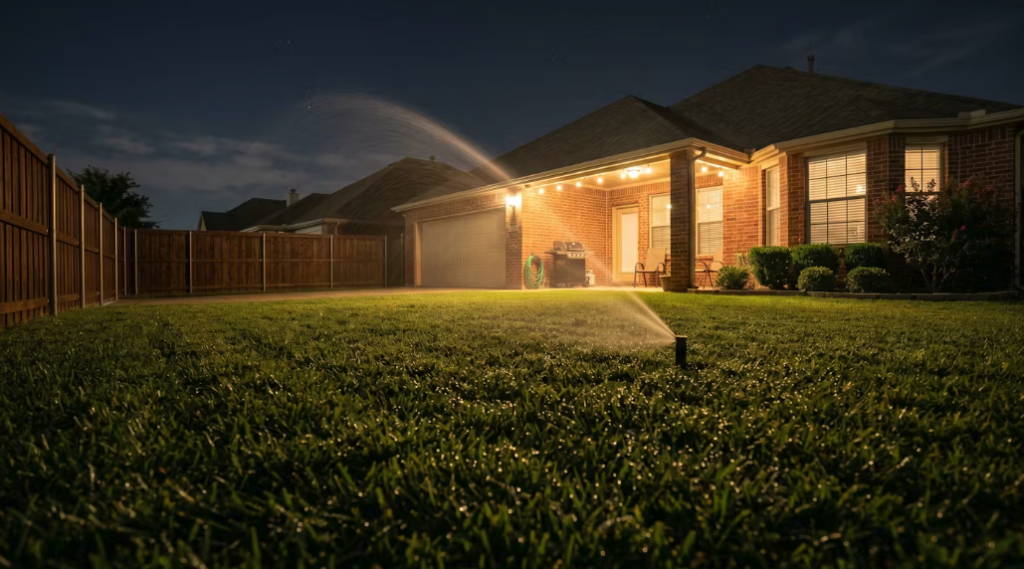
- Water in the morning, not at night. Nighttime watering leaves the lawn surface wet for hours — exactly the environment brown patch needs.
- Don’t over-irrigate. A stressed lawn is more vulnerable, but so is a waterlogged one. Find the balance for your soil and shade conditions.
- Watch nitrogen timing. High-nitrogen fertilizer in late summer pushes lush, vulnerable growth right into brown patch season. A properly timed fertilization program adjusts for this.
If your lawn has had brown patch before, it’s worth factoring prevention into your annual service program. Recurring outbreaks in the same areas are a signal that conditions in that part of your yard — shade, drainage, irrigation patterns — may be consistently favorable for the fungus.
Questions About Your Lawn?
Village Green has been caring for North Texas lawns since 1980. We serve homeowners in Plano, Richardson, McKinney, Frisco, Garland, Sachse, Allen, Mesquite, Forney, and surrounding DFW communities.
Call or text us at 972-495-6990, or visit villagegreen-inc.com to learn more about our lawn health programs.
No contracts. 90-Day Worry-Free Guarantee. And if you have a question between visits, you can reach a real person locally — not a national call center.