
When you’ve just invested in new sod, the first two weeks are make-or-break. During those 14 days, you face a common dilemma: when is it safe to mow? And before that — should you fertilize right away, or wait? The answers determine whether your new lawn establishes strong roots or struggles through the first season.
The honest answer is that most North Texas homeowners fertilize or mow too early, and about 40% of newly sodded lawns show root-development delays in week one because of it. We see this pattern across Plano, Richardson, McKinney, Frisco, and Garland every spring and fall when sod installation peaks. Understanding the why behind the timeline helps you avoid that trap.
The Fertilizer Question: Not All Products Are Created Equal
When your sod installer says “don’t fertilize,” they’re usually talking about one specific thing — high-nitrogen fertilizers. That warning makes sense. A 28-3-10 fertilizer (the standard lawn maintenance blend) will burn new sod because the root system can’t yet support that much top growth. You push the grass foliage to grow faster than the roots can handle, and the grass dies back.
But here’s what most installers don’t mention: new sod actually benefits from the right fertilizer. What you want is a root-stimulating product with an analysis like 18-46-10. The middle number — phosphate — is the key. Phosphate drives root development, not leaf growth. By applying a root-focused fertilizer in those first two weeks, you’re investing in the foundation that supports everything else later.
Village Green uses this approach on every newly installed lawn we maintain in North Texas. It’s the difference between a lawn that anchors confidently and one that struggles to establish through the heat of summer. In our experience, homeowners who apply the 18-46-10 blend see visibly stronger, more resilient grass by week four than those who skip fertilizer altogether or wait until month two to apply it.
The Mowing Timeline: The Tug Test
Mowing too soon tears the young grass and damages the root connections to the soil. The question isn’t “how many days” — it’s “when is it rooted?” And there’s a simple, reliable test to know.
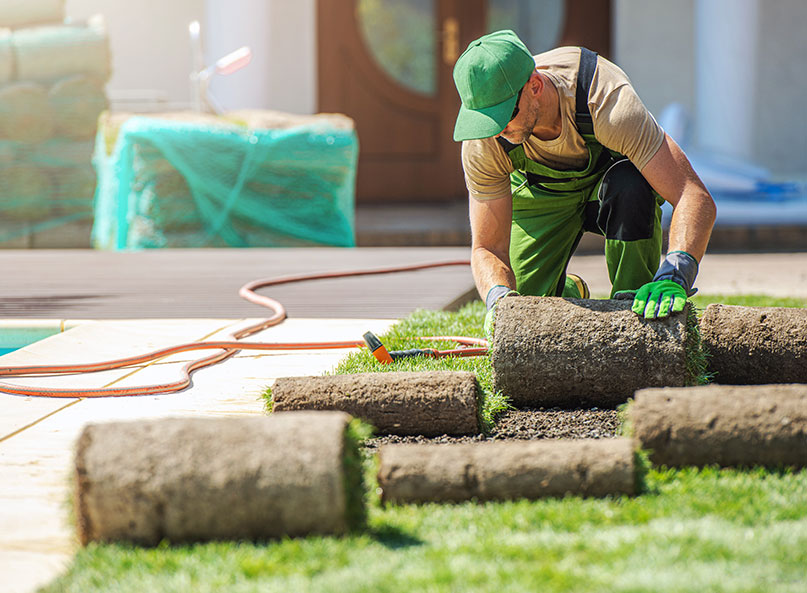
Tug up on a corner of the sod. If it pulls up easily, the roots haven’t anchored yet. Wait. Come back a few days later and try again. Once that corner resists your pull — when it won’t come up without real effort — you’re ready to mow. For most North Texas installations, this happens within one to two weeks, depending on soil temperature and moisture. In cooler months (November through February), it may take closer to three weeks because growth slows. In peak growing season (April through October), it’s often closer to 10 days.
The tug test is foolproof because it tells you exactly what you need to know: has the sod rooted, or hasn’t it? We recommend checking every three to four days rather than guessing. It takes 30 seconds and removes all uncertainty.
What Happens After Mowing Starts
Once your sod is anchored and you’ve mowed the first time, keep mowing at normal height for your grass type — typically 2.5 to 3.5 inches for bermuda or zoysia in North Texas. Don’t scalp it. The grass is still establishing, and full leaf blade supports continued root development.
Continue monitoring moisture carefully. Newly installed sod needs consistent water in those first few weeks, especially during hot weather. Most North Texas homeowners discover this the hard way when their new lawn browns out in July because they assumed “installed sod” means “established sod.” It doesn’t. Established sod can survive dry spells; new sod cannot. Budget for daily or every-other-day watering through the first month, then taper as roots deepen.
Why This Matters
Getting the first two weeks right doesn’t just help your new lawn survive — it determines how healthy and resilient it becomes. A lawn that anchors properly and establishes strong roots before summer stress hits will outperform a lawn that was mowed too early and never quite recovered. That early foundation work pays dividends for years.
This is what we monitor for when we maintain newly installed sod for North Texas homeowners. We catch the issues early because we know what to look for — and we’ve seen what works and what fails across different DFW soil types, microclimates, and seasonal windows.
Managing the Full New Sod Care Timeline
Mowing is one piece of the full New Sod Care process. The first 3–4 weeks also require careful watering to drive roots deep. Read our companion guide on New Sod watering schedules to dial in both timing and moisture.
Questions about your new sod installation? Call or text Village Green at 972-495-6990. We’re here to help you get it right from day one.
Ken Hyatt
Owner, Village Green Lawn and Pest
40+ years of hands-on lawn care and pest control experience in North Texas