
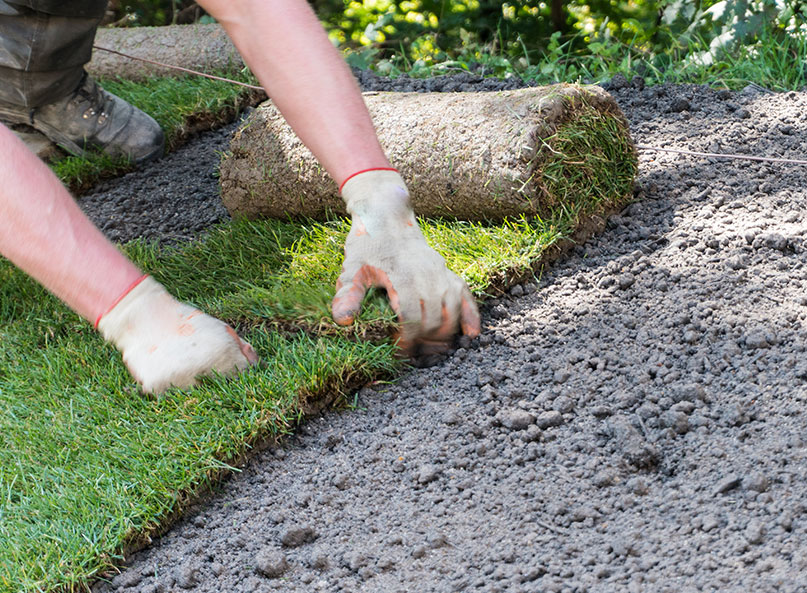
When you install new sod in North Texas, the watering question seems simple: how often do I turn on the sprinklers? The answer is deceptively complicated because your new sod has a critical limitation most homeowners don’t realize — it only has about one inch of soil beneath it, which means approximately one inch of roots. For the first three to four weeks, your entire job is to keep that shallow root system alive while gradually encouraging it to push deeper into your existing soil. Get this phase right, and your lawn establishes. Rush it or ignore it, and about 60% of installations struggle by week three.
The challenge is that North Texas weather doesn’t cooperate. Your temperature might swing from 60–70° one day to 80–90° the next. That kind of variability means the watering schedules that work in stable climates don’t work here. You need a North Texas–specific approach.
Week One: Heavy Watering, Every Day
Start by drenching your sod on day one. Not sprinkling — actually drenching. The goal is to make sure the soil underneath the sod is genuinely wet, not just the grass surface. This first heavy watering is critical because it settles the sod onto your existing soil and signals to the roots that water is available below.
Then, water daily for the entire first week. Most homeowners find 5 to 10 minutes per watering cycle is about right, depending on your sprinkler system and your soil type. If you’re in a heat wave and temperatures are consistently above 85°, you may need to water twice a day — once in early morning and once in late afternoon. The principle is simple: in that first week, the sod’s shallow root system can’t pull water from deeper soil, so you’re providing it at the surface.
Weeks Two Through Three: The Critical Reduction Phase
After the first week, you start backing off. Move from daily watering to every-other-day. Then, depending on what you see, reduce further. This is where most North Texas homeowners make a mistake. They assume “the grass looks fine, so I can skip another day.” They’re not watching what’s actually happening underground.
Here’s what to watch: if you’re watering St. Augustine sod (common in North Texas), the leaf blade will show stress before the grass actually dies. If the blade starts folding in half down the middle — a visible creasing — you’ve reduced watering too fast. That’s your signal to water more frequently. Adjust back up. The grass is telling you its roots haven’t anchored yet.
You may also notice brown patches scattered across the lawn. Don’t panic. This is usually normal and happens for two reasons: either a soil pocket in that area is draining faster than the rest of the lawn, or your sprinkler system isn’t hitting that spot quite right. The solution is hand-watering those specific patches rather than ramping up watering for the entire lawn. Grab a hose, spend two minutes on that brown patch, and move on. This targeted approach keeps you from overwatering the whole yard while nursing the weak spots.
Weeks Three Through Four: Approaching Normal
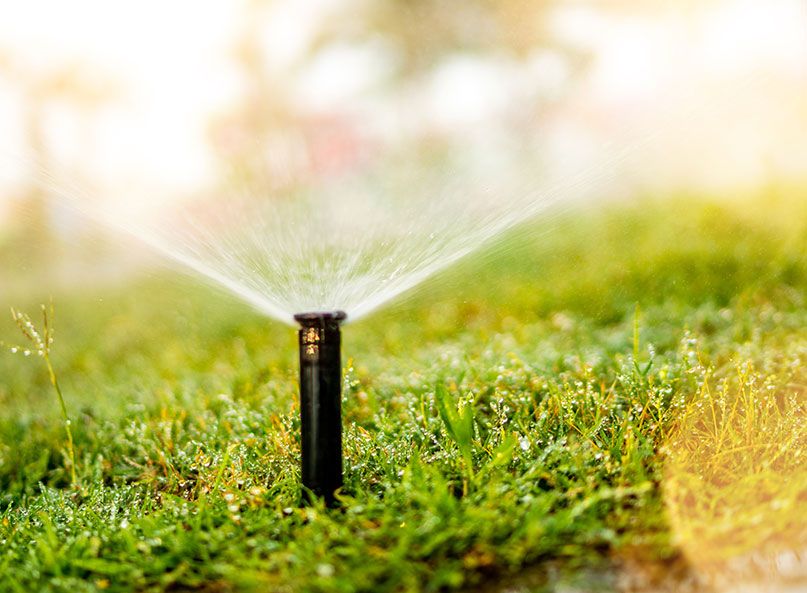
By week three, if you’ve been monitoring and adjusting, your roots have started to push deeper. The sod is beginning to establish. You’re moving toward a more normal watering schedule — typically every two to three days in most weather conditions, depending on heat and rainfall.
Your goal by week four is to get close to your established lawn watering program. For North Texas during non-drought periods, that’s typically 1 to 1.5 inches of water per week, either from rainfall or irrigation. The difference is that by week four, those roots are deep enough to access it.
The Biggest Mistake
Set it and forget it. New sod installation is not a “install and ignore” project. It requires active monitoring for three to four weeks. Walk the yard every couple of days. Look at the grass. Feel the soil if you need to. Watch for the stress signals. That’s what separates a new lawn that thrives from one that barely survives.
This is the process Village Green follows when we maintain newly installed sod for North Texas homeowners. We’re not just watering — we’re watching root development and adjusting based on weather, soil, and grass response.
ManaginManaging the Full New Sod Care Timeline
Watering in the first 3–4 weeks sets the foundation. Once your sod anchors and resists tugging, mowing becomes the next step. Read our companion guide on New Sod mowing timeline to understand the full sequence.
Need help dialing in your new sod watering? Call or text Village Green at 972-495-6990. We help North Texas homeowners get through those critical first four weeks.
Ken Hyatt
Owner, Village Green Lawn and Pest
40+ years of lawn care experience in North Texas