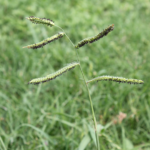
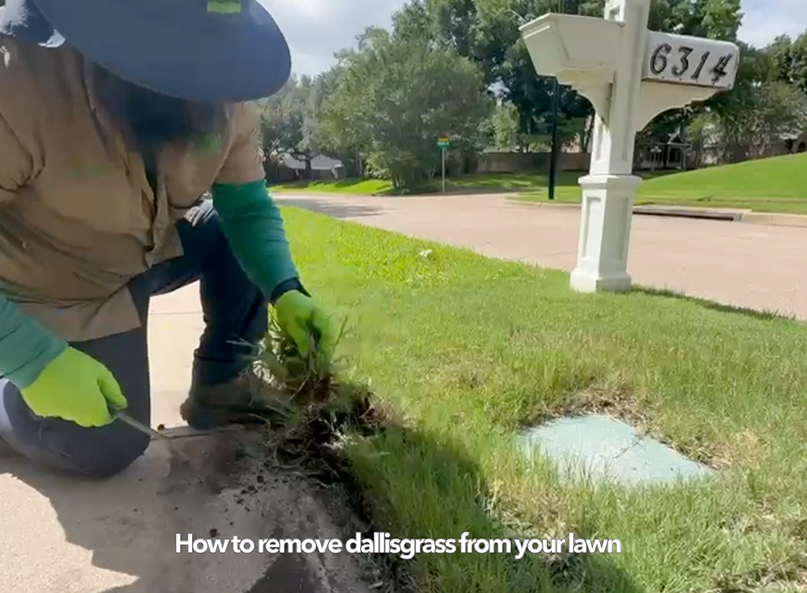
If you’ve spotted a coarse, clumping weed spreading through your Bermuda or St. Augustine lawn this summer, there’s a good chance it’s dallisgrass. And if you’ve been hoping a pre-emergent treatment would stop it — it won’t. Dallisgrass is a perennial. It comes back from the roots every year, regardless of what’s applied to the surface.
The good news: if you catch it early and remove it correctly, your lawn can recover without significant damage. The key word is correctly.
Why Dallisgrass Is Different from Most Weeds
Most common lawn weeds in North Texas — crabgrass, henbit, annual bluegrass — are annuals. They spread by seed, and pre-emergent herbicides applied at the right time of year can stop them before they germinate.
Dallisgrass doesn’t work that way. It’s a warm-season perennial that spreads through both seed and underground rhizomes. Pre-emergent treatments don’t touch the root system already in the ground. Every spring, it comes back up — and each season it’s left alone, it expands.
Left long enough, a small patch becomes a large clump. A large clump becomes several. Eventually it chokes out the Bermuda or St. Augustine around it and begins to dominate the lawn.
The Two Options — And When Each One Makes Sense
Once dallisgrass is established, there are only two legal treatment options:
Option 1: Glyphosate treatment (RoundUp or generic equivalent)
For large, established patches, treating with glyphosate is the most practical approach. It kills the dallisgrass — but it also kills the surrounding turf. The treated area will need time to fill back in from the edges, or you can re-sod to speed up recovery. This is the right call when the infestation is too large to dig out without significant disruption to the lawn.
Option 2: Hand removal
For smaller patches caught early, hand removal is the better option. Done correctly, it eliminates the plant without damaging the surrounding turf, and the good grass fills in more quickly. The trade-off is the labor involved — and the precision required to do it right.
How to Hand-Remove Dallisgrass Correctly
This is where most homeowners make the mistake that sends dallisgrass right back. Pulling from the surface or cutting it at the base doesn’t work. The root system runs deep, and any portion left in the ground will regenerate.
Village Green’s Senior Technician and Field Operations Manager Orlando Pacheco — 13 years with VG and one of the most experienced lawn technicians in North Texas — demonstrates the correct approach in the video below:
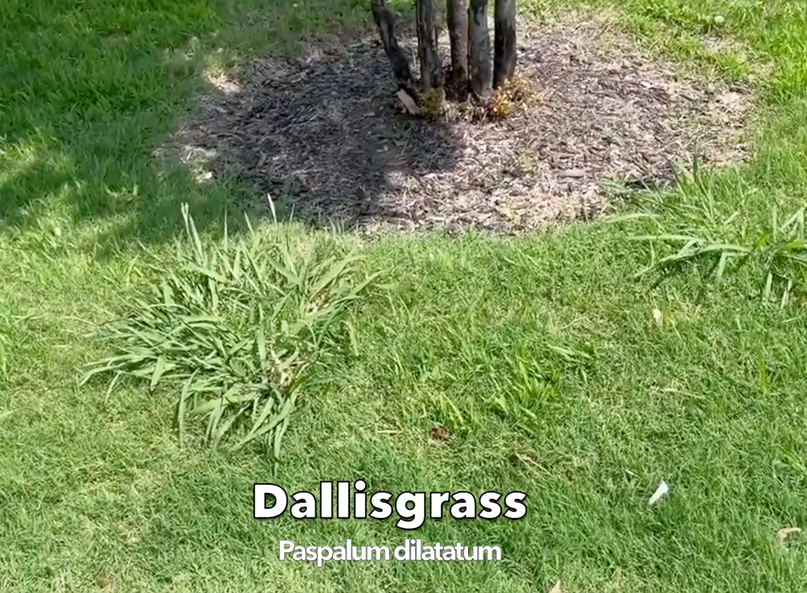
The key points Orlando demonstrates:
- Use a narrow digging tool, not a broad shovel — you want precision, not disruption
- Go deep — follow the root system down fully before lifting
- Remove the entire clump including as much of the root mass as possible
- Fill the void and allow the surrounding Bermuda to fill back in naturally
The goal is clean removal with minimal disturbance to the turf around it. A small void fills in. A large damaged area takes much longer to recover.
Catch It Early — Before One Patch Becomes Ten
The reason we document dallisgrass every time we see it during a Village Green visit is because size matters enormously when it comes to your options. A two-inch clump is a 10-minute removal. A two-foot spread is a RoundUp conversation and a recovery timeline.
If you’re seeing something in your lawn that doesn’t look like it belongs — coarser than the surrounding turf, clumping, growing faster than everything around it — call us. We’ll take a look, tell you what it is, and walk through your options clearly.
For the full story on why treatment options are so limited and what we found when we investigated a competitor’s claims about dallisgrass control, read the original Truth Series post (Learn More)
Village Green Lawn and Pest | Plano, TX | 972-495-6990 | villagegreen-inc.com
Locally owned since 1980. No contracts. 90-Day Worry-Free Guarantee.