Your St. Augustine lawn looks fine one week. By the next, a brown patch appears near the driveway. You check your sprinklers. They seem to be running. You water more. The patch keeps growing. Welcome to the most frustrating diagnosis in North Texas lawn care: chinch bug damage that looks exactly like drought stress.
The Problem With Looking Alike:
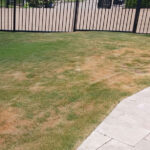
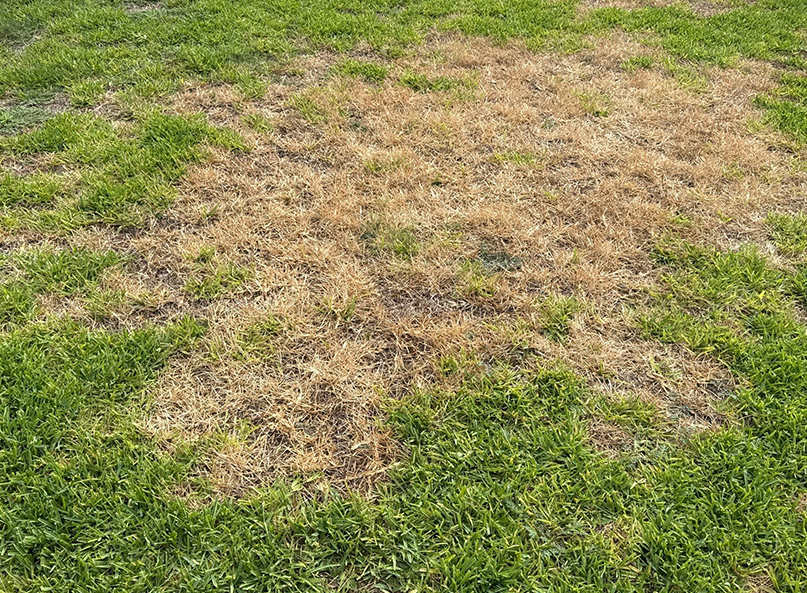
Chinch bugs damage St. Augustine grass by piercing the blade and sucking out sap, which turns the leaves yellow. When they feed along the outer edge of an expanding patch, the visual result is identical to what you’d see from under-watering: a dead brown center with a yellow ring around it.
Here’s the costly part: while you adjust your irrigation or call a technician about a watering problem, the chinch bugs keep feeding. They can destroy a quarter to a third of your yard in two to three weeks. By the time you realize it’s not a drought issue, significant damage is done.
Who Should Care About This:
Chinch bugs only attack St. Augustine. If you have Bermuda or Zoysia, you don’t need to worry about them. But if St. Augustine is your primary turf—which is common in Plano, Richardson, McKinney, and surrounding areas—chinch bugs are a real threat during hot, dry summers.
When They Show Up:
Chinch bugs are typically active in July and August. They don’t appear every year; Ken Hyatt has observed damaging outbreaks arriving in waves every few years. But when conditions align—heat, dry soil, and the transition from wet spring to hot summer—they can emerge earlier and cause serious damage.
Where They Start (And Why That Matters):
Chinch bugs typically start near concrete surfaces like driveways and sidewalks. Concrete radiates heat and creates dry soil, which they prefer. The damage expands outward from there, which is why many North Texas homeowners first notice it as an isolated patch near the home’s perimeter.
How to Confirm It’s Actually Chinch Bugs:
Start with these diagnostic steps:
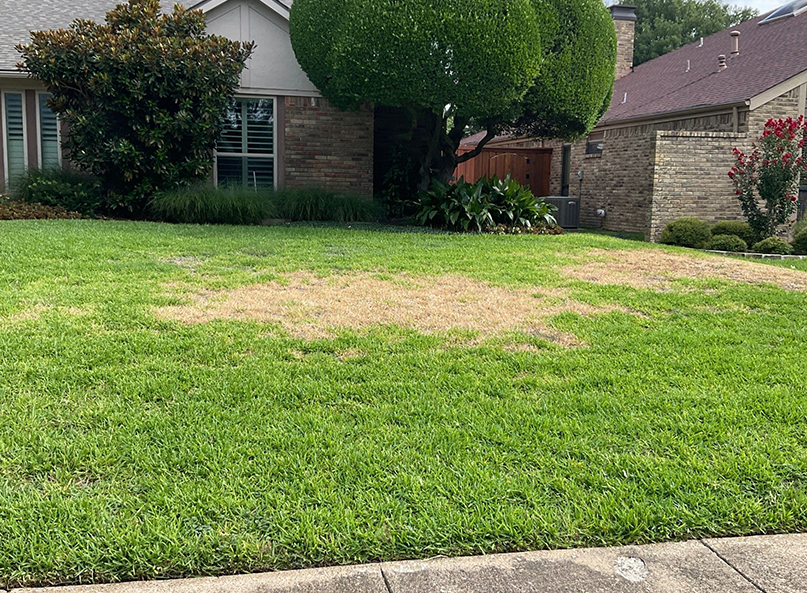
Check Your Sprinkler Coverage: Run the zone that includes the damaged area. Drought stress follows an irrigation pattern—an arc from a sprinkler head or a full zone outline. Chinch bug damage appears in irregular patches with no clear sprinkler pattern. If coverage looks good and the soil is damp, you’re probably not dealing with drought.
Inspect the Yellow Ring: Chinch bugs feed actively in the yellow transition zone between healthy and damaged turf. The brown center is older damage where they’ve already moved on. Look closely at the yellow area—that’s where active feeding is happening.
Try a Flotation Test: Shove a bottomless coffee can into the soil at the edge of the damage and fill it with water. If flea-like insects float to the top, you have chinch bugs. (It sounds simple, but it’s one of the most reliable field tests.)
Take Two Photos: One close-up of the yellow ring, one wide shot showing the patch in context. Even if you don’t see insects, these photos tell a professional whether it’s likely a watering issue, chinch bugs, or something else entirely. Download our instruction guide.
What Village Green Recommends:
Once confirmed, chinch bugs are easy to control. Bifenthrin is a proven, effective treatment. The challenge isn’t the treatment—it’s catching them fast enough to prevent widespread damage.
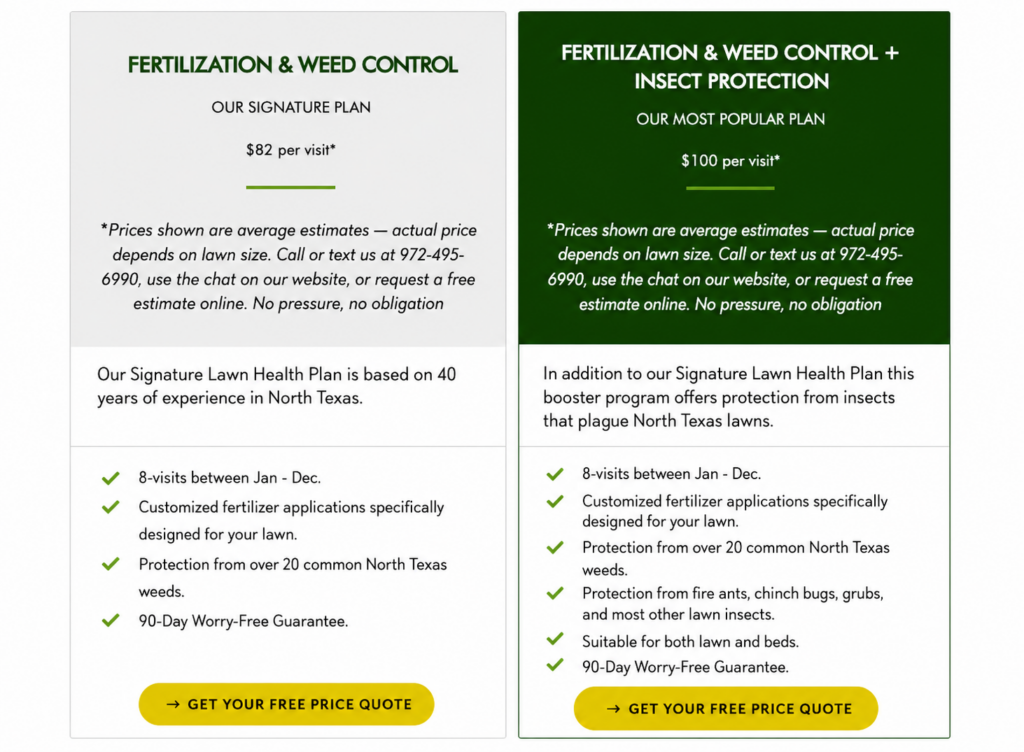
If you’re a Village Green Signature Plan customer and develop a chinch bug problem, we’ll treat it at no extra charge and discuss your options for ongoing protection afterward. Many customers upgrade to our Signature + Insect Protection plan, which applies bifenthrin monthly during peak insect season, reducing the risk of large-scale chinch bug damage before it starts.
Why This Matters:
Ken Hyatt created Village Green’s insect protection program after witnessing too many lawns destroyed by chinch bugs. Forty years in North Texas taught him that this insect causes more lawn damage than any other pest in our area. The difference between catching it early and watching it spread is often the difference between a minor treatment and a complete lawn renovation.
Don’t Guess—Diagnose:
If you see a spreading brown patch in St. Augustine during hot, dry weather, don’t assume it’s a watering problem. Call or text Village Green at 972-495-6990. We’ll help you diagnose with photos or an in-person inspection. No pressure, no surprise fees. Just honest expertise.
Author Bio: Ken Hyatt is the Founder and President of Village Green Lawn and Pest, a locally owned North Texas lawn care and pest control company serving Plano, Richardson, McKinney, Frisco, Garland, Sachse, and Allen since 1980. With over 40 years of field experience, Ken specializes in diagnosing difficult lawn problems and treating them before they become expensive.