You found droppings in the garage, along the back fence, or near the AC unit, and now you’re trying to figure out two things: what left them, and whether this is something you can handle on your own. Here’s how to tell, what rats are after, and what it realistically takes to get them under control in North Texas.
Ken Hyatt, owner and founder of Village Green, has spent more than 45 years in lawn and pest care here. In his experience, late fall into winter is when rat activity picks up around homes in Plano and the surrounding cities, as rats look for food, water, and shelter.
Rat or mouse: start with the droppings
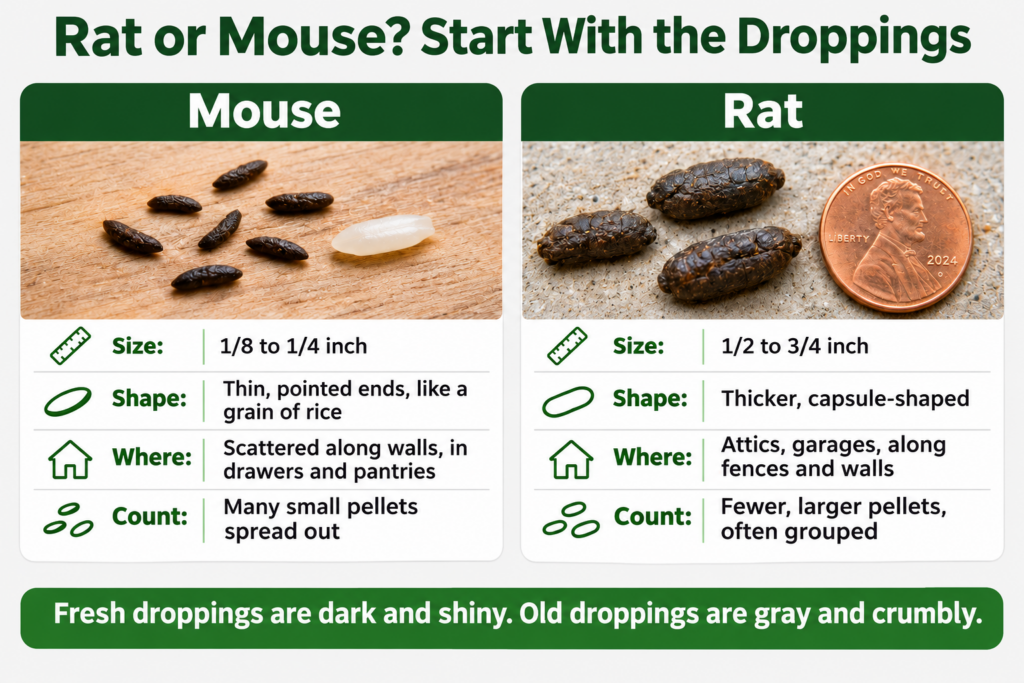
The size of the droppings is the quickest clue.
- Mouse droppings are about 1/8 to 1/4 inch long, roughly the size of a grain of rice, with pointed ends.
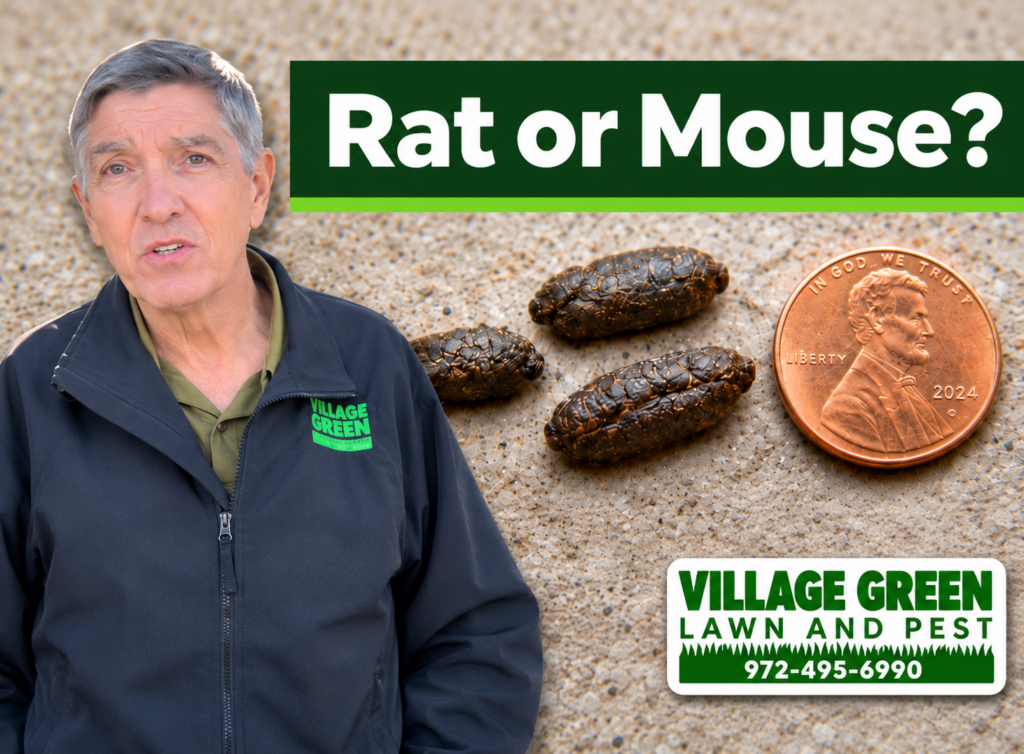
- Rat droppings are noticeably larger, about 1/2 to 3/4 inch, and thicker. Norway rat droppings tend to have blunt ends. Roof rat droppings are a little smaller and more pointed.
Fresh droppings are dark and shiny. Older droppings turn dull and gray. A young rat can leave smaller droppings, so if you’re unsure, a trained technician can usually tell from the other signs around them.
Why it matters which one you have
Mice are curious. They investigate new objects, so traps and bait usually work on them quickly.
Rats are the opposite. They’re wary of anything new in their territory and can avoid an unfamiliar object for days. That’s why rat control takes patience, and why a few traps set out over a weekend rarely solve the problem.
Should you clean up the droppings?
Not right away, and never with a broom or vacuum.
Ken’s field advice: if the droppings are in the garage or outside, don’t rush to clean them up while you’re working to control the rats. In his experience, the scent of droppings and urine tells rats an area is safe to travel and feed, which helps keep them coming back to where the bait is.
When it’s time to clean, or if droppings are inside your living space, do it safely. Sweeping or vacuuming dry droppings can put dust carrying disease, including hantavirus, into the air. Follow CDC guidance instead:
- Put on rubber or nitrile gloves.
- Soak the droppings with disinfectant or a mix of 1 part bleach to 9 parts water.
- Wait 5 minutes.
- Wipe them up with paper towels, bag them, and wash your hands after removing your gloves.
What draws rats to a home
Rats aren’t picky. Pet food, bird seed, and fallen fruit are common draws. They also chew wiring, including the wiring in your car’s engine compartment, which can turn into an expensive repair.
Water matters as much as food. AC units drip condensation, and Ken’s team often finds rat activity close to them, both outside and in the attic.
Why store-bought bait kits often fall short
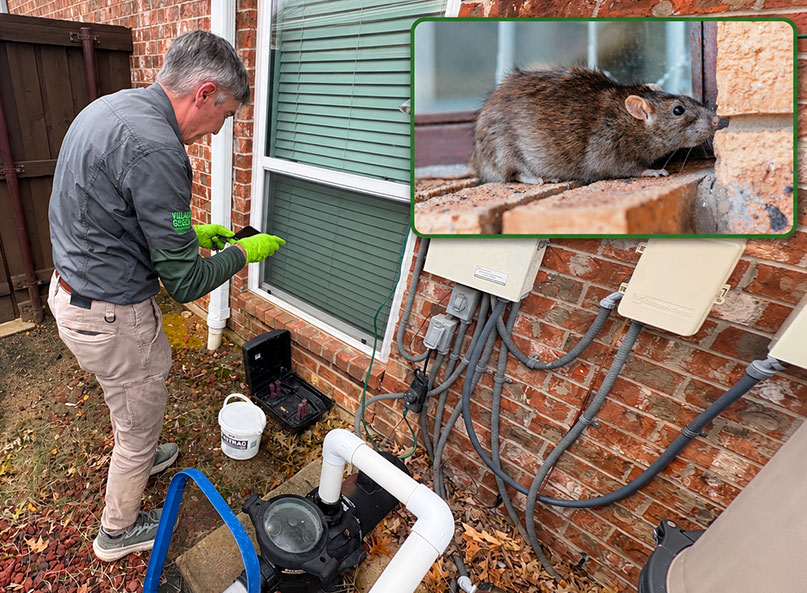
Rodent bait sold to homeowners comes pre-loaded in small, tamper-resistant stations, as federal rules require. In Ken’s experience, those small stations are often a poor fit for the rats we see in North Texas, and the couple of bait blocks inside run out quickly. A few kits from the hardware store rarely hold a rat population in check.
Whatever you use, follow the product label exactly and keep bait inside a locked station, away from kids and pets.
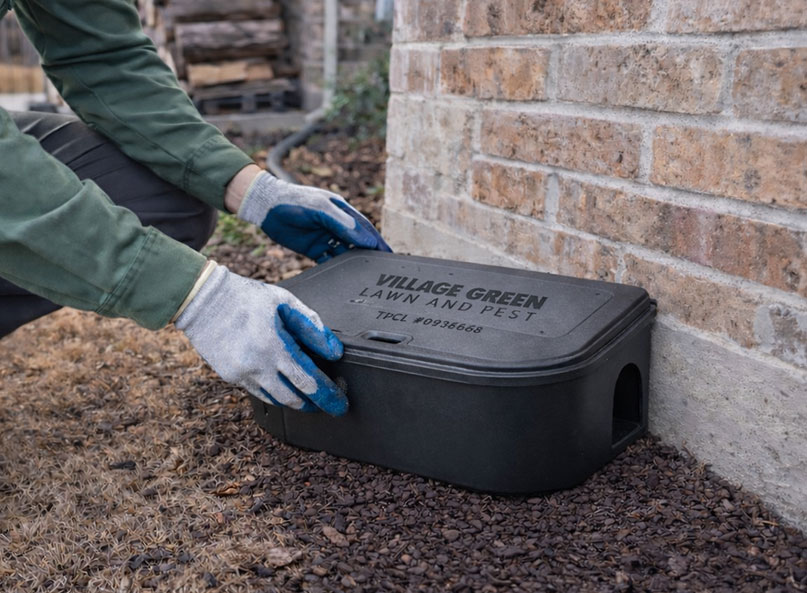
Where bait stations work
Placement matters more than the number of stations. Rats travel along edges, so stations go along their routes:
- Along fences and the home’s foundation
- In corners, where rats slow down and feel safest
- Near outdoor AC units, where condensation gives them water
- In the attic near the AC unit, if rats are getting up there
How long it takes, and what success looks like
Plan on a few weeks before rats trust a new bait station enough to feed from it. After that, it takes more time to work through the colony.
Here’s the honest part: rats in North Texas are a lot like squirrels. You won’t get rid of every one in the neighborhood. The goal is to keep them from living in and around your home.
One safety note from Ken: before you open a bait station, tap it with your foot. It’s common to find something inside, including snakes or the rat you were trying to get rid of.
How Village Green handles rats
Our Home Defense Plus plan includes exterior rodent baiting: a targeted perimeter approach that intercepts rodent activity before it reaches your home. Our technicians place professional, tamper-resistant bait stations along the routes rats use, then check and refill them during service visits. We focus on keeping rats from settling in around your home; we don’t set traps inside it. No contracts.
Seeing signs of rats? Call or text us at 972-495-6990.
About the author
Ken Hyatt is the owner and founder of Village Green Lawn and Pest, a locally owned lawn care, mosquito, and pest control company based in downtown Plano since 1980. He has spent more than 45 years helping North Texas homeowners in Plano, Richardson, Allen, McKinney, Frisco, Garland, Sachse, Murphy, and North Dallas. Ken holds a Texas Department of Agriculture Commercial Pesticide Applicator License (No. 316927). Village Green is licensed by the TDA Structural Pest Control Service (Business License No. 0936668).