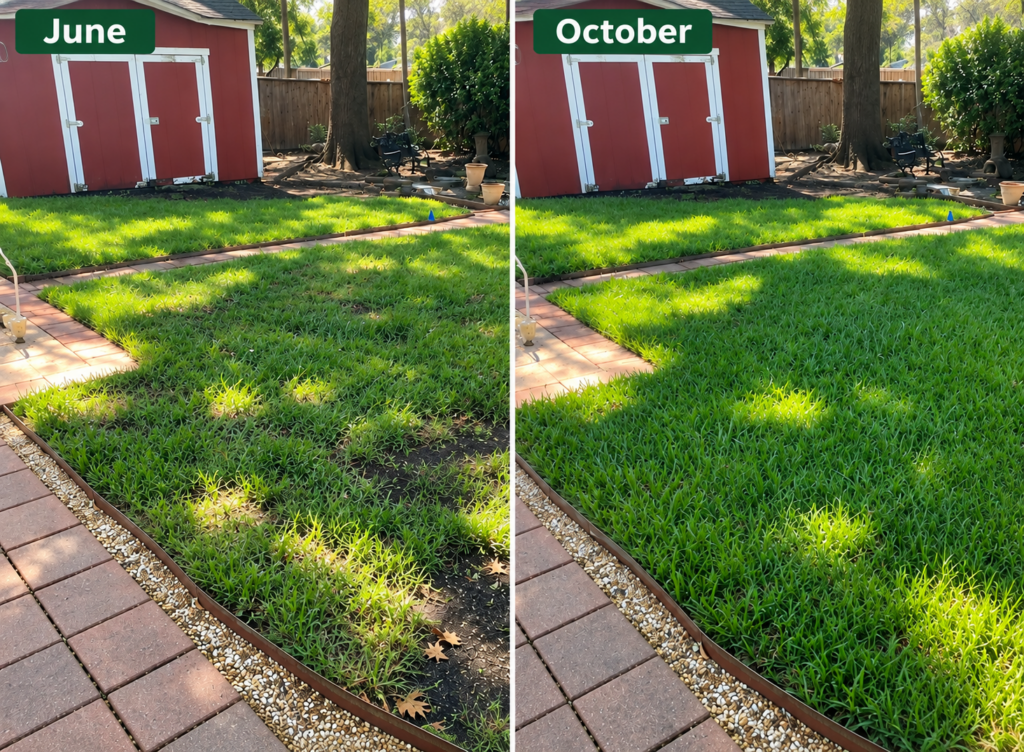
A lot of North Texas homeowners reach fall looking at thin grass, bare spots, and brown patches, and wondering whether the lawn is worth saving. Tim W. in Richardson was in that spot this June. Four months later, through a long stretch of 100-degree days, most of his lawn has filled back in. Here is what we found, what changed, and what did not work.
Where the lawn started
Tim called us in early June. He had taken over a struggling St. Augustine and Bermuda lawn and was not sure a fertilization program would make any difference. That doubt is fair. It is frustrating to spend money on a yard and still not like what you see.
When Ken Hyatt walked the property on June 5, he found several different problems, not one:
- Dead patches in a straight-line pattern, likely from an earlier fertilizer application
- Grass smothered where storm limbs had been piled
- A low spot by the gate where water collects and St. Augustine will not take hold
- Heavy shade under a large tree
- One small area in full sun that was not responding to normal care
- Grass mowed too short heading into summer heat
- No watering yet that season, after a rainy spring
Each one has a different answer, and some do not have a good one.
What we told Tim up front
Ken’s message on every first visit is the same: a lawn needs sunlight, water, and fertilizer working together. Fertilizer cannot do its job without the other two.
Areas with good sun would fill in once watering was corrected, because St. Augustine and Bermuda spread aggressively in heat when they have enough water. Tim had his sprinkler system checked and adjusted by an irrigation company, raised his mowing height, and started on our Signature Lawn Health Plan with insect and disease protection.
Ken was equally direct about the limits. The heavily shaded corner had no runners left, and he told Tim it was not worth sodding at that time.
The watering change that made the difference
Tim switched from one long sprinkler run of about 25 minutes per zone to three shorter cycles of about 10 minutes each. The total water is about the same. The difference is that North Texas clay soil absorbs water slowly, so a long run sends much of it down the curb. Shorter cycles give each round time to soak in before the next one starts.
His water bill went up a few hundred dollars over the summer. That is a real cost. Ken has also seen the other side many times: homeowners who save that money in summer, go into winter with weakened roots, and lose large sections of lawn in a hard freeze. Replacing a front yard often runs several thousand dollars.
What four months looked like
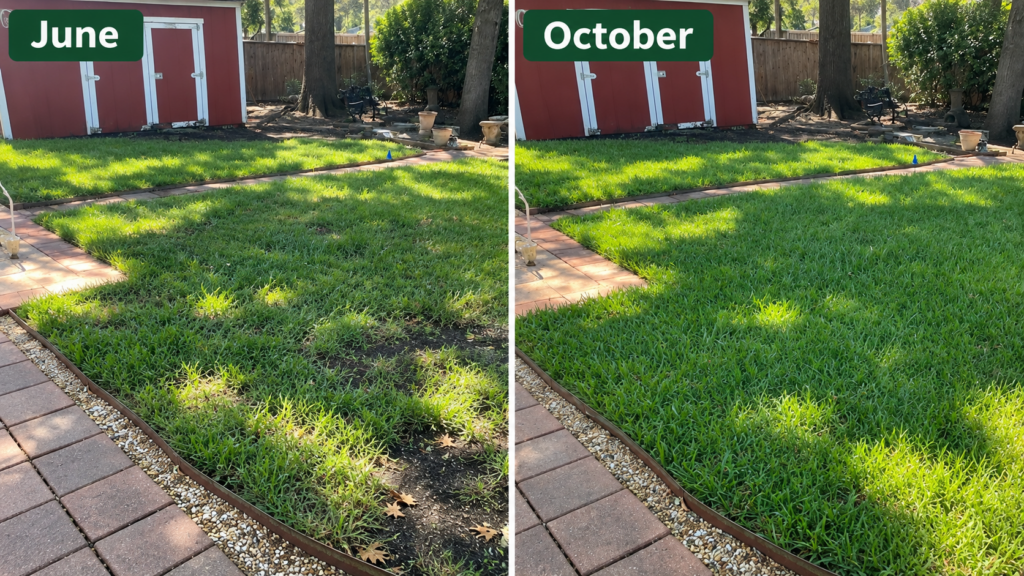
By early October, before the fall rains arrived, Tim’s lawn was one of the few green lawns on his street. St. Augustine in the backyard grew all the way to the house for the first time, and thin areas in the front had filled in noticeably.
Not everything recovered. A few patches are still filling in. The small area in full sun has not responded, and Ken suspects a soil-borne disease called take-all root rot. Fungicides help most as prevention, not as a cure once it is established, so we told Tim plainly that there is no guaranteed fix, and we are working through options with him.
Every visit is documented with photos, technicians flag anything unusual, and Ken set a reminder in June to check the lawn’s progress by midsummer. You should always know what is improving, what is not, and why.
What to do with your own lawn this fall
- Turn the seasonal adjust down to about 50 percent now, then about 20 percent in winter.
- Water in your pre-emergent once. A single watering or a good rain moves it into the soil.
- Keep soil damp before a hard freeze. Moist soil protects roots better than dry soil. We send customers a heads-up when a hard freeze is coming.
- Expect some yellowing. Random yellow spots in late September and October are common after a hard summer and usually reflect seasonal stress, not a new problem.
- Be honest about shade. If an area gets little sun and has no runners left, more fertilizer and water will not bring it back.
If your lawn has sun and you can give it water, it has a good chance of coming back.
Fall watering guide: https://qrco.de/bh1W9L
Not sure whether your lawn can recover? Call or text Village Green at 972-495-6990 and we will come take a look. Village Green is locally owned, has no contracts, and stands behind its work with a Worry-Free Guarantee.
About the author: Ken Hyatt is the owner and founder of Village Green Lawn and Pest, which he started in Plano in 1980. He has more than 45 years of hands-on lawn care experience in North Texas.