At a glance
- Location: Richardson, Texas
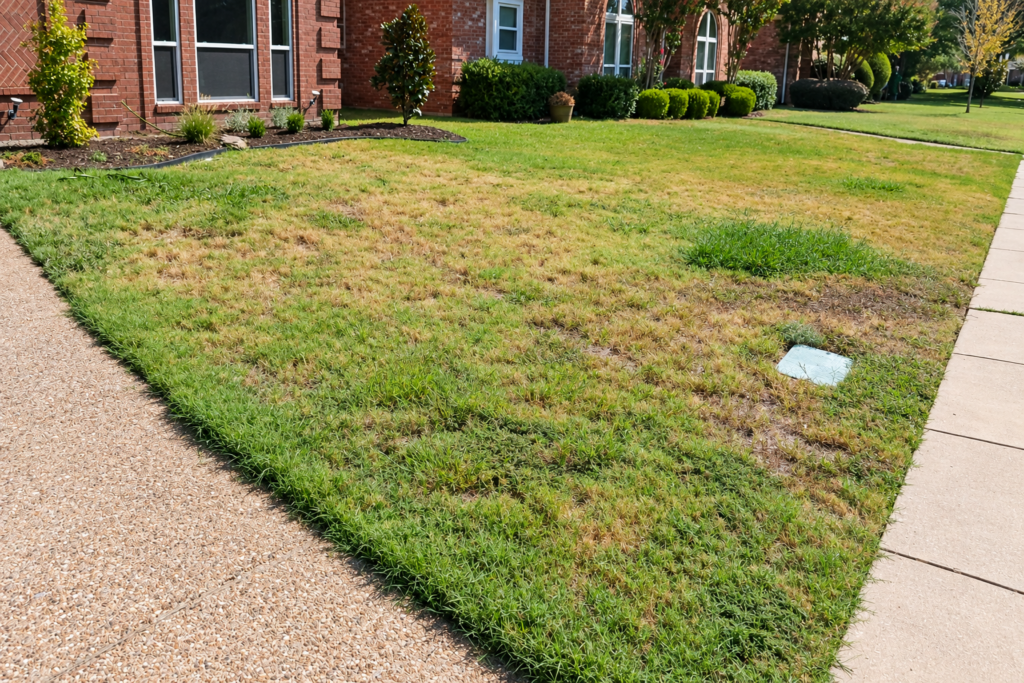
- Starting point (August 2024): Severely under-watered lawn; dallisgrass on an estimated 30 to 40 percent of the front and back yards; Bermuda and St. Augustine scattered in patches
- Options given: Re-sod the whole lawn (estimated $6,000 to $8,000), or fix the watering and rebuild the existing grass over time
- Path chosen: Rebuild, with a warning that it would look worse before it looked better
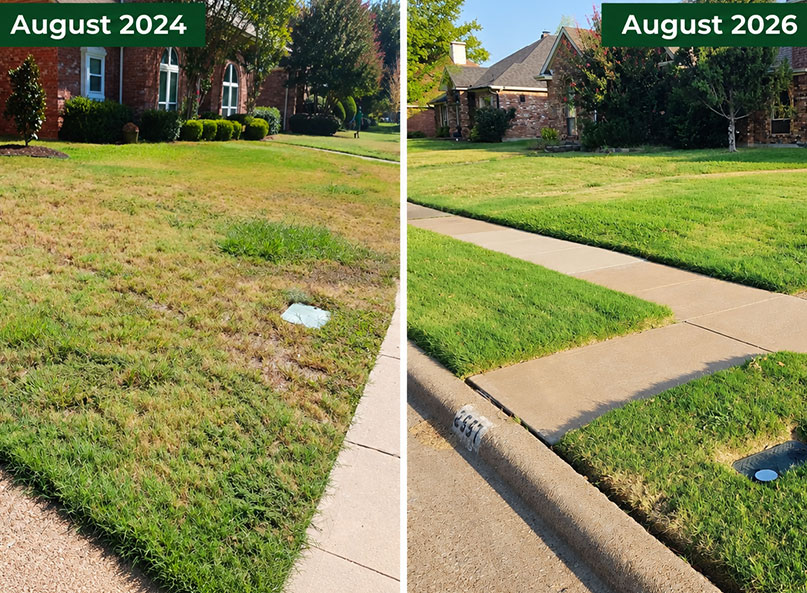
- Result (August 2026): Lawn filled in from the grass already there. No re-sod.
- What made the difference: Corrected watering, consistent feeding and weed control, and a homeowner who stuck with it
The call
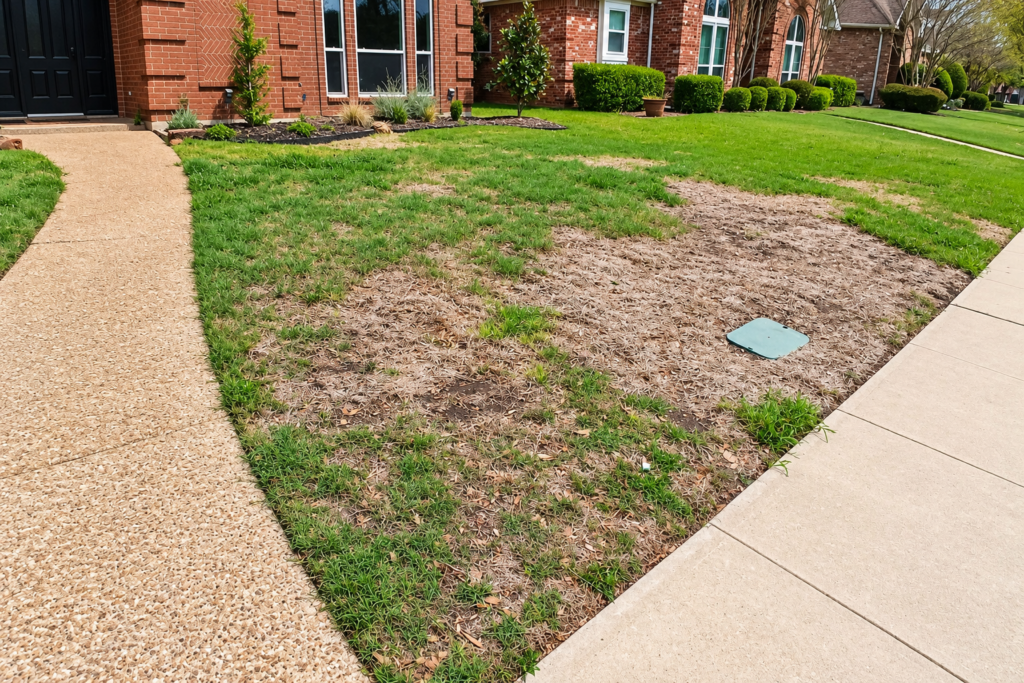
In August 2024, Molli R. called us a few days after moving to Richardson from out of state. She’d inherited a lawn that hadn’t been watered properly in years. When I walked it with her the next day, dallisgrass covered an estimated 30 to 40 percent of the front and back yards. The Bermuda and St. Augustine that were left were scattered in patches.
A lot of homeowners land here. Some moved in and inherited the problem. Some have worked on a lawn themselves for a few seasons and keep losing ground. Some are paying a company and not seeing change. At some point, someone says the only fix is new sod.
Two options
I gave Molli two choices. I call them the microwave method and the crockpot method.
The microwave method: re-sod the whole lawn. My estimate was $6,000 to $8,000. It’s fast, and it works when the conditions underneath are right.
The crockpot method: fix the watering, feed the grass that’s still alive, and remove the weeds in stages. It costs far less up front. It also takes a year or more, and I told her that plainly.
With a new house to settle into, she chose the crockpot.
Why it had to get ugly first
Dallisgrass is a coarse, clumping perennial grass with gray-green leaves and a pale center vein. It sends up tall seed stalks through the summer, and it doesn’t respond to the weed control that handles most lawn weeds.
The old selective herbicide for dallisgrass, MSMA, is no longer available for home lawns (Neil Sperry). Newer selective products can suppress dallisgrass in Bermuda, but suppression isn’t removal, and they aren’t an option in St. Augustine (LSU AgCenter). For established clumps, the standard approach is spot-treating with a non-selective herbicide. That kills the clump, and it kills any grass it touches (Neil Sperry).
So I told Molli what would happen before it happened. The dallisgrass would come out, and it would leave bare dirt behind. She’d have a worse-looking lawn for a while.
Here’s how it went:
- Fall 2024 and winter: feeding and control of winter and spring weeds
- Spring 2025: dallisgrass spot-treated once the Bermuda was actively growing, leaving large bare areas
- Summer 2025: Bermuda and St. Augustine spreading into the bare spots
- August 2025: noticeably filled in, with the west side still behind the east
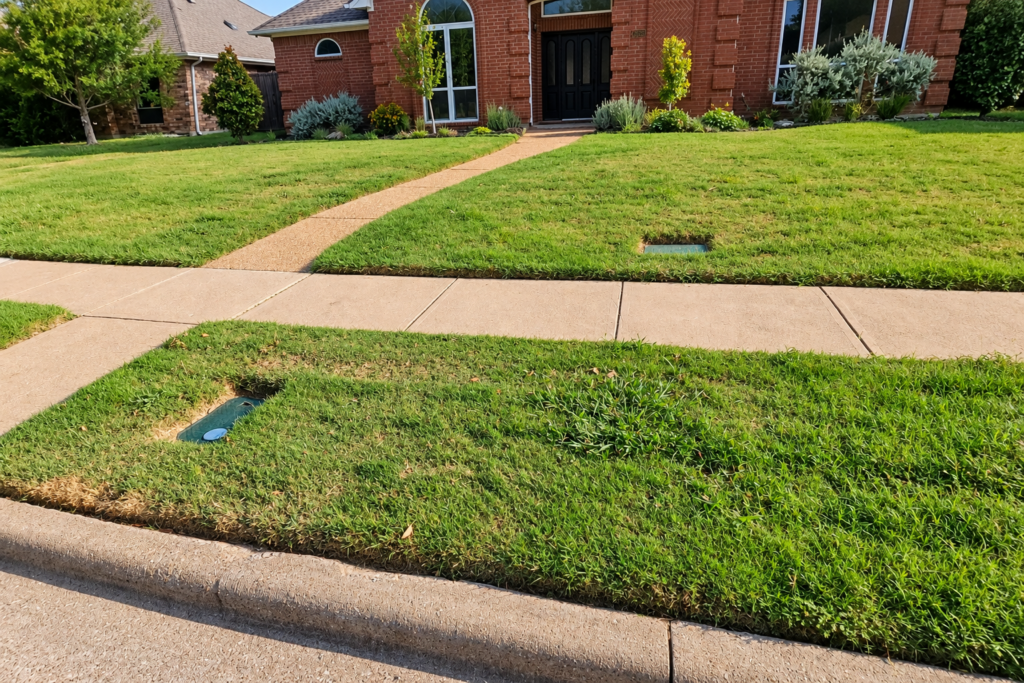
- August 2026: filled in, two years almost to the day from that first visit
Watering was the turning point
The first thing I did on that visit wasn’t a treatment. I reset her sprinkler controller and recommended having the heads raised and the controller replaced.
No product can make up for a lawn that isn’t getting water. That’s true whether you re-sod or rebuild. New sod on a broken watering setup struggles too.
We kept it simple: controller set to 100 percent in summer, each zone running twice a week within the city’s schedule, split into short cycles so water soaks in instead of running down the curb.
The credit here belongs to Molli. She stuck with the watering for two seasons. Bermuda and St. Augustine spread aggressively when they’re watered and fed, and that’s what filled the lawn back in.
Two things I advised along the way
Checkerboarding to speed up bare areas. Cut pieces of sod into three or four smaller squares and set them in the middle of large bare spots. Each one becomes an island that grows outward. It costs a fraction of a full re-sod.
Not spending money where grass won’t grow. Behind her fence along the alley, there’s a strip with heavy shade and no irrigation. Molli asked about seeding or sodding it. I told her grass would struggle there no matter what, and suggested river rock or a hand-watered ground cover instead.
How to tell which path fits your lawn
Rebuilding usually makes sense when:
- Some living Bermuda or St. Augustine is spread through the yard
- The lawn gets good sun
- The irrigation can be fixed or adjusted
- You can live with an awkward stretch while it fills in
Re-sodding may make more sense when:
- Little or no healthy grass is left
- You need the lawn to look good soon, such as before selling
- Shade from maturing trees has changed what will grow
Either way, fix the watering first.
Common questions
Can a lawn full of dallisgrass come back without new sod?
Often, yes, if enough healthy Bermuda or St. Augustine is left to spread, the lawn gets sun, and the watering is corrected. Molli’s lawn had dallisgrass on an estimated 30 to 40 percent of it and filled in over two years without re-sodding.
Why does removing dallisgrass leave bare spots?
Selective products don’t reliably remove established dallisgrass. Clumps are usually spot-treated with a non-selective herbicide, which also kills the grass right around them. The bare areas fill in as healthy grass spreads.
How long does recovery take?
Plan on a year or more. Molli’s lawn showed clear improvement within the first full growing season and was filled in by the end of the second.
How much does re-sodding cost?
It depends on lawn size, grass type, soil prep, and irrigation work. For Molli’s lawn, my 2024 estimate was $6,000 to $8,000.
Does watering matter if I re-sod?
Yes. A watering problem that hurt the old lawn will hurt new sod too. Fix it first, whichever path you choose.
What working with us looks like
This works the same whether you’re hiring a lawn company for the first time, taking over from DIY, or switching providers. We start by walking the lawn with you and checking how it’s watered. At each visit, our technicians document what they see with photos, so you can follow the progress instead of guessing. Lawn health plans have no contracts and are backed by our Worry-Free Guarantee.
For fall settings, see our Fall Watering Guide.
If your lawn looks like Molli’s did, call or text us at 972-495-6990. We’ll walk it with you and tell you which option makes sense for your yard.
Ken Hyatt is the owner and founder of Village Green Lawn and Pest, locally owned in Plano since 1980. He has worked on North Texas lawns for more than 45 years and still walks customer lawns personally to evaluate problems like Molli’s.