A homeowner in Plano asked us a sharp question on a call this fall. He was signing up for lawn service and wanted to know why our eight-visit plan year starts in January, when it’s cold and the grass is dry. He’s right that the grass will be dormant. But what matters in January isn’t happening on top of the lawn. It’s happening in the top inch of soil.
A dormant lawn is quiet. The soil isn’t.
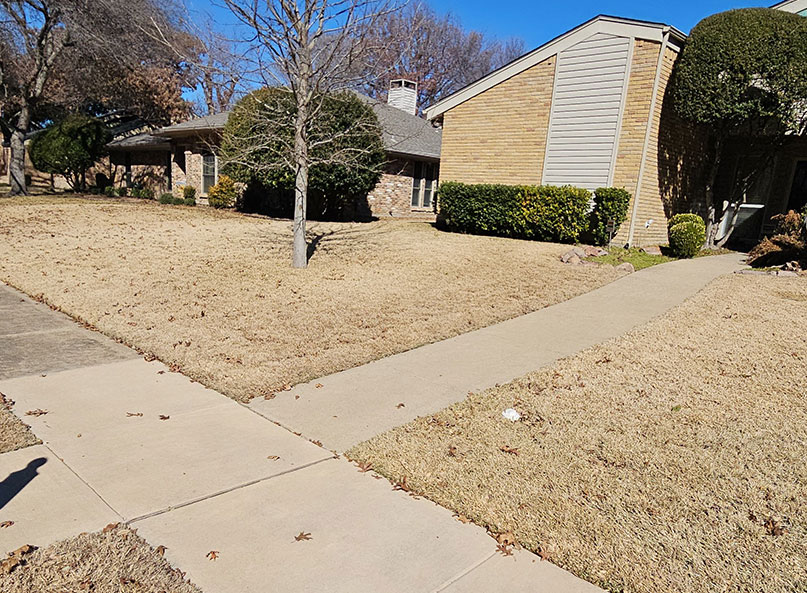
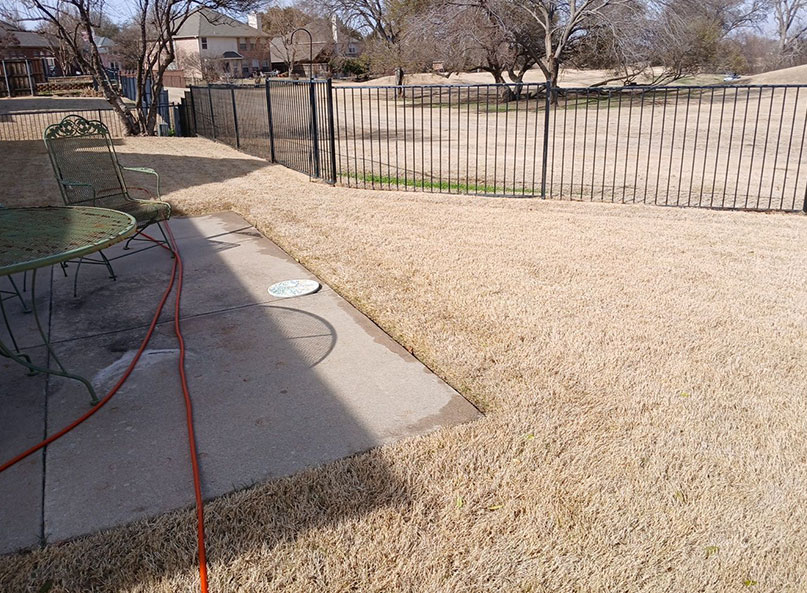
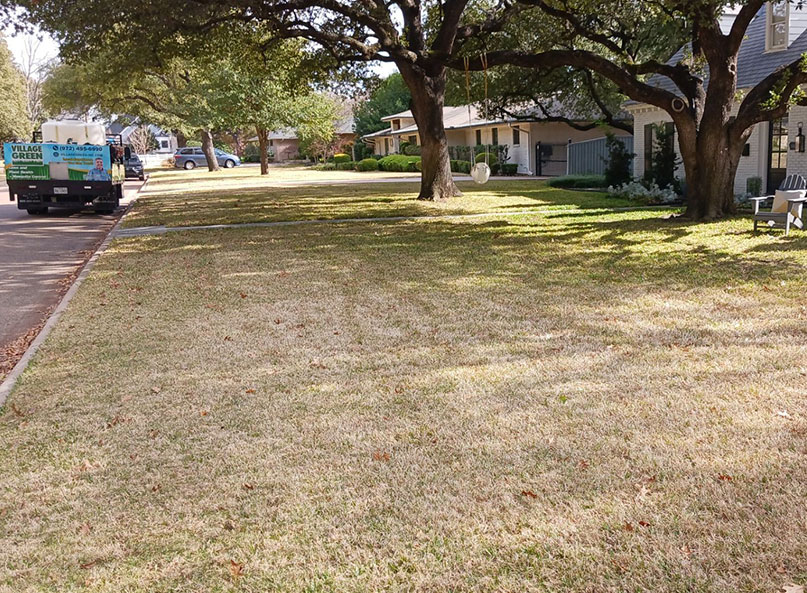
Bermuda and most warm-season grasses in North Texas go brown after the first hard freezes and stay that way until spring. Nothing about the turf needs feeding in January, and we don’t fertilize then.
Weed seeds are a different story. Every lawn holds a supply of them in the soil, left by last year’s weeds, wind and birds. They aren’t growing yet. They’re waiting for a signal, and that signal is soil temperature.
What a pre-emergent does
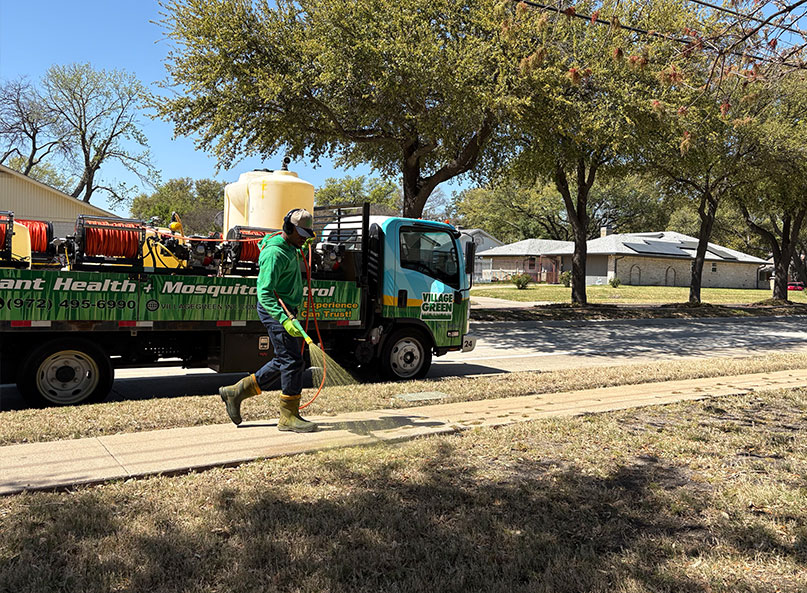
A pre-emergent is a treatment that soaks into the top layer of soil and stops weed seeds from sprouting. It works like a barrier at the surface. When a seed starts to germinate under it, the new shoot doesn’t make it through.
The catch is timing. A pre-emergent only works if it’s in place before the seeds sprout. Once a weed is up and growing, a pre-emergent can’t touch it. That weed has to be treated a different way, one plant at a time.
So the job isn’t to react when weeds show up. The job is to be ahead of them.
Two seasons of weeds, two times to get ahead
North Texas lawns face two main waves of weeds each year.
Winter weeds sprout in the fall, once the heat breaks. Annual bluegrass, rescuegrass and henbit are common ones. That’s why our last two visits of the year, in October and November, put down pre-emergent. They stop the cool-season flush before it starts.
Spring and summer weeds wait for warmer soil. Research from Texas A&M AgriLife shows germination usually begins once soil 2 inches down holds about 55°F for three days. In the Dallas area, that tends to happen from late February into March, and sooner in a warm year.
That’s where January comes in. A pre-emergent lasts for a limited window, so the fall barrier won’t carry a lawn all the way into summer. Round 1 puts a fresh barrier down in January and early February, before the soil warms enough for spring weeds to start. If any winter weeds broke through, your technician spot-treats them on the same visit.
Why we start in January instead of waiting
It’s tempting to wait until the lawn greens up. By then, though, the soil has already warmed, and the first spring weeds are already on their way.
There’s also a practical side. Round 1 has to reach every lawn on our routes before the soil warms. Starting in January gives our technicians time to cover Plano, Richardson, McKinney, Frisco, Garland, Sachse, Allen, Murphy and North Dallas, and get the barrier down on time for everyone.
What you’ll notice in spring
You won’t see a pre-emergent working. There’s nothing to look at in January except brown grass.
You’ll see the result in March and April. When the barrier is in place, the lawn greens up without a carpet of weeds coming in with it. Weeds that do slip through are scattered and easier to handle. The grass gets the room, water and sunlight instead of sharing them.
What we watch for along the way
After every visit, your technician leaves notes on what they saw and treated. If something needs attention, like thin areas, discolored patches or a weed that keeps coming back, you’ll hear about it. Each visit builds on the one before, and we adjust based on what we find in your lawn.
The bottom line
Treating a dormant lawn isn’t about the grass. It’s about the soil, and about getting ahead of weeds that haven’t shown up yet. The fall rounds stop winter weeds before they sprout. The January round sets up your lawn for spring. Together, they mean less time pulling weeds and more time enjoying the yard.
Our lawn health program runs eight visits a year, with no contracts, backed by our 90-Day Worry-Free Guarantee. For more on the fall side of the schedule, read Fall Pre-Emergent and Spring Weeds in North Texas.
Want to know what your lawn needs before spring? Call or text us at 972-495-6990.
Ken Hyatt is the owner and founder of Village Green Lawn and Pest, locally owned in Plano since 1980. He has more than 45 years of experience caring for North Texas lawns.