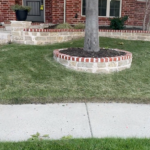
North Texas lawns have had an easy spring. This June brought roughly twice the normal rainfall to the Plano area, and temperatures stayed mild until the past week or so — a combination that’s left most neighborhood lawns looking strong, or close to it. That’s about to change.
Over the past few days, daytime highs have pushed close to 100 degrees, and the rain that carried lawns through June has largely stopped. That’s a familiar pattern in North Texas: once the heat arrives, it typically stays through mid-September with little rainfall to offset it. For the next three months, what a lawn gets from irrigation matters far more than anything Mother Nature provides.
Village Green owner Ken Hyatt, who has spent his career working North Texas lawns through this seasonal shift, puts it directly: the lawns that hold up through a Texas summer are the ones where watering keeps pace with the heat — not the ones that got lucky with a wet spring.
Switch to a summer watering schedule now
Spring watering schedules aren’t built for 100-degree stretches. As the ground dries out and evaporation increases, bermuda and other North Texas turf varieties need more frequent, deeper watering to keep root systems healthy through dormancy risk. Homeowners can find Village Green’s current summer watering schedule at villagegreen-inc.com.
Check sprinkler coverage before the heat sets in
A wet spring can hide sprinkler problems that become obvious — and damaging — the moment rainfall stops. Broken heads and zones that have quietly stopped functioning won’t show up as a problem until a lawn is depending entirely on that water. Walking each zone now, while the stakes are still low, is worth the twenty minutes it takes.
Nutsedge is up — and aggressive
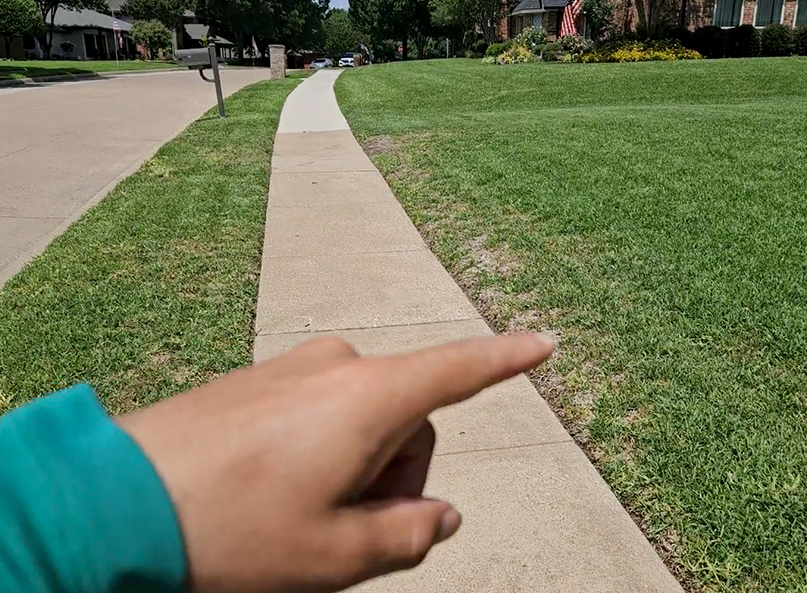
The wet weather this spring has driven a heavier-than-usual nutsedge outbreak across North Texas lawns. Nutsedge spreads fast in hot, wet conditions, and it’s more aggressive than typical broadleaf weeds because of how quickly its underground tubers multiply. Village Green technicians are treating it during scheduled visits, but homeowners managing their own lawns should expect to see more of it before the season dries out.
Rabbit damage: what the bald patches are telling you
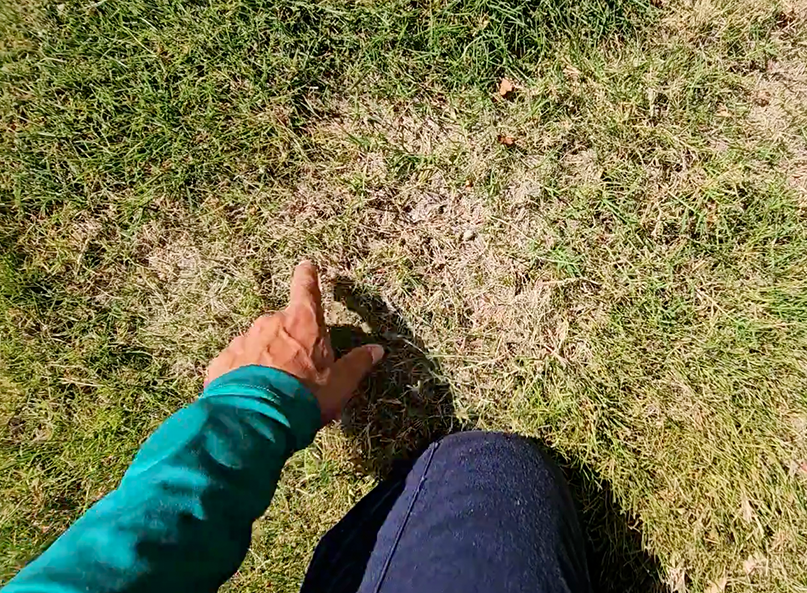
Rabbit damage has stayed relatively low this spring because of the rain, but that typically reverses once conditions turn hot and dry — rabbits seek out green turf more aggressively when the surrounding ground browns out. The damage pattern is specific: bald, dead patches in the middle of a lawn, usually with rabbit pellets nearby. The cause isn’t the rabbits eating the grass — it’s their urine, which burns the turf on contact. Increasing watering in those specific spots helps dilute the damage and speeds recovery.
The pattern underneath all of it
Every issue in this update traces back to the same root cause: water. A lawn getting consistent, adequate watering through a North Texas summer handles heat stress, recovers from nutsedge treatment faster, and shows less rabbit damage. A lawn that isn’t will show every one of these problems more severely, regardless of what treatment program it’s on.
Village Green Lawn and Pest has served North Texas homeowners since 1980, with no-contract service and a 90-Day Worry-Free Guarantee on treatment programs. Homeowners with questions about their summer watering schedule or current lawn condition can reach the team at 972-495-6990.