The question we hear constantly
Something is wrong with my lawn — but I don’t know if it’s the soil or a fungus problem.
That question comes up on almost every lawn assessment we do. Homeowners have put in time and money, and when the grass keeps struggling, it’s natural to wonder if there’s something fundamentally broken about the yard.
The answer, in most cases, is that neither the soil nor fungus is the primary problem. And once you understand what’s actually happening, the path forward gets a lot clearer.
North Texas soil is not the enemy
Soil is one of those things that sounds like a reasonable culprit — it’s invisible, it’s complicated, and problems with it feel difficult to diagnose or fix. But in the North Texas lawns we’ve been maintaining since 1980, soil issues that actually prevent grass from growing are rare.
St. Augustine and Bermuda are aggressive grasses. They can root across compacted soil, spread toward pavement, and even creep across concrete when conditions allow. That’s the same reason we edge sidewalks and driveways — these grasses want to grow, and they’re good at it.
When they’re not growing, it’s almost always because something is restricting them. The soil being deficient enough to stop them entirely? That’s genuinely uncommon around here.
What’s actually stopping your grass from growing
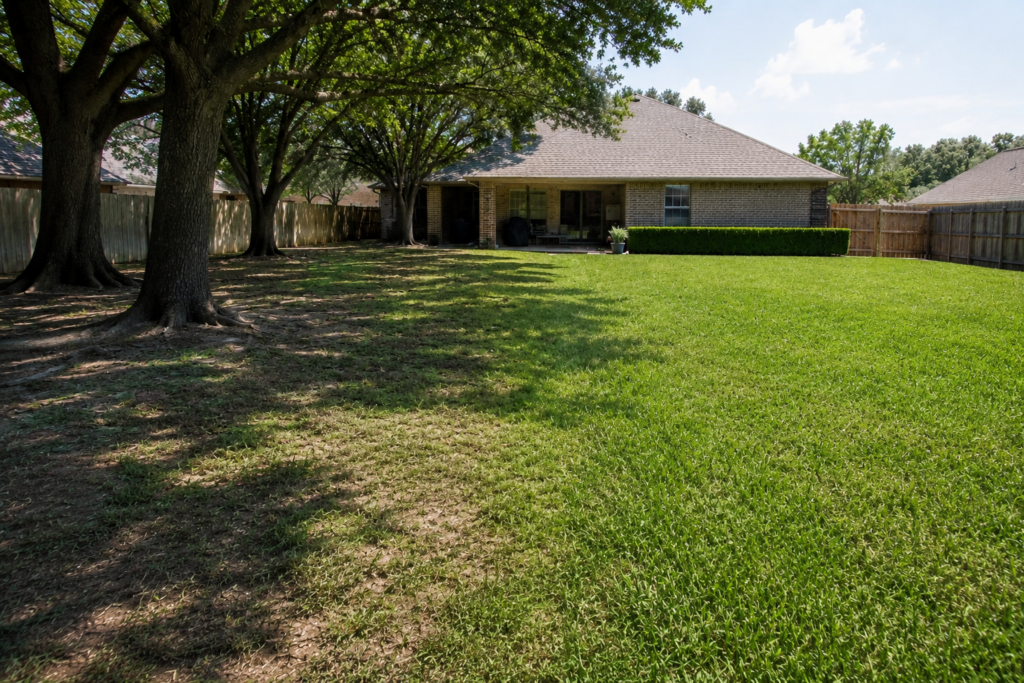
In the majority of lawns where we see persistent bare spots or thinning turf, the cause is one of two things: not enough sunlight, or not enough water. And of those two, shade is by far the most common.
St. Augustine needs approximately 6 hours of direct sunlight per day to stay healthy and continue spreading. It can survive in heavy shade for a surprisingly long time — it’s tough in that way — but over time, without adequate light, the grass thins out, weakens, and eventually can’t recover from normal stressors.
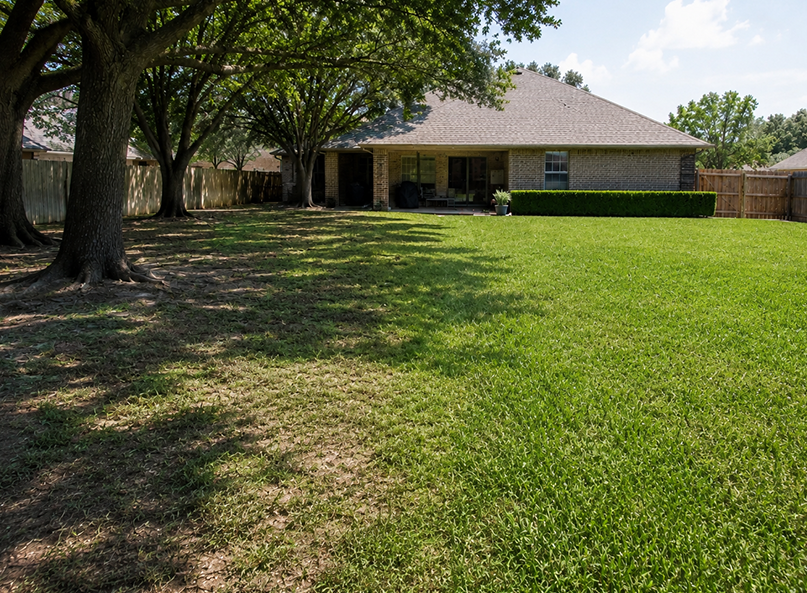
The clearest way to see this is in a yard with large, mature trees. We often see exactly the same lawn on both sides of a property — same soil, same irrigation, same maintenance schedule — and one side is thick and green while the other is patchy and struggling. The only variable is the tree canopy above the struggling section.
So where does fungus fit in?
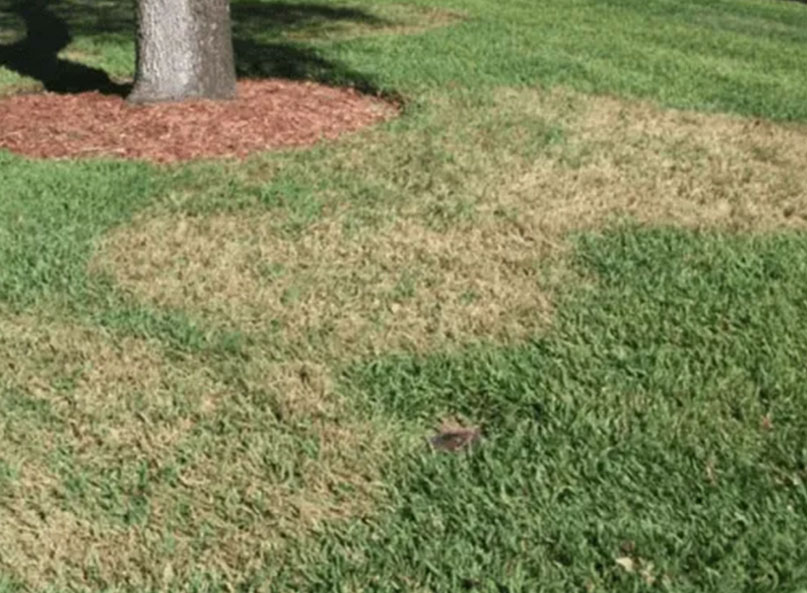
Brown patch is the fungal issue we see most often on St. Augustine lawns in North Texas. It tends to show up in spring and fall, and it creates the kind of irregular brown or bare-looking areas that can look alarming.
Here’s what most people don’t realize: in most cases, brown patch doesn’t cause permanent, long-term damage to a healthy lawn. The grass usually recovers. The problem is that in shaded areas where the grass is already weakened, a fungal episode hits harder and the turf simply doesn’t bounce back the way it would in a sunny, healthy section.
In other words, the fungus isn’t the root problem. It’s the combination of shade-weakened grass and a fungal trigger. Address only the fungus without understanding the shade situation, and you’ll be treating the same areas repeatedly.
What to do if you see this pattern in your lawn
Start by looking at the areas that are struggling and asking one question: how much direct sun are they getting each day?
If the answer is less than 6 hours, shade is likely the primary factor. From there, you have a few options — trimming tree canopy to let more light through, considering whether the area is better suited for ground cover than turf, or managing expectations and focusing effort on the lawn areas that have enough sunlight to thrive.
If the struggling areas are in full sun and the pattern doesn’t match the shade map, that’s when it’s worth looking more closely at moisture, irrigation coverage, and potential fungal activity.
We’re happy to take a look
If you’re in Plano, Richardson, McKinney, Frisco, Garland, Sachse, or the surrounding area and you’re not sure what’s going on with your lawn, we’re glad to come out and walk it with you. Village Green has been doing this in North Texas since 1980. No contracts, no pressure. Just an honest look at what’s happening and what, if anything, makes sense to do about it.
Call or text us at 972-495-6990.