
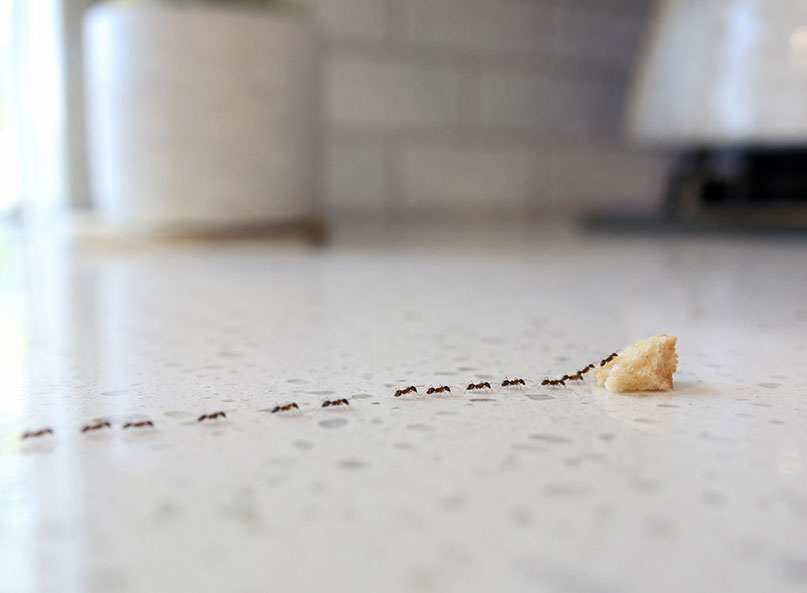
Homeowners across Plano, McKinney, Frisco, and Richardson ask us some version of the same question every spring:
“Where did all these ants come from? They weren’t there yesterday.”
It feels sudden. From the colony’s perspective, it’s anything but.
Here’s what’s actually happening — and why these conditions create some of the most intense ant pressure of the year in North Texas.
Why warm weather and rain create peak ant pressure in North Texas
Several conditions collide to create intense ant pressure. Consistently warm soil temperatures accelerate colony development. Colonies that have been building underground enter peak expansion mode. Food competition outdoors intensifies as vegetation grows. And homes become attractive refuges for moisture — especially kitchens, bathrooms, and wall voids near plumbing. In North Texas, this combination tends to show up in late spring into early summer — but the real driver is conditions, not the calendar. A warm early spring or a wet stretch in April can push it earlier; a cooler season may delay it.
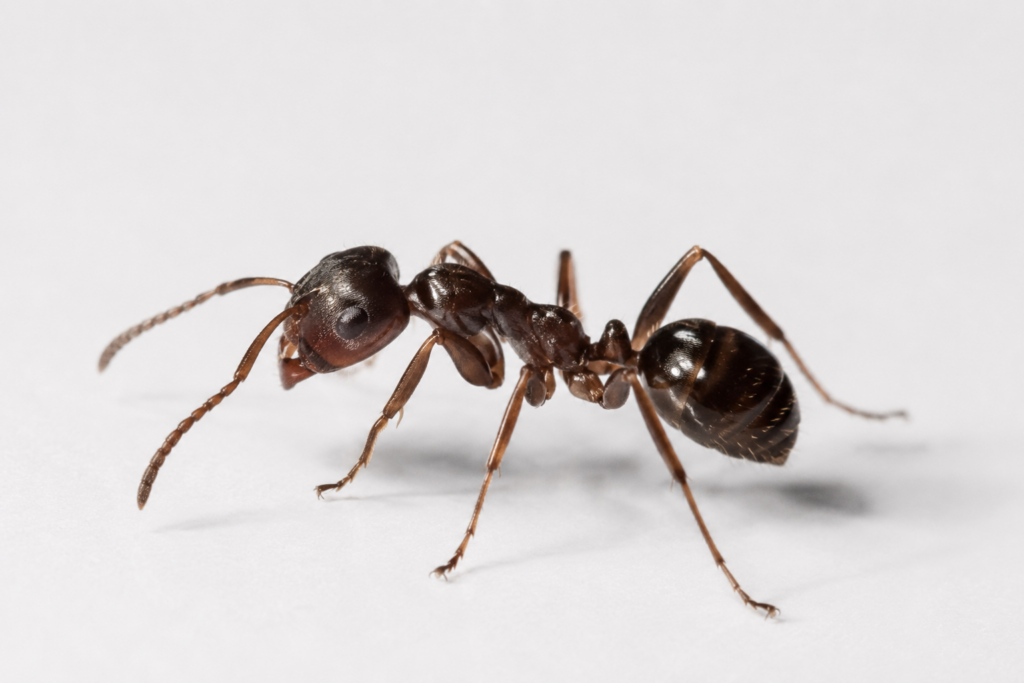
The ant species most commonly responsible for spring complaints in DFW include odorous house ants, rover ants, pavement ants, and Argentine ants. Rover ants and odorous house ants are particularly aggressive foragers this time of year and account for the majority of spring indoor ant calls in our service area.
What rain actually does to ant colonies
A common misconception is that rain “creates” ants. It doesn’t. What rain does is displace and redirect colonies that were already there.
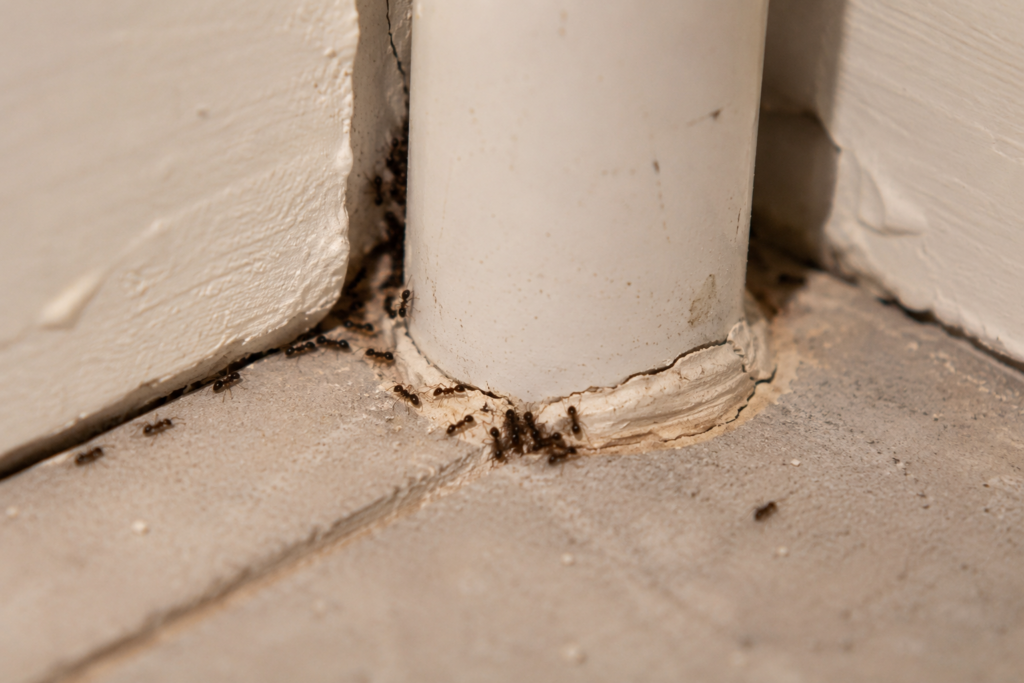
When soil moisture changes rapidly, underground galleries can flood, food sources shift, and pheromone trails get disrupted. Colonies respond by splitting and relocating — which means exploratory foraging into homes through any available gap: slab penetrations, expansion joints, utility penetrations, and plumbing chases.
This is why the timing often feels overnight. The colony didn’t appear from nowhere. It relocated.
Why North Texas homes are especially vulnerable
DFW construction creates near-ideal conditions for ant entry. Slab foundations have expansion joints. Brick exteriors retain heat. Irrigation overspray keeps soil and mulch beds near foundations consistently moist. And the clay soil common throughout Collin and Dallas counties shrinks and swells seasonally, creating gaps and movement in foundation edges that ants exploit.
The good news: understanding the entry points is the first step toward addressing them.
How conditions shape ant pressure year to year
Ant activity in North Texas follows a general pattern — colonies build through late winter, enter expansion mode as soil warms, and slow down during extreme summer heat — but the intensity and timing vary significantly year to year. Warm temperatures arriving early, periodic rain events, and sustained humidity are the real accelerants. Years with those conditions tend to produce earlier and stronger pressure. A drier or cooler stretch can compress the window. This year’s combination of warm temperatures and intermittent rain has created favorable conditions for aggressive colony movement.
Why DIY sprays usually make it worse
Most over-the-counter ant products target what you can see: the foragers on your counter. They don’t address the colony, the entry points, or the conditions drawing ants in. Worse, some repellent sprays scatter colonies rather than eliminating them, spreading the problem to new areas of the home.
Effective ant management addresses the exterior first — perimeter treatment, conducive condition identification, and exclusion recommendations — rather than chasing visible foragers indoors.
What Village Green does differently
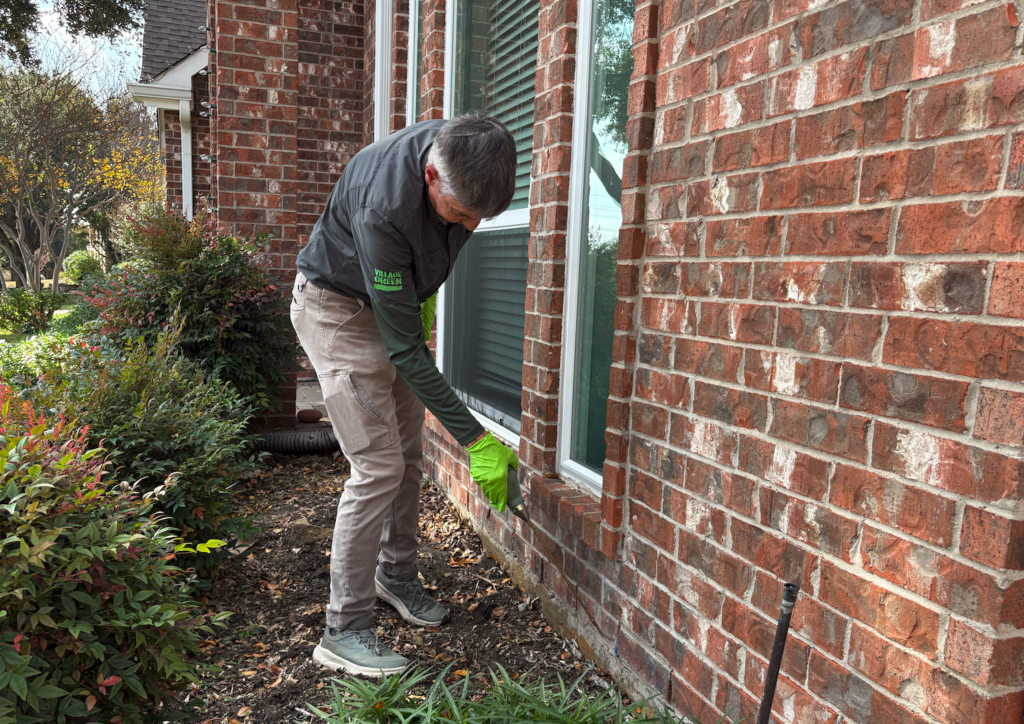
Our pest control program includes perimeter treatment at the foundation line, interior spot treatment where needed, and per-visit photo documentation so you can see exactly what was treated. We identify conducive conditions — moisture sources, mulch placement, entry points — and make recommendations specific to your property rather than applying a generic blanket treatment.
No contracts. If you’re not satisfied, we make it right under our 90-Day Worry-Free Guarantee.
If you’re seeing ants in or around your home, give us a call or text at 972-495-6990, or request a free estimate.