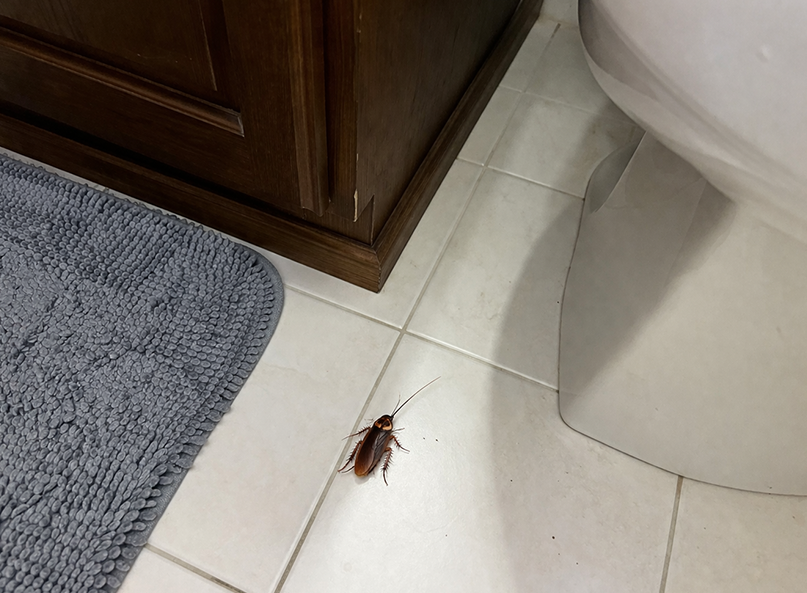
You flip on the bathroom light and freeze. There, scurrying across your tile floor, is something that looks like it belongs in a horror movie—a massive, reddish-brown cockroach nearly two inches long. Your heart races. You grab the nearest shoe. And you wonder: “How did this monster get in my clean home?”
If this sounds familiar, you’ve encountered an American cockroach, commonly called a “waterbug” here in North Texas. The good news? It didn’t appear because your home is dirty. The better news? Village Green’s exterior defense system can prevent these shocking encounters entirely.
What you’re actually seeing: American cockroach identification
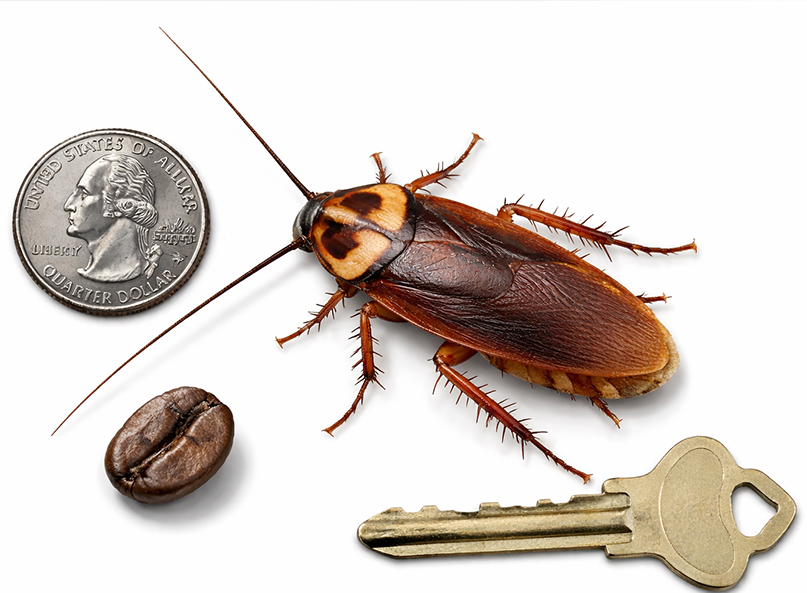
American cockroaches are the largest roaches commonly found in North Texas homes, measuring 1.5 to 2 inches long. They’re reddish-brown with a distinctive light-colored, figure-8 pattern behind their head. Unlike their smaller German cousins, these giants prefer to live outside but occasionally venture indoors—creating those heart-stopping moments when you least expect them.
The “waterbug” nickname comes from their attraction to moisture and their common presence around drains and plumbing areas. But don’t be fooled by the harmless-sounding name—seeing one of these in your kitchen or bathroom is genuinely startling.

Why they’re appearing in Plano, Richardson, and McKinney homes
American cockroaches don’t live in your home like German roaches do. They’re outdoor dwellers that come inside temporarily, usually for these reasons:
Weather changes: Spring and summer storms drive them toward dry shelter. Heavy rains flood their outdoor harborage areas, pushing them to seek higher ground—sometimes inside your home.
Moisture seeking: Despite living outside, they’re drawn to indoor water sources during dry periods. Bathrooms, laundry rooms, and kitchen areas with plumbing leaks become magnets.
Food foraging: They’ll enter homes following food scents, especially pet food, crumbs, or garbage odors.
Accidental entry: Their large size means they can’t squeeze through tiny gaps like German roaches, but they will exploit larger openings around doors, windows, and utility penetrations.
Where they’re coming from around your property
Understanding their outdoor sources helps explain why exterior defense is so effective:
Sewer systems: They thrive in municipal sewer lines and can emerge through floor drains or damaged plumbing connections.
Mulch beds: Organic mulch provides ideal humidity and food sources. They hide underneath during the day and become active at night.
Leaf litter: Accumulated leaves around your foundation create perfect harborage areas.
Tree cavities and wood piles: Dead trees, firewood stacks, and landscape timbers house American roach populations.
Outdoor drains and gutters: Clogged drainage areas with standing water attract and support populations.
Why indoor treatment misses the point
Most pest control companies focus on spraying inside after you’ve already had the terrifying experience of finding one in your bathroom. This reactive approach has significant limitations:
First, you’ve already been traumatized by the encounter. The psychological impact of seeing a two-inch roach in your kitchen stays with you.
Second, indoor treatment doesn’t address the outdoor populations that will continue sending scouts into your home.
Third, American roaches don’t establish colonies inside like German roaches. Treating indoors targets individual invaders, not the source population.
Village Green’s exterior source elimination
Our 5-step exterior defense process specifically targets American cockroach sources before they attempt entry:
Step 1: Source identification inspection
We locate outdoor harborage areas around your property—mulch beds, drainage issues, leaf accumulation, and structural gaps they’re using for access.
Step 2: Harborage elimination
Professional removal of webs and nests also includes recommendations for reducing outdoor cockroach attractants around your foundation.
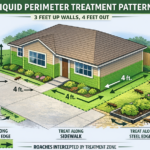
Step 3: Perimeter barrier treatment
Our liquid treatment creates a defensive zone that intercepts American roaches as they approach your home from their outdoor sources.
Step 4: Granular treatment in source areas
Targeted application in mulch beds, around drains, and other identified harborage zones controls the outdoor populations before they attempt entry.
Step 5: Entry point sealing guidance
We identify and treat the larger gaps American roaches use—door thresholds, utility penetrations, and drainage connections.

The moisture management component
American cockroach prevention requires addressing the moisture issues that attract them:
- Fixing drainage problems around foundations
- Eliminating standing water in gutters and landscape areas
- Addressing plumbing leaks that create indoor moisture sources
- Improving ventilation in basements and crawl spaces
Our technicians provide specific recommendations for moisture reduction as part of the comprehensive prevention strategy.
Seasonal timing for maximum effectiveness
Spring treatment is optimal for American cockroach prevention. As temperatures warm and storm activity increases, outdoor populations become more active. Establishing exterior defenses before peak activity prevents the summer encounters that traumatize homeowners.
What to expect from professional exterior treatment
Effective American cockroach control focuses on population reduction in outdoor source areas rather than crisis response to indoor sightings. Treatment includes:
- Identification and mapping of outdoor harborage areas
- Targeted application to mulch beds, drainage areas, and structural voids
- Moisture reduction recommendations
- Entry point assessment and treatment recommendations
- Follow-up monitoring to ensure population reduction
The peace of mind factor
The real value of professional American cockroach prevention isn’t just pest control—it’s preventing those heart-stopping moments when you encounter a two-inch roach in your bathroom at 2 AM. Exterior defense means fewer shocking surprises and more confidence in your home’s protection.
Ready to prevent waterbug encounters?
If you’re tired of those terrifying moments when massive roaches appear in your home, Village Green’s exterior defense system addresses the outdoor sources before they become indoor nightmares.
Call 972-495-6990 for comprehensive exterior American cockroach prevention.
About Village Green: Serving Plano, Richardson, McKinney, Frisco, Garland, and Sachse since 1980. Exterior pest defense specialists who understand that big roaches come from outside sources. No contracts, 90-Day Worry-Free Guarantee.