How German roaches get into North Texas homes (and our 5-step process to stop them outside)
Spring in North Texas means more than warming temperatures and blooming landscapes. It also means German cockroaches are becoming active again—and they’re looking for new homes to invade. The question isn’t whether they’ll try to get into your Plano, Richardson, or McKinney home. The question is: will you stop them before they succeed?
How German roaches actually get inside North Texas homes
German cockroaches don’t just appear in your kitchen. They travel. These adaptable pests hitch rides in grocery bags, cardboard boxes, used appliances, and even shopping bags from infested stores or restaurants. Once they’re in your neighborhood, they actively seek entry points.
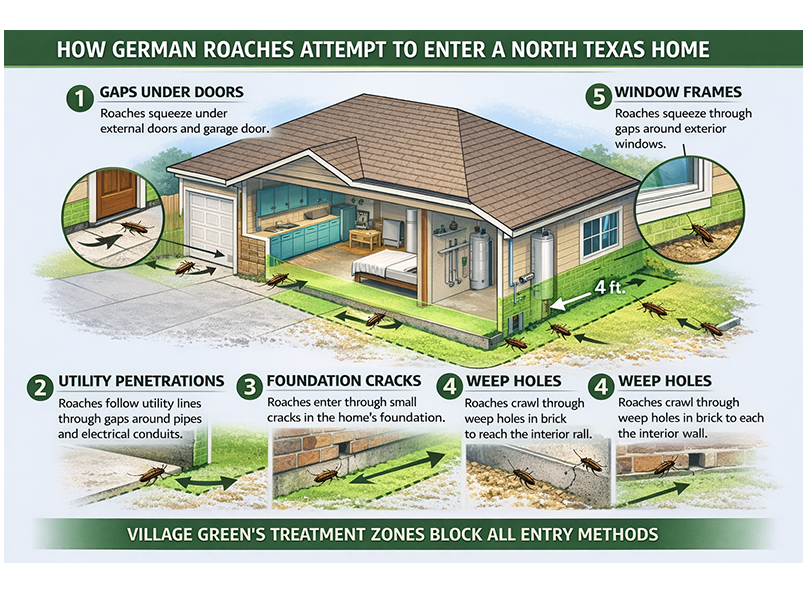
Unlike the larger American cockroaches that live primarily outdoors, German roaches need to get inside to survive. They’re specifically adapted to indoor living and will exploit any opening they find:
- Gaps under doors and around windows
- Cracks in foundation walls
- Utility penetrations (cable, phone, electrical)
- Spaces around plumbing entries
- Garage-to-house connections
- Weep holes in brick foundations
A gap as small as a credit card’s thickness is enough for an adult German cockroach to squeeze through.
Why spring is invasion season
During winter, German roaches slow down but don’t disappear. They cluster in warm areas of buildings—restaurants, stores, and unfortunately, some homes. When spring temperatures consistently hit the 60s and 70s, their activity increases dramatically.
This is when established populations start expanding territory. Young adults leave overcrowded areas to find new homes. This dispersal period, typically March through May in North Texas, is when they’re most likely to attempt entry into previously uninfested homes.
Village Green’s 5-step exterior defense process
Most pest control companies wait until roaches are already inside, then spray kitchens and bathrooms. At Village Green, we stop them before they breach your home’s perimeter. Here’s exactly how our 5-step process creates multiple defensive barriers:
Step 1: Comprehensive exterior inspection
Our technician walks your entire property looking for signs of pest activity and potential entry points. For German roaches specifically, we’re identifying:
- Foundation cracks and gaps
- Utility penetrations that need sealing
- Door thresholds with gaps
- Weep hole conditions
- Moisture issues that attract roaches
- Evidence of existing pest pressure from neighboring properties
This inspection reveals the specific vulnerabilities German roaches would exploit to enter your home.
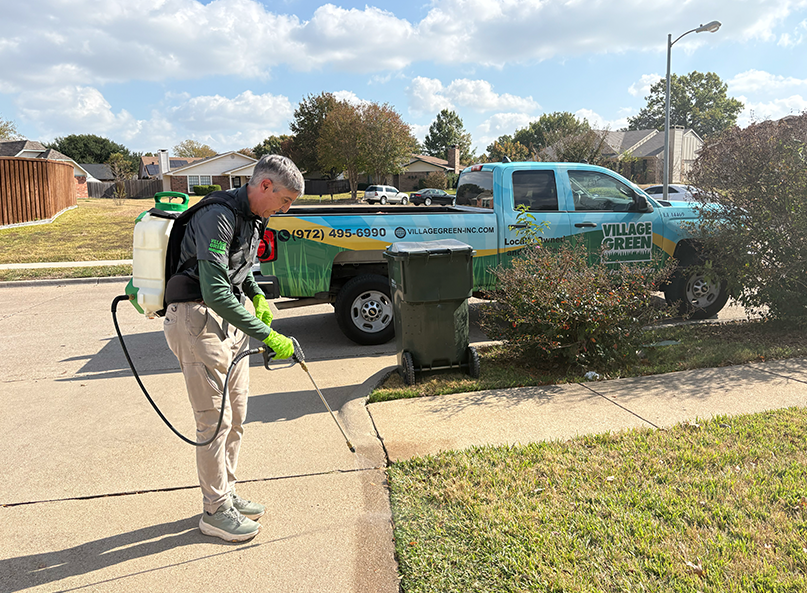
Step 2: Web and nest removal with extension tools
Using professional weber tools (long poles with specialized tips), we remove spider webs and wasp nests from around your home’s exterior. This step serves dual purposes: it eliminates existing pests that compete for the same spaces German roaches target, and it allows our technician to thoroughly inspect hard-to-reach areas where roaches might attempt entry.
Step 3: Liquid perimeter barrier application
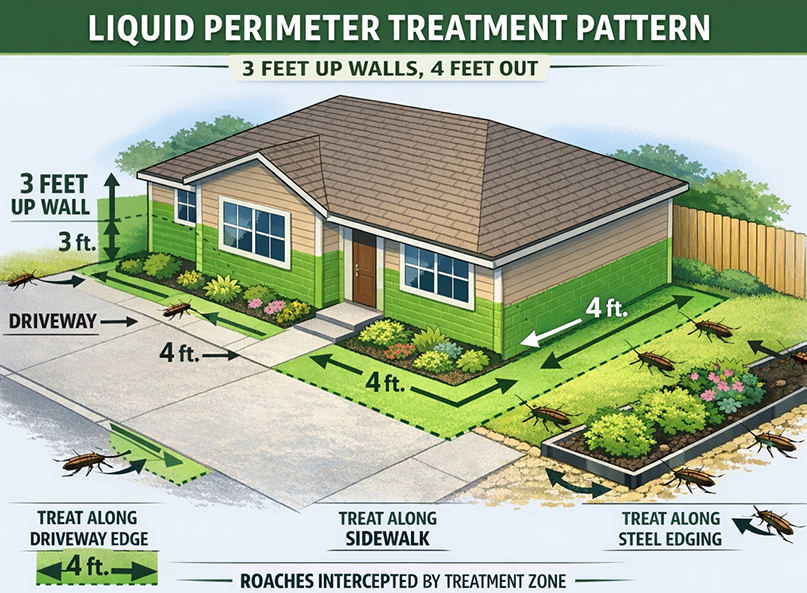
This is the heart of our German roach defense strategy. We apply professional-grade liquid treatment in a precise pattern:
- 3 feet up your exterior walls
- 4 feet out into the landscape
- Around all structural elements (sidewalks, driveways, steel edging)
This creates an interceptive barrier that stops German roaches before they reach your foundation. Insects naturally follow structures when seeking entry points—by treating these pathways, we intercept them during their approach to your home.
Step 4: Granular bait perimeter placement
Beyond the liquid barrier, we establish a second defensive layer using granular bait stations. These are strategically placed:
- Just past the liquid treatment zone
- Around your fence line and structural borders
- In areas where German roaches typically travel
This dual-barrier system ensures that any roaches that might bypass the initial liquid treatment encounter a secondary control measure before reaching your home’s entry points.
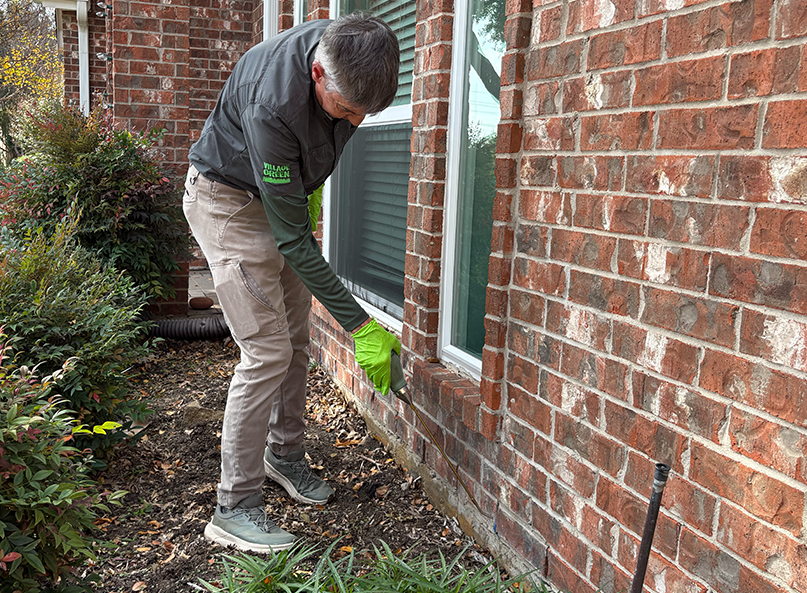
Step 5: Weep hole protection with silica dust
German roaches commonly use weep holes as entry points into homes. We treat each weep hole with food-grade silica dust—a natural material that’s harmless to people and pets but creates an insurmountable barrier for insects attempting to crawl through these openings.
The silica works mechanically, not chemically, making it a long-lasting defense against roach entry through these vulnerable points.
Why this systematic approach works
Each step in our process addresses a specific aspect of German roach invasion behavior:
- Inspection identifies their target entry points
- Web removal clears competing pests and improves access for treatment
- Liquid barrier intercepts roaches approaching your home
- Granular bait provides secondary control for any breakthrough attempts
- Weep hole treatment secures the most common entry points
Together, these create overlapping defensive zones that make it nearly impossible for German roaches to successfully enter your home.
Ready for comprehensive exterior roach defense? Call 972-495-6990 to schedule your inspection and 5-step treatment process.
About Village Green: Serving Plano, Richardson, McKinney, Frisco, Garland, and Sachse since 1980. Exterior pest defense specialists. No contracts, 90-Day Worry-Free Guarantee, and same-day communication on every service visit.