Your mosquito treatment works in the rain — here’s why you might still see more mosquitoes
Rain rolls in the day after a mosquito treatment. A few days later, you’re swatting more mosquitoes than you were before the technician ever showed up. It’s a fair question: did it get washed off?
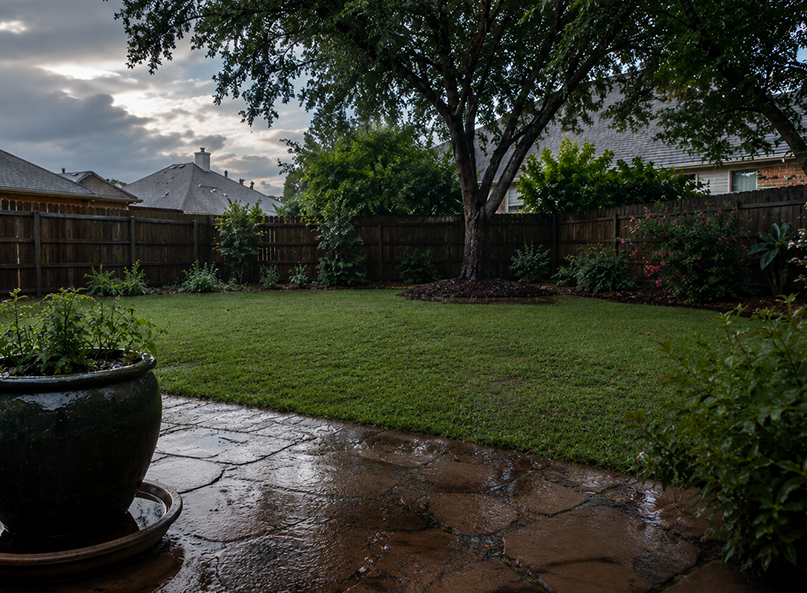
The short answer is no. The longer answer is that rain and mosquitoes have a complicated relationship, and understanding it makes a real difference in how you manage your yard through North Texas summers, especially after a storm like the one that dropped rain across the area this week.
The product doesn’t wash off, here’s why
When a Village Green technician applies mosquito control to your trees and shrubs, the product doesn’t go on alone. A surfactant is mixed in, a binding agent that works essentially like a glue. Once the product dries against your foliage, rain can no longer dislodge it.
This is how we can confidently tell customers: if it rains after your treatment, the product is still working. The surfactant is doing its job.
So why are you seeing more mosquitoes?
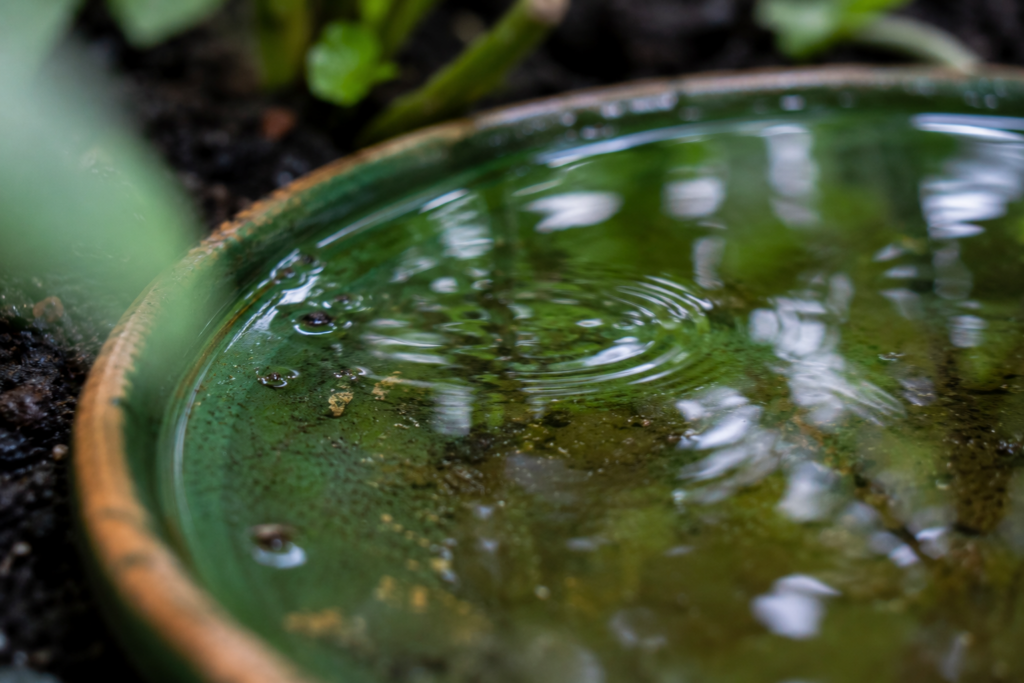
This is where the biology of mosquitoes matters. Mosquitoes don’t need ponds or puddles to breed. A female mosquito can lay 300 eggs at a time in a space no larger than a water bottle cap. After a significant rain event, your yard is suddenly full of those small, overlooked water sources: leaf axils, plant saucers, clogged gutters, low spots in mulch.
A single female mosquito can lay up to 3,000 eggs in her lifetime. With warm temperatures and plentiful standing water, the population in your yard can grow significantly within a week.
Your treatment is still active. It hasn’t had time yet to intercept this new wave of adults.
How the treatment eventually catches up
Mosquitoes aren’t strong flyers. They spend most of their time resting in shaded areas, the underside of leaves, low shrubs, dense foliage. These are exactly the areas your technician targeted.
Once the newly hatched adults move into those resting zones, the treated surfaces do their work. The post-rain spike is real, but it’s temporary. Most customers see a meaningful reduction within one to two weeks.
What you can do in the meantime
Walk the yard and eliminate any standing water you can find, especially containers, saucers, and low-lying areas where water pools. Keep grass cut and edges trimmed to reduce shaded resting zones. Avoid peak mosquito activity hours, dawn and dusk, for a few days after heavy rain. And call us if you have questions or need to discuss additional steps as needed. We want you to be completely satisfied.
When to call
Village Green’s mosquito program includes a callback policy. If you’re seeing activity at a level that’s affecting how you use your yard, you don’t have to wait for your next scheduled visit. Call or text 972-495-6990 and we’ll discuss options including getting a technician out as needed.
If you’re not on mosquito service yet, weeks like this one are usually when it becomes obvious why neighbors who are on it aren’t dealing with the same problem. Our Signature plan runs $85 per visit for most lawns in our area, with the first visit at 50% off, and it’s built around 8 visits from March through October. Since we’re already midway through the season, joining now still gets you roughly four visits this year. No contract, and the plan is backed by our Worry-Free Guarantee, so you can cancel anytime if it isn’t doing the job.
Serving North Texas since 1980
Village Green serves Plano, Richardson, McKinney, Frisco, Garland, Sachse, Allen, Murphy, and surrounding North Texas communities. No contracts. Worry-Free Guarantee. Per-visit photo documentation. Same-day communication.
About the author: Ken Hyatt is the owner of Village Green Lawn and Pest. He has spent more than 45 years working directly with North Texas lawns and yards and is the on-camera voice behind the company’s Truth Series, where he addresses common lawn and pest care myths and misconceptions.