

Why do mosquitoes keep coming back even when you treat?
If you’ve ever wondered whether mosquito control actually works — or whether it’s worth it if your neighbors aren’t doing anything — you’re asking the right questions. Ken Hyatt, owner of Village Green, hears these every season. Here are the three most common, with straight answers.
Question 1: What exactly are you doing when you treat?
The mosquitoes biting you aren’t flying in from miles away. They’re already in your yard — resting in the lower shaded areas of your landscape, typically eight feet and below. That’s where their food sources are: people, pets, and animals.
When we treat, we use a fogging machine — think of it as a commercial-grade leaf blower — to apply our mosquito control product through the ornamental trees and shrubs where mosquitoes rest. We pay specific attention to the undersides of plant leaves, which is where they hide.
On a first treatment, it’s common for our technicians to see mosquitoes billowing out of the shrubs as the product does its job. That initial flush-out is a normal part of the process.
We also treat drains and any standing water areas where mosquitoes breed.
Question 2: Will this even work if my neighbors aren’t treating?
It helps when neighboring properties treat too — but our customers consistently see strong results even when they don’t.
Here’s why: the species of mosquito most likely to bite you in your backyard is not a strong flyer. It doesn’t travel far. It rests frequently, and its preferred resting spots are the trees and shrubs right in your yard. When we eliminate those harborage areas on your property, we eliminate most of the mosquitoes that were going to bite you.
You don’t need a neighborhood-wide effort to protect your own yard.
Question 3: Will mosquito treatments harm my bees and butterflies?
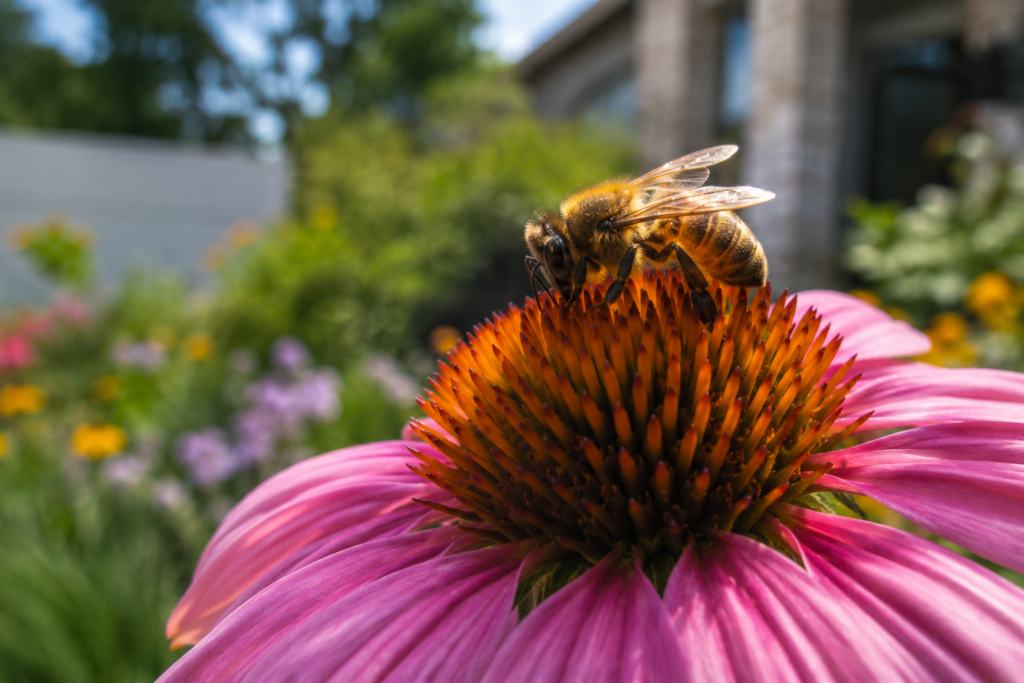
This is one we take seriously.
Bees and butterflies are attracted to blooming plants — flowers, annuals, and flowering perennials. They’re generally not landing on non-blooming shrubs and ornamental trees, which is precisely where we focus our treatment.
Our technicians are trained to avoid treating annuals and any shrubs that are actively blooming during each visit. Since most perennials bloom for only a few weeks at a time, we can adjust on the next visit if something is in bloom when we arrive.
The goal is effective mosquito control that doesn’t put your pollinators at risk.
The number that matters most
90% of customers who start our mosquito program renew the following year.
That’s not a marketing claim — that’s the outcome of people deciding for themselves whether the service is worth it. Most decide it is.
If you’re ready to reclaim your backyard this season, we’re ready to help.
📞 Call or text us at 972-495-6990
💻 Get a quote at villagegreen-inc.com